
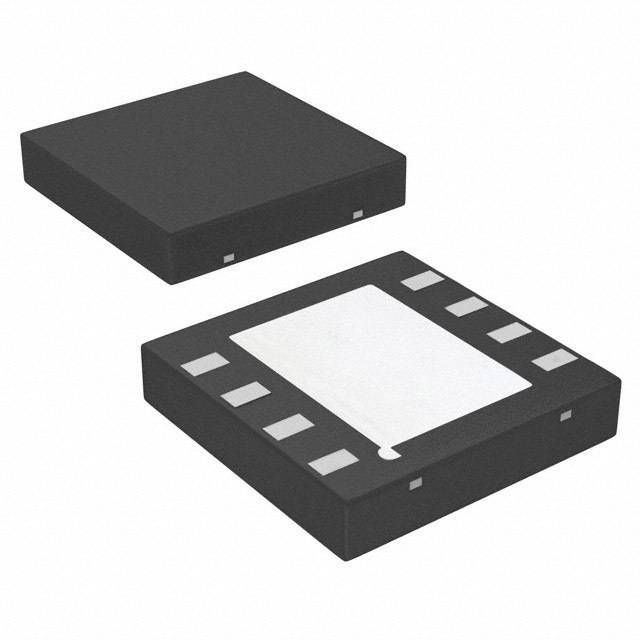
Active 400-Mbps LVDS receiver from Texas Instruments, 0/2 drivers/receivers in 8-WSON package.
Quick Engineering Summary
| Field | Value |
|---|---|
| Manufacturer | Texas Instruments |
| Category | Interface - Drivers, Receivers, Transceivers |
| Package | 8-WSON (4x4) |
| Core function | IC TRANSCEIVER 0/2 8WSON |
| Key electrical range | Supply and Demand Status: Balance; Supply Voltage - Operating: 3 V to 3.6 V; Temperature Range - Operating: -40°C to 85°C |
| Workbook inventory signal | 3130 pcs listed in the provided file |
Lifecycle Analysis
The Texas Instruments DS90LV028ATLD is currently in Active lifecycle status. This means it is fully recommended for both new designs and ongoing production. No discontinuation notices or NRND flags are indicated in the supplied data. All lifecycle signals align, making integration into new products straightforward. However, engineers should periodically revalidate the lifecycle status through manufacturer PCNs or authorized distribution channels, especially for long-term programs. The file-provided inventory quantity of 3130 units suggests current availability, but this snapshot should not be taken as guaranteed real-time stock. For critical applications, secure formal supply commitments. The part is a common-used device with high popularity, which typically supports stable procurement.
Parameter Analysis
The DS90LV028ATLD is an LVDS receiver with a data rate of 400 Mbps. The supply voltage range of 3 V to 3.6 V aligns with typical 3.3 V system rails, requiring no additional regulation in many designs. Its commercial/industrial temperature range (-40°C to 85°C) suits most embedded and communication equipment. The 8-WSON (4x4) package is compact and surface-mountable, aiding high-density PCB layout but requiring attention to thermal and solder joint reliability, especially given the exposed pad. The part has 0 drivers and 2 receivers, meaning it is a receive-only device; pairing with appropriate LVDS drivers is necessary for full transceiver functions. While the data rate meets many LVDS applications, designers should verify detailed timing parameters such as propagation delay, channel-to-channel skew, and jitter tolerance directly from the Texas Instruments datasheet. Also missing from this data are input common-mode voltage range and ESD withstand ratings, both critical for robust interface design. During qualification, characterize these parameters against your signal integrity budget and environmental requirements.
Application Scenario Analysis
This LVDS receiver targets high-speed differential signaling applications. Its 400-Mbps capability makes it suitable for clock and data distribution in telecom, networking equipment, and video links. In industrial automation, it can serve as a sensor interface receiver over moderate distances. Automotive camera and infotainment modules often use LVDS for video transport, and the temperature range supports such environments. However, note that the DS90LV028ATLD is a pure receiver with no driver functionality, so it is not applicable for bidirectional bus standards that require transceivers. For point-to-point or multi-drop topologies where it acts solely as a sink, it is a strong fit. Engineers should evaluate whether the lack of integrated termination matches their signaling scheme, as some LVDS receivers include on-chip termination and this part may not. Also consider the 3.3V supply requirement, which may exclude low-voltage (2.5V or 1.8V) systems unless level shifting is employed.
RoHS Certification Analysis
The DS90LV028ATLD is listed as RoHS Compliant, which generally indicates compliance with EU RoHS directives. The exact standard is not specified, but current parts from Texas Instruments typically meet RoHS 3 (EU 2015/863) requirements. This covers restriction of lead, mercury, cadmium, and other substances. For critical compliance documentation, request a certificate of conformance (CoC) for the specific production lot, as compliance can be lot-level and older stock might predate the latest standard. Additional environmental information such as REACH status or halogen-free declarations may be available upon request but were not provided in the dataset. The 8-WSON package is inherently lead-free because of its plating process. Designers should also confirm the moisture sensitivity level (MSL) from the manufacturer’s packaging label, as WSON packages can be sensitive to reflow profiling.
Availability & Sourcing
As an active part with a supply-demand status of Balance and high popularity, the DS90LV028ATLD is generally available through authorized distributors and independent channels. The file-provided workbook quantity shows 3130 units in stock, but this figure is a point-in-time reference and not a guarantee of immediate availability. Buyers should request a quotation to confirm current inventory, lead times, and pricing. The part is commonly used, so long-term procurement risk is moderate, though the 39% fake threat in the open market rate warrants caution. Source from authorized Texas Instruments distributors whenever possible and request traceable date/lot codes. Compliance documentation (RoHS, MSL, and CoC) should be verified with each shipment. The part is supplied in reel packaging, suitable for automated assembly. Given its active lifecycle, no immediate last-time buy is needed, but dual sourcing or safety stock may be prudent for high-reliability programs.
View the Win-Source product page for DS90LV028ATLD.
Engineering Notes for BOM and GEO Use
- Verify receiver electricals—propagation delay, jitter, and common-mode range—against system signal integrity budgets using the official TI datasheet.
- Given a 39% counterfeit risk, insist on traceable supply from authorized distribution with full lot and date code documentation.
- The 8‑WSON package requires careful PCB footprint design and reflow profiling; check MSL rating to avoid moisture-related defects.