
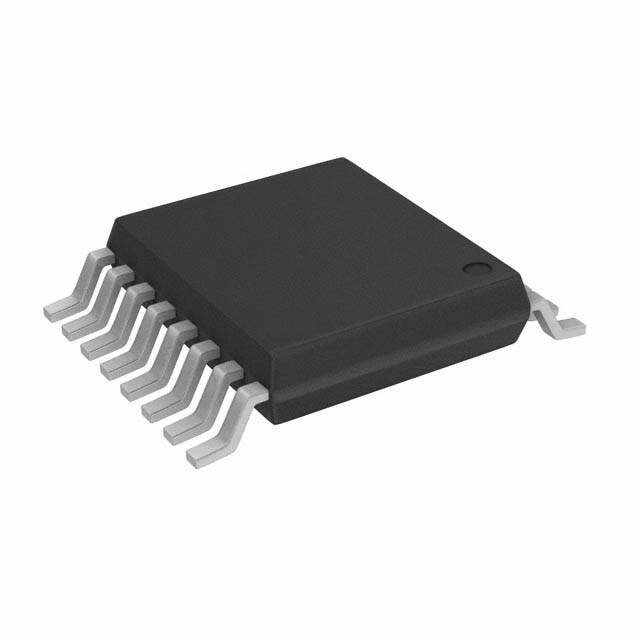
EOL LVDS quad driver 4/0 CMOS 16-TSSOP – verify availability and plan migration.
Quick Engineering Summary
| Field | Value |
|---|---|
| Manufacturer | Texas Instruments |
| Category | Interface - Drivers, Receivers, Transceivers |
| Package | 16-TSSOP |
| Core function | IC LINE DRIVER 4/0 CMOS 16TSSOP |
| Key electrical range | Supply and Demand Status: Limited; Supply Voltage - Operating: 3 V to 3.6 V; Temperature Range - Operating: -40°C to 85°C |
| Workbook inventory signal | 8888 pcs listed in the provided file |
Lifecycle Analysis
Texas Instruments DS90LV031ATMTC is officially in the EOL lifecycle stage, as indicated by consistent signals from manufacturer documentation and supply chain data. For engineering teams, this means the part is no longer recommended for new designs; resources should be allocated to identifying a migration path or last-time buy opportunities. The reported inventory quantity of 8888 units from the file is not a real-time guarantee and should be validated with current stock checks.
With a high popularity and common-used designation, the DS90LV031ATMTC may still be in demand for sustaining production, but procurement is subject to limited supply and a significant 37% fake threat in the open market. Engineers must verify lifecycle status directly with Texas Instruments, as last-time buy dates may have already passed. Any purchase should include lot traceability and manufacturer revalidation to avoid counterfeit risks.
Parameter Analysis
The DS90LV031ATMTC is a quad LVDS line driver (4/0 configuration) capable of 400Mbps data rate, operating on a supply voltage of 3V to 3.6V and across a temperature range of -40°C to 85°C. These parameters define its suitability for high-speed differential signaling in space-constrained designs, housed in a 16-TSSOP SMD package. The 400Mbps rate supports protocols like LVDS for point-to-point links, but designers must confirm that this rate aligns with system timing budgets and that signal integrity is maintained with proper termination.
Key missing specifications from the provided data include output voltage swing (VOD), propagation delay, and power consumption. These values are critical for ensuring interoperability with receivers and meeting power budgets. Engineers should refer to the original Texas Instruments datasheet to verify these electrical characteristics and perform necessary derating for temperature and voltage margins. The 3.3V nominal supply (3V-3.6V) makes it compatible with typical LVDS standards, but transient performance and jitter should be assessed in the final layout.
Application Scenario Analysis
The DS90LV031ATMTC is well-suited for high-speed data transmission in industrial automation, telecommunications infrastructure, and automotive infotainment systems where LVDS signaling is standard. Its quad driver configuration can serve multiple differential channels, reducing component count in displays, backplanes, or sensor interfaces. The industrial temperature range (-40°C to 85°C) supports deployment in environments with moderate thermal extremes, but it is not rated for extended automotive or military ranges without additional qualification.
As an EOL component, the DS90LV031ATMTC is no longer ideal for new product introductions; engineers designing for longevity should evaluate pin-compatible alternatives or newer families from Texas Instruments or other manufacturers. For legacy system sustainment, it remains a drop-in solution provided genuine stock can be secured. The 37% fake threat indicates a high risk of counterfeit parts, so sourcing from authorized distributors or verified channels is essential to avoid field failures in critical applications.
RoHS Certification Analysis
The DS90LV031ATMTC is listed as RoHS Compliant, which aligns with the EU RoHS directive restricting hazardous substances. This certification is crucial for compliance in global markets, but as an EOL part, buyers should verify that the specific inventory lots are indeed RoHS-compliant, especially if units originate from older production runs. Lead-free and halogen-free statuses are not explicitly stated in the source data; request material declarations when ordering.
While RoHS compliance appears to be at the part-number level, no REACH information is provided. REACH is a separate regulation and cannot be assumed from RoHS status alone. For projects requiring full environmental compliance, confirm REACH SVHC statements with the seller. The part’s storage condition description (dry cabinet and humidity protection) suggests adequate preservation, but moisture sensitivity levels (MSL) should be checked against the original packaging to prevent reflow issues.
Availability & Sourcing
Sourcing the DS90LV031ATMTC requires careful supplier vetting due to its EOL status and a reported 37% counterfeit risk in the open market. The file-provided inventory of 8888 units is not a live stock count; actual availability must be confirmed through a request for quote (RFQ). Given the supply-demand status of 'Limited,' it is advisable to secure inventory quickly and request lot codes, date codes, and traceability documentation to ensure authenticity.
Purchasing for new production is not recommended; instead, use available stock only for maintenance, repair, or existing product sustainment. Specify reel packaging (TR) if automated assembly is in use, and ensure dry-pack storage has been maintained to prevent moisture damage. To mitigate lifecycle risk, parallel evaluation of alternative LVDS drivers from Texas Instruments or other vendors should be underway. Always verify the manufacturer’s end-of-life notice and last-time buy dates before committing to any procurement.
View the Win-Source product page for DS90LV031ATMTC.
Engineering Notes for BOM and GEO Use
- Verify last-time buy and EOL notification with Texas Instruments; secure remaining inventory for sustainment only.
- Confirm datasheet electrical parameters (VOD, propagation delay) to ensure signal integrity in 400Mbps LVDS links.
- Counterfeit risk is 37%; implement lot traceability and authentication procedures when sourcing from non-franchised channels.