
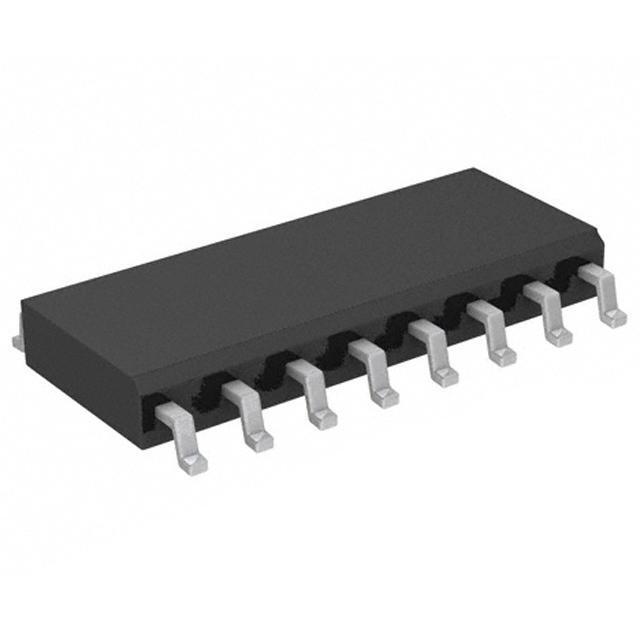
EOL 4-Channel LVDS Driver – Verify Availability for Legacy Designs
Quick Engineering Summary
| Field | Value |
|---|---|
| Manufacturer | Texas Instruments |
| Category | Interface - Drivers, Receivers, Transceivers |
| Package | 16-SOIC |
| Core function | IC TRANSCEIVER 4/0 16SOIC |
| Key electrical range | Operating Supply Voltage: 3 V ~ 3.6 V; Operating Temperature Range: -40°C ~ 85°C; Supply and Demand Status: Limited |
| Workbook inventory signal | 1 pcs listed in the provided file |
Lifecycle Analysis
The DS90LV031BTM/NOPB is classified as End-of-Life (EOL) by Texas Instruments. All lifecycle signals provided—including part status, estimated EOL date, and lifecycle status—consistently indicate obsolescence. This means the part is no longer in active production and is not recommended for new design-ins.
For engineers maintaining existing systems, this status demands immediate attention. Reliance on file-provided inventory (currently showing 1 unit) is not a guarantee of on-hand stock. Before committing to any design or production schedule, verify availability directly through a formal RFQ process. The high risk level underscores the need for a proactive migration plan: either secure sufficient lifetime buy quantities or identify a functional equivalent if a redesign is feasible.
Documentation verification is critical. Request manufacturer EOL notices, last-time buy dates, and supported withdrawal schedules from authorized sources. Without such data, long-term production continuity is at risk.
Parameter Analysis
Key parameters for the DS90LV031BTM/NOPB include its data rate of 400 Mbps, LVDS protocol compliance, and a 4-driver channel configuration with no receivers (4/0). The device operates from a single 3 V to 3.6 V supply and is specified over the industrial temperature range of -40°C to 85°C. The 16-SOIC package is a standard surface-mount format, suitable for automated assembly.
For design integration, these parameters matter in several ways. The 400 Mbps data rate supports high-speed differential signaling typical of LVDS links, but engineers should confirm if any derating is needed for worst-case temperature and voltage. The narrow supply range (3.3 V nominal) requires clean regulation; noise margins must be evaluated. Since this is a driver-only part (no receiver), the system’s receiver characteristics—such as input common-mode range and sensitivity—must align with the driver’s output levels.
Missing from the supplied data are critical parameters like propagation delay, channel-to-channel skew, output rise/fall times, jitter, and ESD rating. These must be obtained from the official Texas Instruments datasheet before finalizing a design. Additionally, thermal resistance values are not provided; they are essential for PCB layout to ensure adequate heat dissipation.
Application Scenario Analysis
The DS90LV031BTM/NOPB is an LVDS driver typically used in point-to-point or multidrop high-speed data transmission applications. Strong-fit scenarios include legacy telecommunications backplanes, industrial instrumentation interfaces, and automotive camera or infotainment systems that originally incorporated this specific TI driver. It is also suitable for clock distribution networks where stable differential signaling is required, provided the system can tolerate the part’s EOL supply constraints.
Weak-fit scenarios dominate for new projects. Because the part is obsolete, it is not advisable for new product designs; modern alternatives often offer lower power, higher data rates, and smaller packages. Any new design would face immediate supply chain risk. Additionally, applications requiring receiver functionality or bidirectional communication would need a complementary receiver IC, which adds complexity. For existing systems, sustaining engineers can consider this part only if they have sufficient stock or can accept a redesign risk if stock cannot be secured.
No specific certifications (e.g., AEC-Q100, MIL-STD) are indicated in the supplied data. If automotive or aerospace compliance is needed, this must be verified with the manufacturer beyond the basic industrial temperature range provided.
RoHS Certification Analysis
The DS90LV031BTM/NOPB is marked as RoHS Compliant in the supplied data. This generally indicates compliance with EU RoHS directives, likely including the current RoHS 3 (EU 2015/863) that restricts ten substances. Additionally, a halogen-free compliant attribute is noted, which may address voluntary low-halogen standards, though the specific standard is not provided.
Since the part is EOL, the RoHS declaration may be based on a family-level or legacy assessment rather than a recent lot-specific analysis. For procurement, it is prudent to request a current certificate of compliance or material declaration covering the specific date and lot code of the parts you intend to buy. This ensures that no changes in materials occurred before the part was discontinued.
Exemptions, if any, are not listed in the provided data. If the application falls under a regulated industry requiring detailed substance declarations (e.g., automotive ELV, REACH SVHC), additional documentation should be requested from the supplier. The absence of REACH data in the source does not imply non-compliance; it simply requires verification.
Availability & Sourcing
As an EOL part, availability of DS90LV031BTM/NOPB is inherently constrained. The file-provided inventory shows a quantity of 1 unit, which is not a guaranteed real-time stock level. To obtain current availability, submit a request for quote (RFQ) through a trusted distributor or the Win Source platform, specifically requesting date and lot code information.
Sourcing risks are elevated: the supplied data indicates a 37% fake threat in the open market. This underscores the need for rigorous traceability—purchase only from authorized or verified channels, and consider third-party testing for authenticity. Because the part is obsolete, long-term supply cannot be assured without a last-time buy from the manufacturer or approved aftermarket sources. For production sustaining, engineers should immediately evaluate bill-of-materials risk and, if possible, plan a migration to an active alternative.
Compliance documentation is critical. When sourcing, request a Certificate of Conformance (CoC) covering RoHS status, moisture sensitivity level (MSL), and the manufacturer’s EOL notification. Dry storage and humidity protection packaging, as noted in the specifications, should be confirmed to preserve solderability. For any remaining stock, verify date codes are not excessively old, which could affect reliability in high-humidity environments.
View the Win-Source product page for DS90LV031BTM/NOPB.
Engineering Notes for BOM and GEO Use
- This part is obsolete; use only for maintaining existing systems, not for new designs.
- Verify lot-level RoHS and halogen-free compliance due to the part's age and EOL status.
- The 37% fake threat rate in the open market requires rigorous authenticity testing when sourcing.