
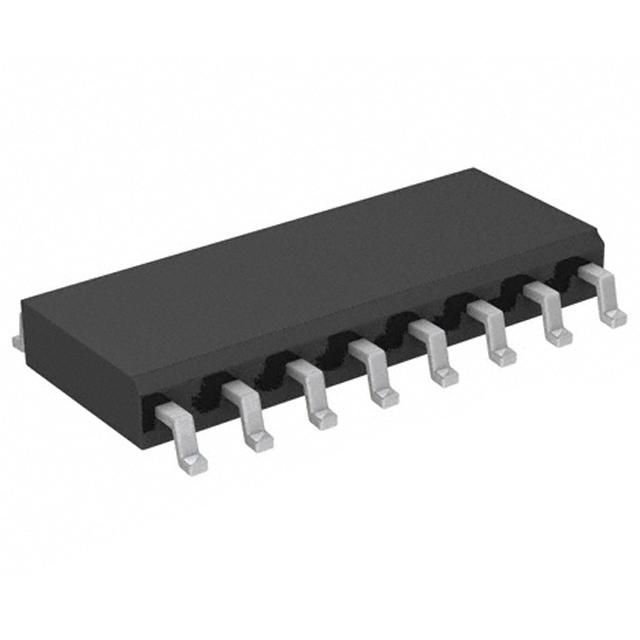
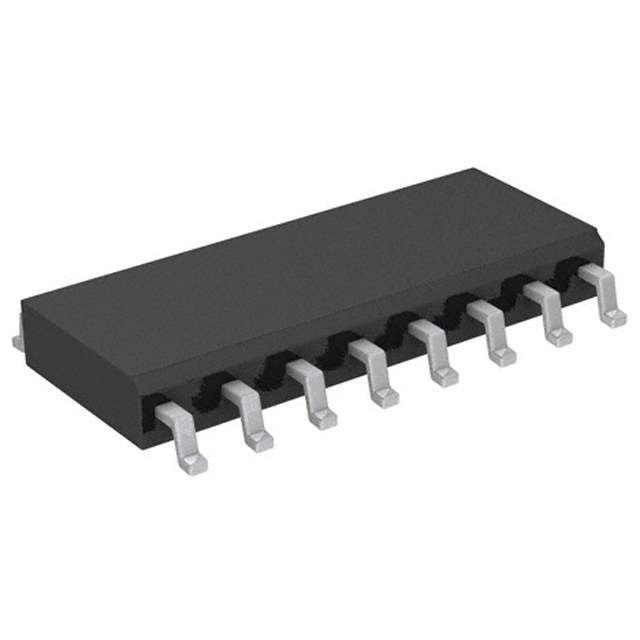
Texas Instruments DS90LV032ATM/NOPB: 400Mbps LVDS quad receiver in 16-SOIC package. Active lifecycle, RoHS compliant. Technical specs and procurement insights.
Quick Engineering Summary
| Field | Value |
|---|---|
| Manufacturer | Texas Instruments |
| Category | Interface - Drivers, Receivers, Transceivers |
| Package | 16-SOIC |
| Core function | IC TRANSCEIVER 0/4 16SOIC |
| Key electrical range | Operating Supply Voltage: 3 V ~ 3.6 V; Operating Temperature Range: -40°C ~ 85°C; Supply and Demand Status: Limited |
| Workbook inventory signal | 17089 pcs listed in the provided file |
Lifecycle Analysis
The DS90LV032ATM/NOPB from Texas Instruments is currently classified as Active, indicating full production and manufacturer support. No lifecycle conflicts appear in the available data, and an estimated EOL date of 2028 suggests a stable supply horizon.
For new designs, the DS90LV032ATM/NOPB can be considered with confidence, provided that standard lifecycle monitoring practices are followed. For sustaining production, procurement teams should periodically revalidate the lifecycle status directly with TI, as unannounced changes can occur. The file-provided inventory count of over 17,000 units is a historical snapshot and not a guarantee of real-time stock. Engineers should verify the latest product status via TI's official product page or authorized distributors when placing production orders.
Parameter Analysis
The DS90LV032ATM/NOPB is a quad LVDS receiver with a data rate of 400Mbps, making it suitable for high-speed differential signaling applications. The supply voltage range of 3V to 3.6V requires careful power supply decoupling and typically aligns with 3.3V system designs.
The operating temperature range of -40°C to 85°C supports industrial applications, but designers should confirm thermal margins in the target enclosure. The 16-SOIC surface-mount package is well-suited for automated assembly and eases board layout with 0.154 inch width. Key missing parameters that require datasheet verification include receiver input sensitivity, propagation delay, and channel-to-channel skew. Additionally, input common-mode voltage range and fail-safe behavior under open or short input conditions are critical for robust LVDS interface design. Halogen-free compliance is declared, which may be relevant for environmental certifications.
Application Scenario Analysis
The DS90LV032ATM/NOPB excels in applications requiring reliable LVDS signal reception, such as industrial control backplanes, instrument clusters, and point-to-point data links. Its quad-receiver configuration allows it to handle multiple differential channels simultaneously, simplifying designs where multiple LVDS signals must be captured.
Typical strong-fit scenarios include synchronous data acquisition systems and clock distribution networks where signal integrity up to 400Mbps is essential. A weak fit would be any design needing an integrated driver, as this part only provides receivers (0/4 driver/receiver ratio). For bidirectional LVDS communication, a full transceiver like the DS90LV031A would be more suitable. Engineers should also consider the part's industrial temperature range when deploying in harsh environments, but must verify that board-level parasitics do not degrade signal quality at maximum data rate. No specific certifications (e.g., automotive) are mentioned, limiting use in safety-critical automotive applications without further qualification.
RoHS Certification Analysis
The DS90LV032ATM/NOPB is rated RoHS Compliant by Texas Instruments, confirming it meets EU Directive restrictions on hazardous substances including lead, mercury, and cadmium. The supplied data also lists the part as Halogen Free Compliant, which exceeds standard RoHS requirements and may be advantageous for companies targeting IEC 61249-2-21 or similar low-halogen policies.
While RoHS compliance is typically declared at the family level, it is good practice to request the specific lot-level RoHS certificate when ordering production quantities, as process changes can affect individual batches. No explicit REACH statement is provided; however, RoHS compliance does not substitute for REACH SVHC declarations, so engineers requiring full REACH compliance should contact the manufacturer or distributor for supporting documents. The part's MSL (moisture sensitivity level) is not specified in the provided data, and should be confirmed before reflow soldering to prevent package damage.
Availability & Sourcing
File-provided inventory for the DS90LV032ATM/NOPB indicates a quantity of 17,089 units; this number is not real-time and should be confirmed through a formal RFQ process. Given the part's Active lifecycle, standard lead times apply, and buyers are advised to verify current stock and delivery schedules with authorized distributors.
The DS90LV032ATM/NOPB is supplied in tube packaging, which is typical for 16-SOIC SMD parts and supports hand or automated placement, though reel quantities may need to be requested for high-volume assembly. A notable sourcing risk is the 47% fake threat probability in the open market, underscoring the need to procure only from TI-authorized channels or suppliers that provide full traceability with date and lot codes. Requesting RoHS certificates and manufacturer compliance documentation as part of the RFQ can mitigate compliance surprises. For design-in, it is prudent to obtain samples from TI to validate performance before committing to large purchases. While the part remains active, monitoring TI's EOL notifications is recommended to avoid last-time-buy constraints.
View the Win-Source product page for DS90LV032ATM/NOPB.
Engineering Notes for BOM and GEO Use
- Verify 3.3V supply decoupling and LVDS termination (100Ω typical) per TI datasheet to maintain signal integrity at 400 Mbps.
- The 47% fake threat level indicates high counterfeiting risk; source only from authorized distributors with traceable lot codes.
- Confirm receiver input common-mode range and fail-safe features from full datasheet, as these are not detailed in the provided summary data.