
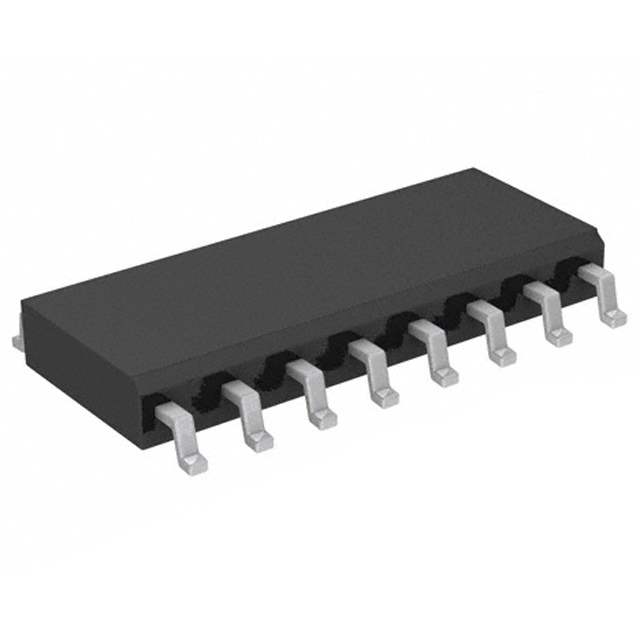
Texas Instruments 4-channel LVDS line driver – EOL status, requires lifecycle verification and careful sourcing.
Quick Engineering Summary
| Field | Value |
|---|---|
| Manufacturer | Texas Instruments |
| Category | Interface - Drivers, Receivers, Transceivers |
| Package | 16-TSSOP |
| Core function | IC LINE DRIVER 4/0 CMOS 16SOIC |
| Key electrical range | Supply and Demand Status: Balance; Supply Voltage - Operating: 3 V to 3.6 V; Temperature Range - Operating: -40°C to 85°C |
| Workbook inventory signal | 12600 pcs listed in the provided file |
Lifecycle Analysis
The DS90LV047ATM is officially listed as End-of-Life (EOL) by Texas Instruments, a status that carries high procurement risk. All supplied lifecycle signals align on EOL, except for a contradictory 'Active' entry in one specification field; that field should be treated as erroneous. Manufacturers typically issue a Product Change Notification (PCN) or discontinuation notice for EOL parts, and buyers should obtain the exact last-time-buy date and last-time-ship date from TI before committing to any new production.
For new designs, this part is completely unsuitable. For sustaining production, it demands a securement strategy: either hold sufficient buffer stock for the product’s remaining lifetime or immediately migrate to a recommended replacement. The file indicates 12,600 units in stock, but this quantity is not a real‑time guarantee; actual availability can change rapidly for EOL parts. It is critical to revalidate the lifecycle status through official manufacturer channels and not rely solely on distributor data.
Parameter Analysis
The DS90LV047ATM is a quad (4/0) LVDS line driver, meaning it contains four independent drivers and no receivers. LVDS signaling enables low‑power, high‑speed differential data transmission with a quoted data rate of 400 Mbps, making it suitable for many mid‑range clock and data distribution applications. The operating supply voltage is 3 V to 3.6 V, which is standard for LVDS, and the temperature range is industrial (-40°C to +85°C).
A critical discrepancy exists in the package information: the description and typical TI datasheet reference a 16‑pin SOIC package, but the specifications list “16‑TSSOP.” Engineers must verify the actual package outline from the manufacturer’s official datasheet for the exact ordering code, as a footprint mismatch would lead to PCB respins. Key parameters missing from the supplied data include propagation delay, channel‑to‑channel skew, differential output voltage, and input common‑mode range. These must be extracted from the original datasheet to ensure signal integrity and timing margins in the target application.
Application Scenario Analysis
This LVDS line driver is primarily employed in high‑speed point‑to‑point or multidrop serial communication links. Strong‑fit applications include clock distribution networks, backplane data transmission, digital video interfaces (such as FPD‑Link), industrial automation systems, and telecom infrastructure where reliable differential signaling is needed. Its 4‑channel configuration allows driving four independent differential pairs, which suits parallel data buses.
Weaker‑fit scenarios arise in modern designs that demand lower voltage operation (below 3 V), ultra‑low power consumption, or space‑constrained layouts that would benefit from smaller packages like WSON or BGA. Because the part is EOL, any new design should avoid it entirely; even in legacy system maintenance, the high fake‑threat percentage (28% in open market) and dwindling authorized stock make it a risky choice. Migration to an active Texas Instruments LVDS driver in a compatible package is strongly advised where possible.
RoHS Certification Analysis
The DS90LV047ATM is flagged as RoHS Compliant according to the provided data, but the specific RoHS directive version is not stated. It is typically compliant with the EU RoHS substance restrictions (lead‑free, etc.). No additional REACH, MSL, or halogen‑free declarations are supplied, so these must be requested if required for the end application.
Given the EOL status, the RoHS compliance certificate may be based on family‑level data or a test report from an earlier production date. For procurement of existing stock, it is essential to obtain a lot‑specific certificate of compliance to ensure that the parts meet current RoHS requirements and have not been subjected to improper storage or re‑conditioning that might affect substance content. Without explicit MSL information, assume standard moisture sensitivity and follow dry storage handling as suggested by the storage condition note.
Availability & Sourcing
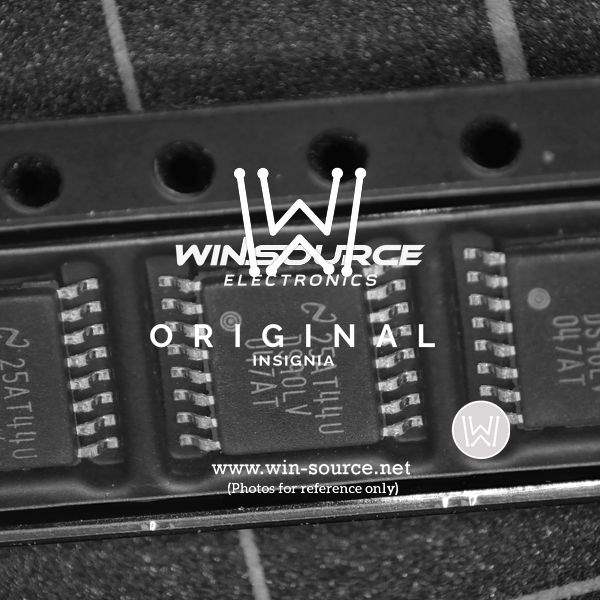
Sourcing the DS90LV047ATM requires immediate action due to its EOL status. While a file‑provided quantity of 12,600 units exists, this is not a real‑time inventory guarantee; actual availability can change quickly. Buyers should request a current quote through the distributor’s RFQ process, explicitly asking for date/lot codes, traceability documentation, and photographs of the physical package to confirm authenticity and storage conditions (the parts are specified for dry storage cabinet and humidity protection).
With a 28% open‑market fake threat rate, authentication is critical. Only source through authorized or highly reputable channels. Additionally, verify the lifecycle status directly with Texas Instruments before placing any order. For designs still in production, secure a sufficient last‑time buy quantity and immediately begin evaluating active replacement parts to avoid future shortages. Always accompany any purchase with lot‑specific RoHS compliance certificates and full traceability records.
View the Win-Source product page for DS90LV047ATM.
Engineering Notes for BOM and GEO Use
- Confirm package variant: The part number DS90LV047ATM typically corresponds to a 16-pin SOIC, but manufacturer data should be verified against the supplied TSSOP listing to avoid footprint mismatches.
- Treat as end-of-life: All lifecycle indicators point to EOL; secure existing inventory and plan a migration to an active replacement from the LVDS driver portfolio.
- RoHS compliance is stated but verify lot-level documentation, especially for long-stored stock, to ensure conformity to current EU RoHS directives.