
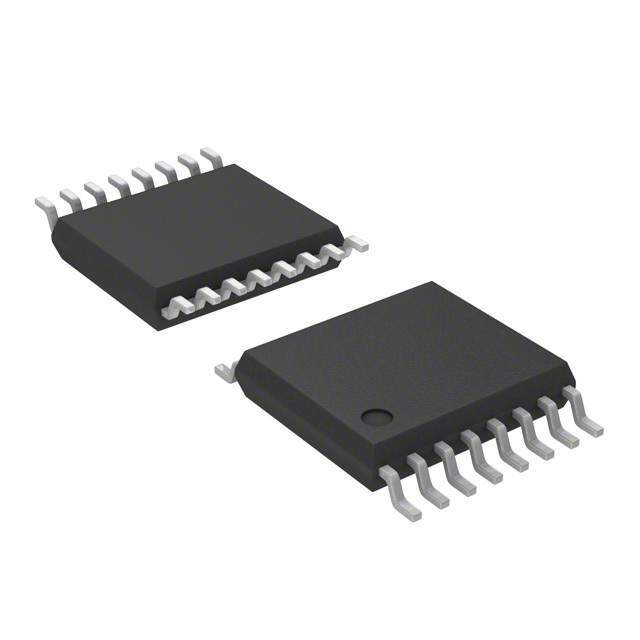
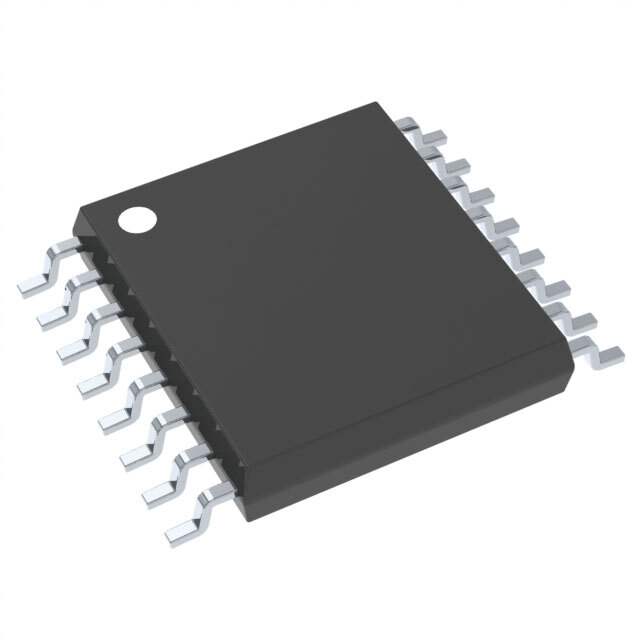
4-channel LVDS driver with 400Mbps data rate, active lifecycle and RoHS compliance.
Quick Engineering Summary
| Field | Value |
|---|---|
| Manufacturer | Texas Instruments |
| Category | Interface - Drivers, Receivers, Transceivers |
| Package | 16-TSSOP |
| Core function | IC TRANSCEIVER 4/0 16TSSOP |
| Key electrical range | Supply and Demand Status: Balance; Supply Voltage - Operating: 3 V to 3.6 V; Temperature Range - Operating: -40°C to 85°C |
| Workbook inventory signal | 19070 pcs listed in the provided file |
Lifecycle Analysis
The DS90LV047ATMTCX/NOPB from Texas Instruments is currently in an Active lifecycle status, with all available signals from the manufacturer aligning to confirm this. This means the part is fully supported for new designs and volume production, with no immediate plans for discontinuation. An estimated end-of-life date of 2027 is provided, indicating at least several years of sustained availability, which allows design engineers to integrate the device into long-lifecycle products with confidence.
Despite the Active classification, procurement teams should routinely revalidate lifecycle data directly with Texas Instruments or authorized distributors, especially when planning production runs that extend beyond the estimated 2027 time frame. The file-provided inventory count of 19,070 units suggests current stock availability, but this figure is not guaranteed real-time and should be verified through a formal request for quotation.
The risk level is assessed as low for new designs, but standard obsolescence monitoring practices are recommended. The DS90LV047ATMTCX/NOPB’s stable lifecycle is complemented by its broad industrial temperature range and LVDS signaling, making it a reliable choice for applications where supply continuity is critical.
Parameter Analysis
Key parameters for the DS90LV047ATMTCX/NOPB include its 4/0 driver/receiver configuration, meaning it contains four differential line drivers with no receivers, and supports the LVDS protocol. The maximum data rate is 400Mbps, which is a critical speed for high-bandwidth digital interfaces in backplanes, telecom, and video distribution. The supply voltage range of 3V to 3.6V aligns with typical 3.3V logic rails, simplifying power supply design and decoupling requirements.
The package is a 16-TSSOP, surface mount, with a compact footprint suitable for dense PCB layouts. The operating temperature range of -40°C to 85°C ensures functionality in industrial environments. Engineers should verify junction-to-ambient thermal resistance and power dissipation at maximum data rate and switching frequency to ensure adequate thermal margin in enclosed enclosures. Additionally, while the datasheet is not fully provided here, missing items such as propagation delay, output rise/fall times, and input common-mode voltage range should be verified from the manufacturer’s official datasheet to guarantee signal integrity and timing closure in the target application.
The device’s Halogen Free compliance and RoHS certification are bonus attributes for environmentally constrained designs. When interfacing with standard LVDS receivers, ensure proper 100-ohm differential termination to maintain signal quality at 400Mbps across trace lengths.
Application Scenario Analysis
The DS90LV047ATMTCX/NOPB is a dedicated LVDS line driver, making it well-suited for point-to-point differential data transmission in applications requiring high noise immunity and low power consumption. Strong-fit scenarios include clock distribution networks, high-speed serial backplane communication, and digital video interfaces where 400Mbps throughput is adequate. In industrial automation, it can drive encoder or sensor data over longer cable runs, leveraging LVDS’s common-mode rejection.
Weak-fit applications might include low-speed, single-ended signaling or protocols like RS-232/I2C where LVDS is unnecessary and adds complexity. The 4-channel driver arrangement is ideal for systems with multiple parallel data streams, such as FPGA-to-transmitter links, but is not suitable as a transceiver in bidirectional buses since it lacks any receiver functionality (4/0 configuration). Verify that the receiving end is compatible with LVDS levels and that the 3.3V supply is available; if the system uses 2.5V or 1.8V logic, level shifting may be required, adding cost and board space.
Given the estimated 46% fake threat in the open market, applications in safety-critical or high-reliability sectors (automotive, medical) should mandate strict sourcing from TI-authorized channels and incoming inspection protocols to avoid counterfeit devices that could compromise performance.
RoHS Certification Analysis
The DS90LV047ATMTCX/NOPB is listed as RoHS Compliant, which in the context of Texas Instruments typically refers to compliance with EU RoHS Directive 2015/863. This means the part does not exceed the maximum concentration values for restricted substances such as lead, mercury, cadmium, hexavalent chromium, PBBs, and PBDEs, and includes the four phthalates. The part is also marked as Halogen Free Compliant, indicating low bromine and chlorine content per industry standards.
Lot-level or batch-level certification should be requested from the supplier to confirm compliance for the specific date codes being procured, as compliance status can change with manufacturing process adjustments. While the data does not explicitly state REACH or other regulation status, Texas Instruments typically provides detailed material declarations; engineers should request this information for complete due diligence.
For design teams incorporating the DS90LV047ATMTCX/NOPB into products destined for the European market, the RoHS compliance simplifies certification. However, for extreme environment applications or those requiring military-level specifications, additional testing or screening may be necessary, as the standard commercial RoHS does not guarantee extended temperature or ruggedness beyond the listed -40°C to 85°C.
Availability & Sourcing
At the time of this guide’s generation, file-provided inventory shows a quantity of 19,070 units of the DS90LV047ATMTCX/NOPB. This figure is not a live stock count and should be treated as a planning indicator. To obtain current pricing and availability, procurement teams are encouraged to request a quote directly through the supplier platform, specifying desired quantities and target delivery dates.
Sourcing considerations must include the part’s Active lifecycle status and estimated EOL of 2027, which reduces urgency but does not eliminate the need for supply chain monitoring. The DS90LV047ATMTCX/NOPB is supplied in tape and reel packaging (Reel - TR), which is suitable for automated assembly. Request a full traceability package including lot code, date code, and RoHS compliance certificates to mitigate the highlighted 46% counterfeit risk. For high-volume production, negotiate lead times and shelf-life conditions, as the specified storage requires a dry cabinet and humidity protection.
Authorized Texas Instruments distributors should be the primary procurement channel; avoid brokers and unauthorized resellers unless rigorous incoming inspection and testing are in place. For sustaining production, consider placing a last-time-buy order well before the estimated 2027 EOL if the part is critical and no replacement is planned. Given the Active status and high popularity, the DS90LV047ATMTCX/NOPB is expected to remain widely available, but proactive quoting ensures supply alignment with production schedules.
View the Win-Source product page for DS90LV047ATMTCX/NOPB.
Engineering Notes for BOM and GEO Use
- DS90LV047ATMTCX/NOPB is an active, 4-channel LVDS driver with a 400Mbps data rate, making it suitable for high-speed differential signaling in industrial and communication systems.
- The device operates over a wide industrial temperature range (-40°C to 85°C) and accepts a 3V to 3.6V supply, simplifying integration into standard 3.3V logic systems.
- Due to a reported 46% fake threat in the open market, source from authorized distributors and request traceability documentation, including lot codes and date codes, to mitigate counterfeit risks.