
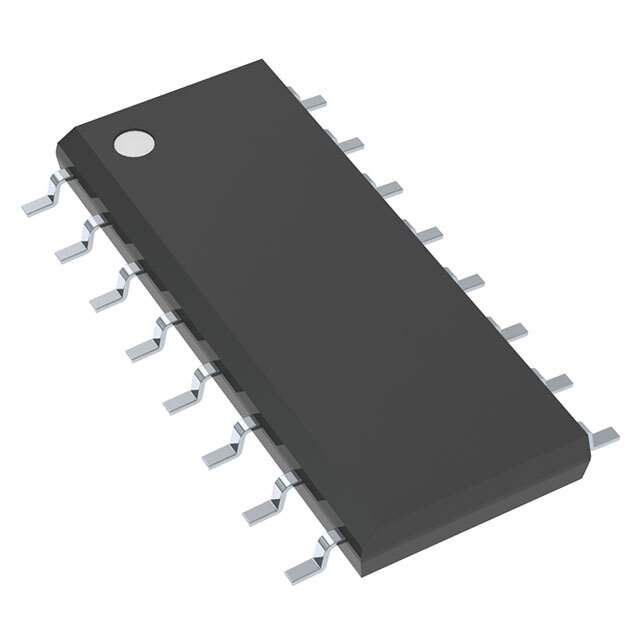
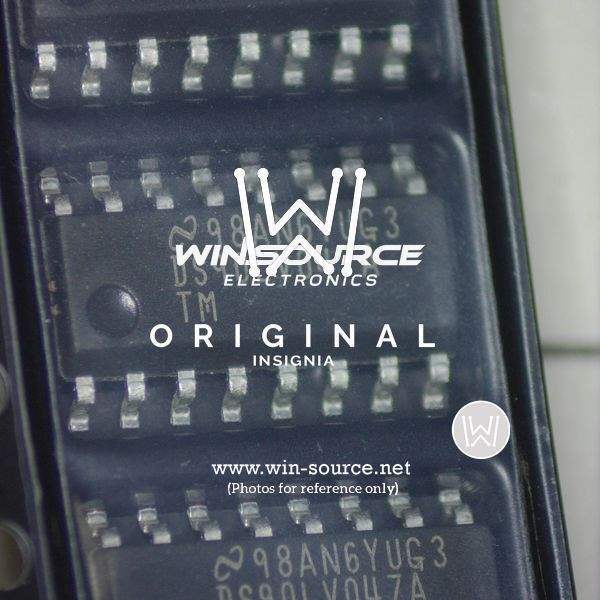
Texas Instruments LVDS Driver in 16‑SOIC package, active lifecycle, RoHS compliant, 400 Mbps data rate.
Quick Engineering Summary
| Field | Value |
|---|---|
| Manufacturer | Texas Instruments |
| Category | Interface - Drivers, Receivers, Transceivers |
| Package | 16-SOIC |
| Core function | IC TRANSCEIVER 4/0 16SOIC |
| Key electrical range | Supply and Demand Status: Limited; Supply Voltage - Operating: 3 V to 3.6 V; Temperature Range - Operating: -40°C to 85°C |
| Workbook inventory signal | 4710 pcs listed in the provided file |
Lifecycle Analysis
The DS90LV047ATMX/NOPB is classified as Active by Texas Instruments, and all available sourcing signals align with this status. There are no conflicting NRND or EOL indicators in the supplied data. For new‑design teams, an Active lifecycle means the part can be adopted without immediate risk of obsolescence.
Despite the low risk, engineers should not treat Active as a permanent guarantee. The manufacturer may update lifecycle status without forward notice, especially if market demand shifts. It is prudent to re‑check the status on ti.com or with an authorized distributor before committing to high‑volume production.
From a procurement standpoint, Active parts are typically supported with full manufacturing capacity and documentation. The DS90LV047ATMX/NOPB therefore remains a strong candidate for both prototype builds and mass production, though lead times can vary based on allocation.
Parameter Analysis
Key parameters for the DS90LV047ATMX/NOPB include its 400 Mbps data rate, a 4‑driver/0‑receiver configuration, an operating voltage range of 3 V to 3.6 V, and an industrial temperature span of -40°C to 85°C. The LVDS protocol guarantees low‑voltage differential signaling, which aids noise immunity and reduces EMI.
The 16‑SOIC package and SMD mounting enable standard PCB assembly processes. The supply voltage range is relatively narrow; beyond 3.6 V the device may be damaged, so rail regulation and decoupling are critical. The 400 Mbps rate is suitable for many high‑speed data paths, but designers should confirm that the actual channel bit rate, termination scheme, and PCB layout do not degrade signal integrity.
Important missing details from the provided data include typical propagation delay, rise/fall times, driver output current limits, and ESD ratings. These parameters are essential for timing analysis, protection circuits, and reliability predictions. They must be verified directly from the official DS90LV047ATMX/NOPB datasheet before finalizing the schematic or BOM.
Application Scenario Analysis
The DS90LV047ATMX/NOPB is a unidirectional 4‑channel LVDS driver, making it a strong fit for point‑to‑point high‑speed links such as clock distribution, backplane signaling, and data forwarding in telecom, industrial, and computing systems. The four independent driver channels allow parallel transmission of multiple signals, each up to 400 Mbps, with low power consumption characteristic of LVDS.
Where the application requires bidirectional communication or receiver functionality, this part alone is insufficient; an LVDS receiver would need to be paired with it. The -40°C to 85°C operating range covers most industrial environments, but applications requiring extended temperature (e.g., -55°C to 125°C) would need a different variant.
The 3 V to 3.6 V supply is compatible with many 3.3 V logic families, but systems operating on 2.5 V or 1.8 V rails may need level translation or a different driver. The 16‑SOIC package is convenient for prototyping and moderate‑density boards, but space‑constrained designs might look for smaller VQFN or WSON alternatives if available.
RoHS Certification Analysis
The DS90LV047ATMX/NOPB is listed as RoHS Compliant, which implies it meets the substance restrictions set by the EU Directive 2011/65/EU, including its amendments up to 2015/863 (RoHS 3). This status covers hazardous materials such as lead, mercury, cadmium, and certain phthalates.
No explicit REACH, halogen‑free, or MSL information is provided in the source data. While REACH is a separate regulation, its absence here does not automatically imply non‑compliance—it simply means it was not stated. Similarly, RoHS compliance at the part‑family level should be confirmed with a lot‑level certificate for any production shipment, as traceability and material declarations can vary with manufacturing site or date.
Design teams integrating the DS90LV047ATMX/NOPB into equipment destined for the European market should request the full EU Declaration of Conformity from Texas Instruments or their distributor. This ensures that the specific reels or trays procured are indeed within the RoHS scope and free from any exempted substances that might require end‑product labeling.
Availability & Sourcing
File‑provided inventory shows a workbook quantity of 4710 units for the DS90LV047ATMX/NOPB; however, this figure is not a real‑time stock level and cannot be guaranteed. The part is listed as Active with a medium popularity rating and a supply‑demand status of Limited, which suggests that while it is not obsolete, availability can be constrained.
Sourcing teams should request a formal quote to confirm current pricing, lead times, and authentic lot‑code traceability. The reported fake‑threat in the open market is 53 percent, underscoring the importance of purchasing through Texas Instruments authorized channels. The part is supplied in reel (TR) packaging and requires dry storage with humidity protection, so incoming goods should be inspected and stored per JEDEC guidelines.
Because the lifecycle is Active, standard buyer‑engineer workflows apply: issue an RFQ, validate supplier authorization, and request compliance certificates (RoHS, and optionally REACH and MSL). For long‑term production, consider negotiating a schedule agreement to secure allocation, especially given the Limited supply‑demand label. Always verify the latest lifecycle and datasheet revisions before issuing a production purchase order.
View the Win-Source product page for DS90LV047ATMX/NOPB.
Engineering Notes for BOM and GEO Use
- Verify the 400 Mbps data rate and LVDS compliance per TIA/EIA‑644‑A in your specific application.
- Account for the 3V‑3.6V operating voltage and -40°C to 85°C temperature range in power and thermal design.
- Request MSL and storage condition details along with date/lot code traceability when procuring.