
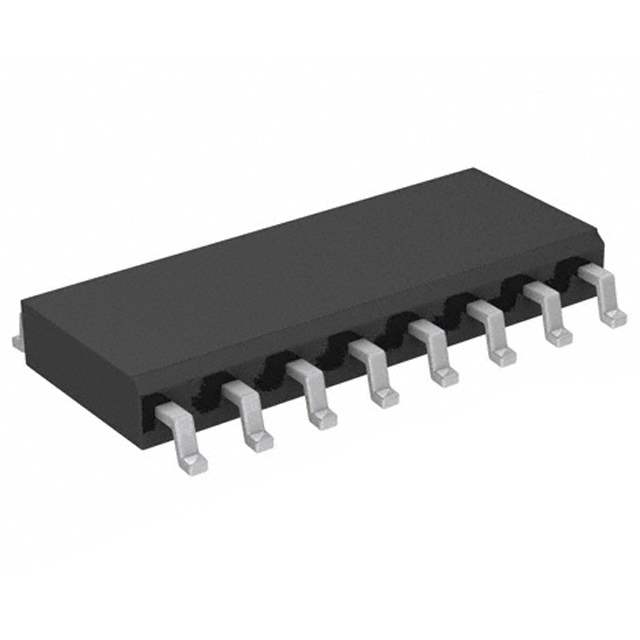
Texas Instruments quad LVDS receiver, 400Mbps data rate, 3V to 3.6V supply, -40°C to 85°C, 16-SOIC package.
Quick Engineering Summary
| Field | Value |
|---|---|
| Manufacturer | Texas Instruments |
| Category | Interface - Drivers, Receivers, Transceivers |
| Package | 16-TSSOP |
| Core function | IC RECEIVER 0/4 16SOIC |
| Key electrical range | Supply and Demand Status: Limited; Supply Voltage - Operating: 3 V to 3.6 V; Temperature Range - Operating: -40°C to 85°C |
| Workbook inventory signal | 950 pcs listed in the provided file |
Lifecycle Analysis
The DS90LV048ATM is classified as End-of-Life (EOL) according to Texas Instruments' lifecycle signals. This status indicates that the manufacturer has discontinued or plans to discontinue production, and no new designs should use this part. For existing production, sustaining engineering teams must immediately evaluate inventory levels and initiate a last-time-buy (LTB) process if the manufacturer offers one.
A conflicting lifecycle signal exists in the supplied data: one parameter field lists the part as 'Active.' However, all other lifecycle indicators—including the manufacturer's status and inventory system tags—consistently show EOL. This discrepancy likely stems from outdated or non-synchronized databases. Procurement teams should treat the part as EOL and verify directly with Texas Instruments or authorized distributors before committing to any new production orders.
The file-provided inventory quantity of 950 units is not a real-time guarantee of availability. Without an active last-time-buy window, the part may be subject to quick depletion. Engineers should revalidate the design for a migration path to a recommended replacement if one exists, or else secure sufficient stock to cover projected demand until a redesign is implemented.
Parameter Analysis
Key parameters for the DS90LV048ATM include its LVDS protocol support, quad receiver configuration (0/4 drivers/receivers), 400 Mbps data rate, and a supply voltage range of 3 V to 3.6 V. These specs make it suitable for low-voltage differential signaling applications that require high-speed data reception with low power. The wide operating temperature range (-40°C to 85°C) supports industrial and communications equipment deployed in harsh environments.
Critical missing datasheet values—such as receiver input thresholds, propagation delay, skew, and power consumption—must be verified against the official Texas Instruments datasheet. The package is described as 16-SOIC, but a secondary field lists '16-TSSOP'; designers must confirm the exact footprint to avoid PCB layout mismatches. Additionally, the 'Reel - TR' packaging note suggests tape and reel, but the excel data indicates tube packaging; this should be clarified when quoting to ensure proper handling and quantity increments.
For design qualification, engineers should pay attention to supply voltage regulation within the 3 V–3.6 V range, especially under transient conditions. LVDS receivers are sensitive to common-mode voltage levels and termination impedance, which are not detailed in the provided data. Verify those parameters with the manufacturer to guarantee signal integrity in the final application.
Application Scenario Analysis
The DS90LV048ATM is typically used in communications and networking equipment, as well as sensing and instrumentation systems, according to the application field data. Its LVDS protocol and 400 Mbps data rate suit high-speed backplane or point-to-point data links, clock distribution, and digital video transmission where low electromagnetic interference (EMI) and robust differential signaling are required.
Strong-fit scenarios include telecom switches, routers, base stations, and industrial control systems that have already qualified this part and need to maintain legacy product lines. However, because the part is EOL, new deployments in these areas are not advisable unless a long-term stockpile is secured. Weak-fit applications would be those requiring higher data rates beyond 400 Mbps or that use alternative signaling standards like M-LVDS or BLVDS without a redesign.
Designers should not assume this part can be directly replaced by a newer LVDS receiver without a thorough pin-to-pin and parametric comparison, which is not provided here. While LVDS is a standard, receiver thresholds, package, and supply voltage may differ. Any migration must involve complete requalification of the interface.
RoHS Certification Analysis
The DS90LV048ATM is marked as RoHS Compliant in the supplied data. This typically means it meets the requirements of the EU RoHS Directive 2011/65/EU and its amendments (e.g., RoHS 3, EU 2015/863) limiting hazardous substances such as lead, mercury, cadmium, and certain phthalates. Since the part is EOL, it's plausible that compliance status was certified at the time of active production, but buyers should request a current certificate of compliance (CoC) or full material declaration for the specific date/lot code being purchased.
No information about REACH, halogen-free, or MSL (moisture sensitivity level) is provided. REACH compliance is separate from RoHS; if needed, ask the supplier to confirm registration or authorization status for SVHCs. The 'RoHS Compliant' note may be a family-level attribute, so lot-level verification is prudent, especially when sourcing from aftermarket channels where counterfeit risk is elevated (28 pct. fake threat indicated).
Availability & Sourcing
As an EOL component, availability of the DS90LV048ATM is expected to be limited and declining. File data shows a quantity of 950 units, but this is not real-time stock and should be confirmed only through a formal RFQ (request for quote) process. Buyers should contact authorized distributors or the manufacturer's excess inventory channels to check for any remaining last-time-buy options or residual stock.
Given the 28% open-market fake threat, traceability is critical. Insist on full documentation, including manufacturer date/lot codes, original packaging labels, and compliance certificates. Because the part is EOL, third-party sources may carry non-conforming or counterfeit devices; test incoming lots for electrical performance and marking consistency. For production continuity, evaluate whether a redesign using an alternative active LVDS receiver is feasible, and cross-reference with Texas Instruments' suggested replacement—if none is listed, direct engineering inquiry is required.
Request a quote for current availability, but note that no price information is provided here. Procurement teams should negotiate terms with a clear understanding that this part is no longer supported for new designs and that inventory is subject to prior sale. Ensure proper storage: the part requires a dry storage cabinet and humidity protection per the storage condition data.
View the Win-Source product page for DS90LV048ATM.
Engineering Notes for BOM and GEO Use
- Confirm EOL status directly with Texas Instruments; plan for final lifetime buy to secure last-time-purchase quantities.
- Verify package type: description says 16-SOIC, but some sources list TSSOP; ensure PCB footprint matches the actual supplied package.
- With 28 pct. fake threat in the open market, source only through authorized distributors and request full traceability documentation.