
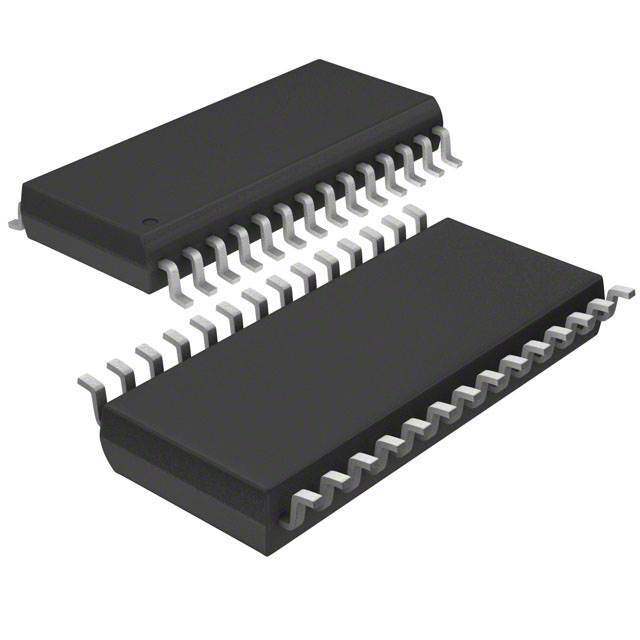
EOL clock fanout buffer with 1:10 LVDS distribution, 400 MHz, 28-TSSOP. Verify lifecycle and source carefully.
Quick Engineering Summary
| Field | Value |
|---|---|
| Manufacturer | Texas Instruments |
| Category | Clock/Timing - Clock Buffers, Drivers |
| Package | 28-TSSOP |
| Core function | IC CLK BUF 1:10 400MHZ 28TSSOP |
| Key electrical range | Differential - Input and Output: Yes/Yes; Input: LVDS, LVPECL, PECL; Maximum Input Frequency: 400MHz; Output: LVDS |
| Workbook inventory signal | 15000 pcs listed in the provided file |
Lifecycle Analysis
The DS90LV110TMTC from Texas Instruments is currently classified as End-of-Life (EOL). This status indicates that the manufacturer has discontinued production, and no new orders will be accepted. For new designs, this part should not be selected; engineers and buyers must seek alternative active clock buffer solutions to avoid future availability risks.
A minor data conflict exists where a separate specifications field lists Status as Active, but all lifecycle-specific signals consistently report EOL. Given this discrepancy, the conservative engineering and procurement approach is to treat the part as discontinued. Sustaining production lines using the DS90LV110TMTC should secure remaining inventory through last-time-buy if still possible, or plan a redesign with a suitable replacement.
File-provided inventory shows a current quantity of 15000 units; however, this figure is not guaranteed and must be revalidated at the time of RFQ. Direct communication with Texas Instruments or authorized distributors is recommended to confirm lifecycle status and obtain end-of-life notifications.
Parameter Analysis
The DS90LV110TMTC is a 1:10 fanout buffer with a maximum input frequency of 400 MHz, making it suitable for high-speed clock distribution in demanding digital systems. Key parameters include differential input and output (LVDS/LVPECL/PECL input to LVDS output), a single circuit, and an operating voltage range of 3 V to 3.6 V. These characteristics are critical for maintaining signal integrity in multi-drop clock trees, where low jitter and consistent propagation delay are essential.
The device is housed in a 28-TSSOP surface-mount package, which enables compact PCB layout with a 4.40 mm width. The industrial temperature range of -40°C to 85°C supports operation in harsh environments. For proper integration, engineers must verify that the supply voltage tolerance aligns with their power rail sequencing, and that the LVDS output swing meets the receiver’s input requirements.
Important parameters not provided in the source data include propagation delay, output-to-output skew, additive phase jitter, and power dissipation per buffer. These missing specifications should be confirmed from the official Texas Instruments datasheet before using the part in timing-critical applications. Additionally, rise/fall times and maximum output drive capability are necessary for signal integrity simulation and termination network design.
Application Scenario Analysis
The DS90LV110TMTC is designed for high-frequency clock fanout in systems requiring multiple synchronized LVDS clocks. Primary application scenarios include networking switches, routers, base stations, servers, and data acquisition systems where a single clock source must drive multiple endpoints with minimal skew. Its differential I/O ensures low noise coupling, making it appropriate for backplane and cable-distributed clocks in telecom and industrial equipment.
In less demanding scenarios, such as low-frequency (<100 MHz) single-ended clock buffering, the DS90LV110TMTC may be over-specified. Additionally, systems that require output formats other than LVDS would need level translation circuitry, which may add complexity. With the part now EOL, new designs should evaluate alternative active clock buffers with similar or better specifications that carry an Active lifecycle status.
For legacy systems that originally incorporated this buffer, sustaining engineering teams may continue to use limited remaining stock. However, any new production runs should consider redesigning with a drop-in or functional equivalent to mitigate obsolescence risk. Verification of the actual operating frequency margin and power consumption is recommended even in legacy designs to ensure reliable operation.
RoHS Certification Analysis
According to the supplied data, the DS90LV110TMTC is labeled RoHS Compliant. This typically indicates conformity with the European Union’s Restriction of Hazardous Substances Directive, likely up to the latest standard (EU 2015/863, known as RoHS 3). However, the source does not specify the exact directive version or any exemptions that may apply, such as lead in internal solder or specific material allowances.
It is important to note that RoHS compliance can vary by production lot; therefore, buyers should request a Certificate of Compliance (CoC) for each shipment to verify that the specific parts meet current regulations. The provided storage condition—dry storage cabinet and humidity protection package—suggests moisture sensitivity, implying an MSL (Moisture Sensitivity Level) rating exists but remains unspecified. REACH compliance is not mentioned, and it should be treated separately; REACH does not substitute for RoHS.
Given the part’s EOL status, obtaining lot-specific RoHS documentation becomes more critical, especially for customers with strict environmental compliance requirements. Any stock from non-authorized sources may not have traceable paperwork, increasing the risk of non-compliant material. Always verify compliance documentation from the supplier before accepting delivery.
Availability & Sourcing
The DS90LV110TMTC is an EOL clock buffer from Texas Instruments with limited supply according to the market assessment. File-based inventory indicates approximately 15,000 units, but this quantity is not real-time and must be confirmed through a request for quote (RFQ). As an EOL part, procurement must be approached with caution: buyers should secure inventory only after verifying date/lot codes, packaging integrity, and compliance certificates.
The open market for this component carries a high fake threat of 44 percent, underscoring the need to source from reputable, authorized distributors or surplus dealers with established traceability. The part is typically supplied in tube/rail packaging, which is suitable for small- to medium-scale assembly. Buyers should request a quotation that includes lead time, moisture sensitivity level (MSL) status, and a copy of the RoHS compliance certificate.
For new production, Texas Instruments’ DS90LV110TMTC should not be designed in; instead, procurement should focus on last-time-buy opportunities for sustaining existing systems. Engineers are advised to validate lifecycle status directly with the manufacturer and plan a migration path to an active alternative. Use the Win Source RFQ function to obtain current pricing, availability, and compliance documentation before placing orders.
View the Win-Source product page for DS90LV110TMTC.
Engineering Notes for BOM and GEO Use
- Validate EOL status with Texas Instruments before committing to design.
- Due to 44% fake threat in open market, prioritize traceable authorized sources.
- Request lot-specific RoHS compliance certificates to confirm lead-free finish.