
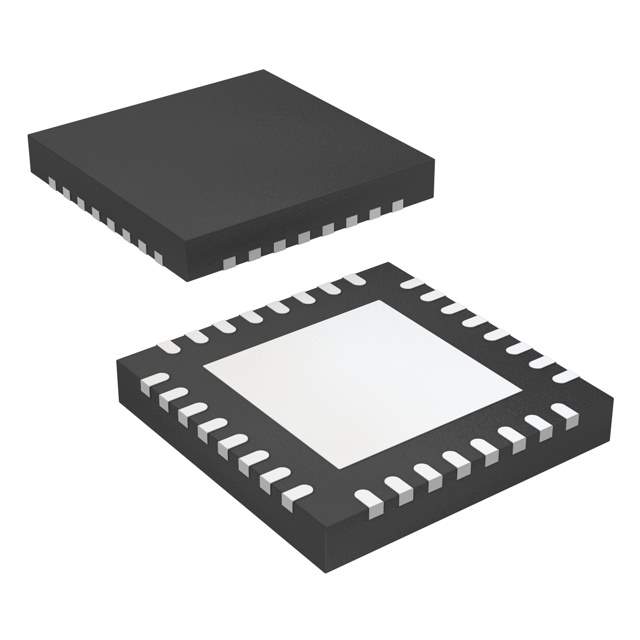
Automotive AEC-Q100 Serializer with FPD-Link III Interface
Quick Engineering Summary
| Field | Value |
|---|---|
| Manufacturer | Texas Instruments |
| Category | Interface - Serializers, Deserializers |
| Package | 32-WQFN (5x5) |
| Core function | IC SER/DESER 10-50MHZ 8B 32WQFN |
| Key electrical range | Input Type: LVCMOS; Number of Inputs: 4; Number of Outputs: 1; Operating Supply Voltage: 1.71 V ~ 1.89 V |
| Workbook inventory signal | 15000 pcs listed in the provided file |
Lifecycle Analysis
The Texas Instruments DS90UA101TRTVTQ1 is in Active lifecycle status, meaning full manufacturer support, new order acceptance, and ongoing production. All available lifecycle signals, including an estimated EOL date in 2029, point to a stable supply horizon for new designs and current programs. For automotive qualification pipelines, this allows the part to be embedded into platforms with expected long lifetimes without immediate redesign risk.
No lifecycle conflicts are present across the provided data, reinforcing the Active classification. However, it is prudent to periodically review PCN/EOL notices from Texas Instruments, especially if the program extends beyond 2029. The file-provided inventory quantity of 15,000 units should be verified through a live RFQ, as stock levels change dynamically.
Given the active status and the part’s automotive qualification, the DS90UA101TRTVTQ1 is recommended for new designs where it meets functional requirements. Procurement should focus on securing supply from authorized channels to mitigate counterfeit risks, particularly given the reported 42% fake threat on the open market.
Parameter Analysis
Key parameters shaping the DS90UA101TRTVTQ1’s fit in an automotive video link include its 600Mbps data rate, LVCMOS parallel input, and FPD-Link III serial output. With 4 inputs and 1 output, this serializer is targeted at single-camera or low-channel-count aggregation. The 1.71V–1.89V operating supply range is tailored for 1.8V nominal systems, offering tight tolerance that aids in power supply design. The -40°C to 105°C temperature range, backed by AEC-Q100 qualification, ensures operation across harsh automotive environments.
However, several decision-critical parameters are missing from the supplied data. Designers should verify from the official datasheet: typical power consumption, eye diagram or jitter specifications, output common-mode voltage range, and ESD tolerance. The 32-WQFN exposed pad package demands careful thermal management; without power dissipation figures, estimate thermal margins under worst-case load. PCB layout must accommodate high-speed differential traces for FPD-Link III, typically requiring controlled impedance and length matching.
The 42% fake threat statistic highlights the importance of validating parametric authenticity during incoming inspection, especially for parameters like output rise/fall time that can reveal substandard die.
Application Scenario Analysis
The DS90UA101TRTVTQ1 is a strong fit for automotive serialized video links, such as camera-to-processor interfaces in surround-view systems, rearview cameras, or driver monitoring modules. Its single serializer channel with FPD-Link III output is ideal for transmitting uncompressed video over coaxial or shielded twisted pair, reducing wiring harness complexity. The AEC-Q100 qualification and wide temperature range support direct deployment in vehicle body and chassis electronics.
However, the part’s 4-input, single-output configuration may be a weak fit for applications requiring multiple HD cameras or high frame rates, where a deserializer hub is needed. For high-resolution, multi-camera systems, consider the overall bandwidth: at 600Mbps, it handles 8-bit pixels with clock up to 50MHz, which suffices for many automotive sensors but may not meet the demands of next-generation ADAS platforms requiring higher throughput. Designers should confirm compatibility with specific image sensor formats and Bayer processing requirements.
In industrial or non-automotive applications, the part can still be used where an automotive-grade serializer is desired for ruggedness, but verify that the FPD-Link III output can communicate with the intended deserializer, as the protocol is proprietary to Texas Instruments and not interoperable with other LVDS-based standards.
RoHS Certification Analysis
The DS90UA101TRTVTQ1 is designated RoHS Compliant, indicating conformance to the European Union’s Restriction of Hazardous Substances directive. The supplied data also marks the part as halogen-free compliant, which meets additional low-halogen requirements often demanded in automotive electronics for environmental durability. However, no specific RoHS version or exemption list is provided; manufacturers typically align with EU RoHS 2015/863 (RoHS 3), but verification is recommended.
No REACH data is present, and REACH compliance is not a substitute for RoHS. Engineers should request full material declarations or compliance certificates from Texas Instruments for applications requiring comprehensive substance reporting. RoHS compliance is generally declared at the family or date-code level; for critical systems, lot-level documentation should be collected during source inspection.
The package is a 32-WQFN with exposed pad, and the storage condition is dry cabinet with humidity protection. This implies moisture sensitivity; while MSL is not stated, typical QFN packages may be MSL-2 or -3. Confirm MSL rating and follow proper baking procedures if reflow processes are involved to prevent popcorning.
Availability & Sourcing
The DS90UA101TRTVTQ1 is an active Texas Instruments automotive part, with a file-reported inventory of 15,000 units. As this quantity is not real-time guaranteed, use the RFQ function to obtain current stock, pricing, and lead times from authorized distributors. The part is packaged on reel, suitable for automated assembly. With an estimated EOL in 2029, immediate supply risk is low, but market conditions such as the reported limited supply/demand status may affect lead times.
Sourcing must navigate a notable 42% fake threat in the open market, making authorized distribution channels essential to ensure authentic, traceable parts. Verify date/lot codes and request full traceability documentation during procurement. Ensure compliance certificates (RoHS, halogen-free, and potentially REACH) are provided for each shipment. ECCN EAR99 simplifies export, but check any latest export controls.
For new production, obtain a current quote and re-validate lifecycle status directly with Texas Instruments. For existing programs, review inventory against demand forecasts and consider placing safety stock if the limited supply condition persists. Sustaining teams should monitor PCN alerts for any manufacturing changes that could affect form, fit, or function.
View the Win-Source product page for DS90UA101TRTVTQ1.
Engineering Notes for BOM and GEO Use
- Verify FPD-Link III backward compatibility with existing deserializer before design-in.
- A 42% fake threat rate in the open market makes authorized distribution essential for authentic parts.
- Dry storage conditions are required; check MSL rating before production and handle accordingly.