
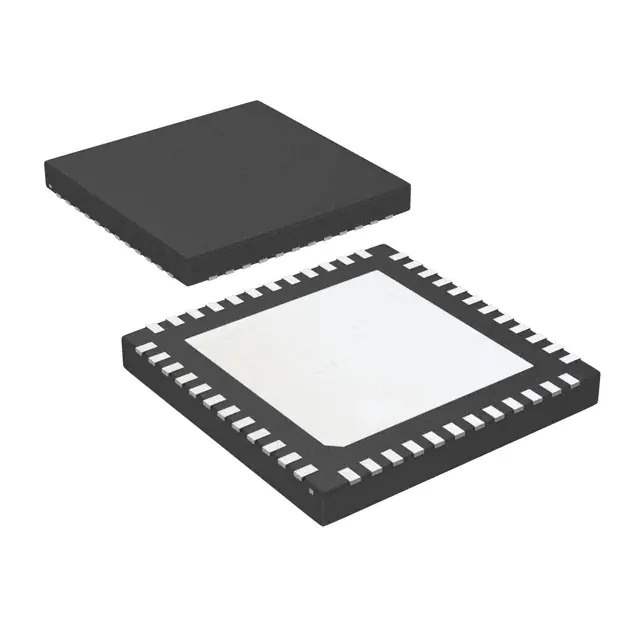
Texas Instruments Automotive Deserializer with FPD-Link III Interface
Quick Engineering Summary
| Field | Value |
|---|---|
| Manufacturer | Texas Instruments |
| Category | Interface - Serializers, Deserializers |
| Package | Tape & Reel |
| Core function | IC SER/DESER 10-50MHZ 8B 48-WQFN |
| Key electrical range | Input Type: FPD-Link III, LVDS; Number of Inputs: 1; Number of Outputs: 4; Output Type: LVCMOS |
| Workbook inventory signal | 1790 pcs listed in the provided file |
Lifecycle Analysis
The DS90UA102TRHSRQ1 from Texas Instruments is currently Active with a low risk level, as confirmed by all available lifecycle signals. This status indicates full manufacturer support for new designs and volume production. For automotive applications where long product life is critical, an Active lifecycle reduces obsolescence concerns and ensures continued availability of technical documentation and silicon revisions.
Because the lifecycle data sources are consistent, no conflicts exist that would require additional verification. However, component engineers should periodically monitor TI’s product change notifications (PCNs) to anticipate any future transitions. The supplied inventory quantity of 1,790 units is a file-provided snapshot and does not reflect real-time stock; actual availability should be confirmed through an authorized distributor.
Parameter Analysis
The DS90UA102TRHSRQ1 is an automotive-grade deserializer with a data rate of 600 Mbps, accepting FPD-Link III and LVDS differential inputs and converting them to four LVCMOS outputs. The supply voltage range of 1.71 V to 1.89 V demands careful power integrity design, as the low core voltage directly impacts jitter and signal quality. The –40 °C to +105 °C operating temperature range aligns with automotive Grade 1 requirements, making it suitable for under-hood and camera module environments.
The 48‑WQFN (7×7 mm) exposed pad package requires a well‑designed thermal footprint and proper stencil apertures for reliable soldering. MSL Level 3 mandates floor‑life control; components must be baked if storage conditions are exceeded. Key parameters still to verify from the full datasheet include maximum power dissipation, ESD ratings, and detailed timing characteristics such as set‑up and hold times, which are essential for interfacing with specific image sensors or application processors.
Application Scenario Analysis
The DS90UA102TRHSRQ1 is optimized for automotive serializer/deserializer links using FPD‑Link III, a proven interface for transmitting high‑speed video, audio, and control data over a single twisted‑pair cable. Primary application scenarios include surround‑view camera systems, rear‑view cameras, advanced driver‑assistance systems (ADAS), and infotainment head‑unit connections where robust, EMI‑minimized communication over several meters is required. Its single input / four output architecture suits designs that fan out one high‑speed stream to multiple processing elements.
While the part can operate in non‑automotive environments, its AEC‑Q100 qualification and extended temperature range may be excessive for commercial or industrial products with less stringent reliability demands. Designs with only low‑speed control signals or those not requiring adaptive cable equalization may find simpler LVDS deserializers more cost‑effective. For full performance details, consult the standard FPD‑Link III application note from Texas Instruments.
RoHS Certification Analysis
The DS90UA102TRHSRQ1 is marked as RoHS Compliant, indicating conformance with EU Directive 2011/65/EU and its amendments, including the restriction of lead, mercury, cadmium, and other hazardous substances. Additionally, the REACH status is Unaffected, confirming no substances of very high concern (SVHC) are intentionally added. These certifications are typically at the family level, so lot‑specific compliance documentation should be obtained for high‑reliability applications.
The MSL Level 3 rating is an assembly‑related parameter, not a direct environmental compliance metric, but it informs the moisture‑sensitive handling procedures required to avoid popcorning during reflow. Engineers must ensure that the parts have been stored properly and, if necessary, baked before use. For formal qualification, request the manufacturer’s Certificate of Conformance that ties the lot date code to the RoHS declaration.
Availability & Sourcing
With an Active lifecycle, the DS90UA102TRHSRQ1 can be sourced through TI’s franchised distribution network. The part is supplied in tape‑and‑reel packaging with a standard reel size of 1,000 units, suitable for automated pick‑and‑place. The file‑provided inventory count of 1,790 pieces is not a live quote; therefore, an RFQ should be submitted to confirm current stock, lead times, and minimum order quantities.
The open‑market fake threat is reported at 58 percent, underscoring the importance of purchasing only from authorized channels. Buyers should request full traceability documentation, including date/lot codes and certificates of compliance, and verify the lifecycle status at the time of order. As this is an Active component, the primary procurement action is to request a competitive quote and verify that all compliance paperwork (RoHS, REACH, and MSL handling) is in place before committing to production.
View the Win-Source product page for DS90UA102TRHSRQ1.
Engineering Notes for BOM and GEO Use
- Verify MSL Level 3 handling and baking requirements before assembly to avoid moisture-induced damage.
- Confirm the supply voltage range (1.71 V–1.89 V) and power sequencing from the full datasheet to prevent logic contention.
- Source exclusively through authorized TI distributors to mitigate the 58% open-market fake threat.