
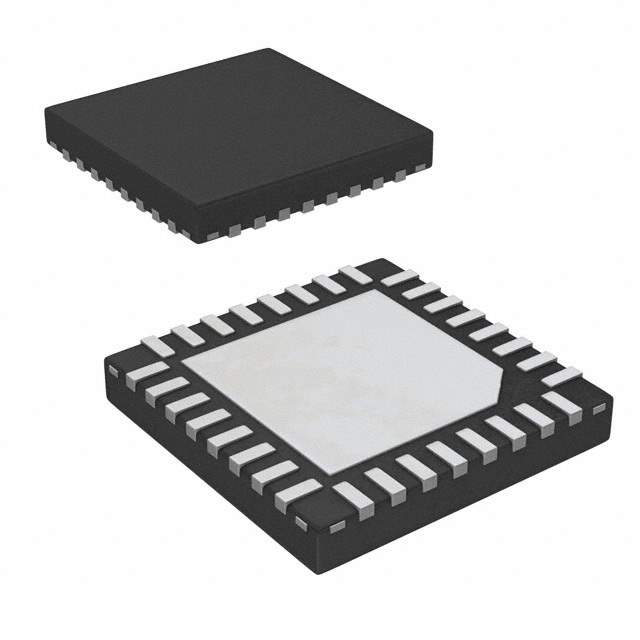
Automotive-grade serializer with 12-bit LVCMOS input and FPD-Link III output in a 32-WQFN package, AEC-Q100 qualified.
Quick Engineering Summary
| Field | Value |
|---|---|
| Manufacturer | Texas Instruments |
| Category | Interface - Serializers, Deserializers |
| Package | 32-WQFN (5x5) |
| Core function | IC SERIALIZER FPD-LINK 32WQFN |
| Key electrical range | Input Type: LVCMOS; Number of Inputs: 12; Number of Outputs: 2; Output Type: LVCMOS |
| Workbook inventory signal | 40000 pcs listed in the provided file |
Lifecycle Analysis
The DS90UB933TRTVTQ1 is shown as Active by Texas Instruments, with all lifecycle signals aligned—Excel lifecycle, status, and supply-demand status all indicate no discontinuation or NRND flags. This means the part is currently in full production, supported for new designs, and suitable for both prototype builds and volume manufacturing. No lifecycle conflicts exist in the provided data.
However, as with any active semiconductor, design teams should periodically revalidate the lifecycle status through TI’s product page or an authorized distributor, especially before committing to long-term programs. The file-provided inventory quantity of 40,000 units is an indication of recent supply availability but must not be treated as real-time stock. For sustaining production, procurement should monitor lead times and consider second-source risks if this is a sole-source serializer in a critical path.
In sum, the DS90UB933TRTVTQ1 carries low procurement risk for new designs, but lifecycle monitoring remains a best practice for any automotive-grade component where qualification cycles are lengthy.
Parameter Analysis
Key parameters driving the DS90UB933TRTVTQ1’s electrical fit include its 12-bit parallel LVCMOS input and two differential serial outputs, which define the parallel-to-serial mapping. The operating supply voltage of 1.71 V to 1.89 V dictates a low-voltage power architecture; engineers must ensure the rail stays within this narrow window to avoid timing violations or corrupted serial streams. The -40°C to +105°C (TA) temperature range, combined with AEC-Q100 qualification, makes this serializer viable for harsh automotive environments, but thermal margin analysis should account for the 32-WQFN package’s junction-to-ambient resistance.
Missing from the provided data are the maximum FPD-Link III payload rate, power dissipation figures, and ESD ratings. The payload rate determines compatibility with camera sensors; without it, the pixel clock and total data throughput cannot be verified. Designers must consult the full TI datasheet for these specifications, as well as for jitter tolerance, eye diagram masks, and recommended external component values. For PCB layout, the exposed pad and signal routing requirements are critical—these are not detailed here but are essential for signal integrity at multi-gigabit speeds.
When integrating the DS90UB933TRTVTQ1, also verify the input logic levels match the sensor’s output, and check the deserializer pairing for backward compatibility. The specifications list only basic interfacing; complete characterization from the manufacturer is necessary before final design freeze.
Application Scenario Analysis
The DS90UB933TRTVTQ1 is designed for automotive camera and video links using the FPD-Link III protocol. Strong-fit applications include surround-view camera systems, rearview cameras, and driver monitoring cameras where the chip serializes parallel video data from an image sensor for transmission over a single coaxial or STP cable. Its AEC-Q100 qualification and wide temperature range directly support underhood or exterior camera modules subject to thermal extremes.
Moderate-fit scenarios involve non-automotive industrial or medical video links that happen to use FPD-Link III. If the deserializer and protocol selection are already fixed to FPD-Link, the DS90UB933TRTVTQ1 can serve, but the automotive-specific test flows and qualification come at a potential premium. Conversely, for general-purpose high-speed serial links without the FPD-Link protocol lock, other serializers may be more cost-optimized. The part is not suitable for applications requiring serializer-deserializer independence from the FPD-Link ecosystem, nor for extremely low-power battery-operated devices, as the power dissipation profile is unknown but likely moderate given the technology node.
In summary, this component is a best fit when paired with a compatible FPD-Link III deserializer in an automotive safety or driver-assistance application, where the AEC-Q100 pedigree is a design-in requirement.
RoHS Certification Analysis
The DS90UB933TRTVTQ1 is marked as RoHS Compliant in the source data. Without an explicit directive version stated, this typically refers to the EU RoHS directive (2011/65/EU) and its amendments, including RoHS 3 (EU 2015/863). This status indicates that the part does not intentionally contain lead, mercury, cadmium, hexavalent chromium, PBBs, or PBDEs above the maximum concentration values, nor the four phthalates added under RoHS 3.
However, RoHS compliance is often declared at the component family level; lot-level or date-code-specific certificates should be obtained from the manufacturer or distributor when full compliance documentation is required for EU market access. The provided data does not list any specific exemptions, but engineers should verify that no exemptions apply, such as lead in internal solder balls or die attach, by reviewing the official TI RoHS certificate. Additionally, REACH and MSL information are not available here—request the Material Safety Data Sheet (MSDS) and REACH Conformance Statement if full chemical substance reporting is needed.
In practice, this component can be specified for RoHS-compliant assemblies, but the procurement team should confirm that the packaging and terminal finish are indeed lead‑free and that the part’s moisture sensitivity level aligns with the assembly flow to prevent reflow damage.
Availability & Sourcing
Procurement of the DS90UB933TRTVTQ1 should start from its active lifecycle status, which allows for standard RFQ processes through Texas Instruments’ distribution network. The file‑provided workbook quantity of 40,000 units suggests a historically available buffer, but this is not a guarantee of live inventory. Buyers must request a current quote to obtain lead time, real‑time stock levels, and logistics details. The part is supplied in tape‑and‑reel packaging (TR), suitable for automated SMT placement, and recommended storage conditions are dry and humidity‑protected.
A notable supply‑chain risk is the 38% counterfeit threat indicated in the open market. To mitigate this, sourcing should be restricted to TI franchised distributors or directly from TI, with mandatory lot traceability, date‑code verification, and full component provenance documentation. For high‑reliability automotive programs, consider incoming inspection that includes electrical testing and visual inspection against known‑good samples. If the DS90UB933TRTVTQ1 becomes constrained, having an alternate source qualified—though uncommon for such protocol‑specific devices—can reduce line‑down risk.
To secure supply, request a quote that includes compliance documentation (RoHS certificate, REACH statement, PPAP/IMDS if required) and confirm the current lifecycle status. Even though the part is active, building a buffer stock for long‑lead production runs is prudent given the lengthy qualification cycles in automotive platforms.
View the Win-Source product page for DS90UB933TRTVTQ1.
Engineering Notes for BOM and GEO Use
- Confirm maximum FPD-Link III payload rate from the official datasheet to ensure it meets your video resolution and frame rate requirements.
- The 1.71 V–1.89 V supply demands tight regulation; design with low-noise LDO or dedicated PMIC output to avoid jitter corruption.
- Given a 38% open-market counterfeit threat, purchase only through TI authorized distributors and insist on full lot traceability documentation.