
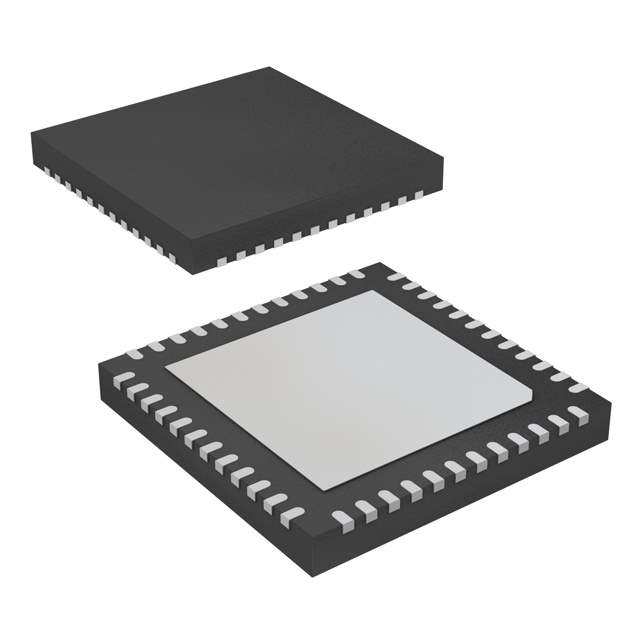
12-bit FPD-Link III Deserializer for Automotive Camera & Display Systems
Quick Engineering Summary
| Field | Value |
|---|---|
| Manufacturer | Texas Instruments |
| Category | Interface - Serializers, Deserializers |
| Package | 48-VQFN (7x7) |
| Core function | IC DESERIALIZER 12 BIT 48-VQFN |
| Key electrical range | Input Type: FPD-Link III, LVDS; Number of Inputs: 1; Number of Outputs: 12; Operating Supply Voltage: 1.71 V ~ 1.89 V |
| Workbook inventory signal | 4500 pcs listed in the provided file |
Lifecycle Analysis
The DS90UB934TRGZTQ1 is classified as Active by Texas Instruments, indicating that the part is currently in mass production and available for new designs. All lifecycle signals inspected—manufacturer status, estimated EOL date of 2029—are consistent, resulting in a low risk level for new product introduction. This automotive-qualified deserializer benefits from an announced production timeline extending several years, which supports long-life automotive programs.
However, the supply-and-demand status is noted as limited, meaning that allocation or lead-time fluctuations may occur. The file-provided inventory quantity of 4500 units at Win Source is not a real-time guarantee; buyers should confirm availability directly with authorized distributors. For new designs, plan around possible lead-time extension and consider whether a second-source deserializer might be needed for supply chain resilience. Sustaining production users should proactively monitor TI’s official product change notifications and order backlog to avoid unexpected shortages.
Parameter Analysis
Critical parameters for the DS90UB934TRGZTQ1 include a maximum data rate of 1.87Gbps, FPD-Link III serial input, and 12-bit parallel LVCMOS output. The operating supply voltage range of 1.71V to 1.89V is narrow, requiring clean, stable power with adequate decoupling. The automotive temperature range of -40°C to +105°C (TA) makes it suitable for harsh environments, and AEC-Q100 qualification adds reliability for automotive systems.
The 48-VQFN (7x7) exposed pad package demands careful PCB thermal design—insufficient vias or copper area can lead to overheating. Input equalization and cable drive compensation are configurable through device registers; ignoring these can degrade signal integrity over typical automotive coaxial or STP cabling. Datasheet parameters such as jitter tolerance, output eye diagram, and power consumption under various output loads are not provided in the source data and should be verified directly from the manufacturer's datasheet when designing high-speed links.
Integration considerations include the need for external power sequencing supervision and proper termination on the FPD-Link III channel. The device’s single serial input limits it to one link, so multi-camera systems will require multiple deserializers. Buyers should also confirm the exact pin-to-pin compatibility with earlier revisions if planning a drop-in replacement.
Application Scenario Analysis
The DS90UB934TRGZTQ1 is designed primarily for automotive camera and display applications that leverage FPD-Link III serialization. Strong-fit scenarios include surround-view camera modules streaming video to a central ADAS processor, rear-view camera links, and driver monitoring systems. The AEC-Q100 qualification and extended temperature range confirm its robustness for on-vehicle deployment.
In industrial machine vision systems, the deserializer can be used where FPD-Link III cameras are already deployed, provided cabling distances and EMC requirements align with automotive-grade design margins. However, it is a weak fit for low-cost commercial camera links not requiring automotive reliability, as the integrated features and interface come at a premium. Also, for applications exceeding 1.87Gbps data throughput or requiring more than 12 bits of pixel depth, this part may be insufficient, and a higher-bandwidth deserializer from TI’s FPD-Link portfolio should be evaluated.
The device’s single-input configuration makes it ideal for point-to-point camera links but less suited for systems needing multiple camera aggregation on a single chip. Engineers should assess cable quality, connector choice, and ESD protection components to ensure the entire link meets automotive EMC standards.
RoHS Certification Analysis
The source data lists DS90UB934TRGZTQ1 as RoHS Compliant and halogen-free compliant. This indicates adherence to the EU RoHS directive's substance restrictions, likely RoHS 2 (2011/65/EU) or RoHS 3 (2015/863) given the part's active automotive status. Texas Instruments typically publishes full material declarations and certificates of compliance for their products, which should be requested during formal qualification.
While REACH compliance is not explicitly mentioned in the provided specifications, it is common for TI ICs to meet REACH requirements; however, this must be confirmed via the manufacturer's official REACH statement. The halogen-free designation is an additional environmental assurance that may be important for some OEMs.
For contract manufacturing or export to regions with evolving environmental regulations, it is prudent to obtain a lot‑specific compliance certificate that covers the specific date code you receive. The absence of an MSL (moisture sensitivity level) rating in the source data means that proper handling per the 48‑VQFN package guidelines should be reviewed in the manufacturer's documentation to avoid reflow soldering issues.
Availability & Sourcing
The DS90UB934TRGZTQ1 is in active production, but supply is currently listed as limited, meaning allocation or extended lead times may apply. The file-provided stock quantity of 4500 units at Win Source is not real-time; always submit an RFQ to confirm current availability, pricing, and delivery terms. The part is packaged on reels (TR) for high-volume SMT assembly, and the storage condition recommends a dry storage cabinet with humidity protection, consistent with typical VQFN handling requirements.
Given the 50% counterfeit threat rating in the open market, procurement should strictly favor Texas Instruments authorized distributors or approved aftermarket providers. Request full traceability documentation, including date/lot codes, to verify authenticity and avoid risk of non-compliance. Because the part is active, the call to action is to obtain a current quote and compliance package for verification.
For sustaining production, ensure continuity by monitoring TI's official obsolescence or PCN notifications. Although the estimated EOL date is 2029, long-term program managers should plan for a potential last-time buy window and identify pin-compatible or drop-in alternatives from TI’s FPD-Link series as a contingency. For new designs, include procurement lead-time in project schedules and negotiate supply agreements where volume commitments are required.
View the Win-Source product page for DS90UB934TRGZTQ1.
Engineering Notes for BOM and GEO Use
- Verify input FPD-Link III channel equalization settings match cable length to maintain signal integrity across the 1.87Gbps link.
- Ensure supply voltage ripple is within 1.71V–1.89V and follow manufacturer layout guidelines for the exposed thermal pad to manage heat.
- Source only from authorized distributors; with 50% open market counterfeit risk, request traceable lot codes and full compliance documentation.