
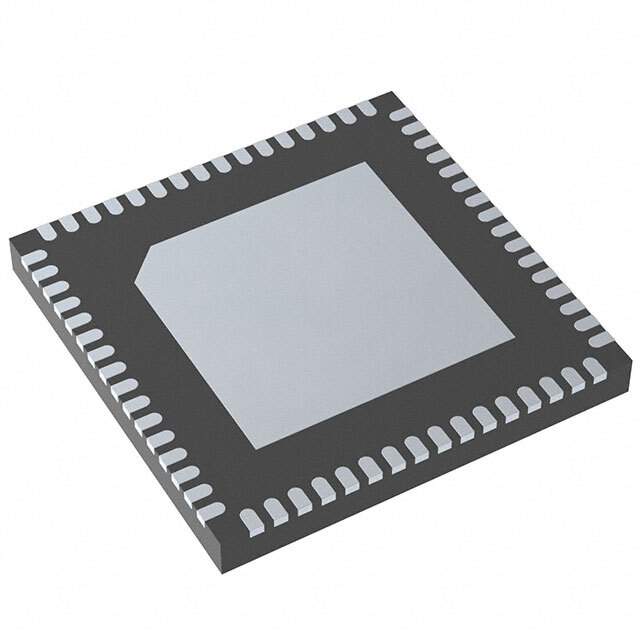
1080p LVDS to CML Serializer with FPD-Link III Output
Quick Engineering Summary
| Field | Value |
|---|---|
| Manufacturer | Texas Instruments |
| Category | Interface - Serializers, Deserializers |
| Package | M122 |
| Core function | 1080P LVDS TO CML SERIALIZER |
| Key electrical range | Operating Temperature: -40°C ~ 85°C; Voltage - Supply: 3V |
| Workbook inventory signal | 1 pcs listed in the provided file |
Lifecycle Analysis
The DS90UB947NTRGCRQ1 serializer from Texas Instruments is classified as Active with a low risk level. All lifecycle signals in the source data align without conflict, indicating the component remains in full production and is available for new designs. For engineers evaluating this part for upcoming programs, the Active status provides confidence that design-in resources, silicon errata, and long-term support are available through TI’s standard product lifecycle.
From a procurement perspective, Active does not guarantee unrestricted supply at all times; lead times can fluctuate based on demand and fab loading. The file-provided inventory shows only a single unit, which is an informational snapshot and not real-time availability. It is essential to request a current quote to confirm stock levels and production schedules. Authorized distributors and direct TI channels are the preferred sources to minimize counterfeiting risks and ensure traceability.
When integrating the DS90UB947NTRGCRQ1 into safety-critical automotive systems, verify that the manufacturer’s PCN (Product Change Notification) process is in place and that your bill of materials lifecycle matches the system’s expected production lifespan. For sustaining programs, no immediate last-time-buy or migration action is required.
Parameter Analysis
The DS90UB947NTRGCRQ1 is a high-speed serializer that bridges parallel LVDS video data to a serial FPD-Link III interface. The source data indicates a data rate of 3.36 Gbps, making it suitable for uncompressed 1080p video at standard frame rates. It features 8 LVDS inputs and 2 FPD-Link III outputs, providing redundancy or dual-stream capability for surround-view or mirror replacement systems.
Critical design parameters include the three supply voltage rails: 1.045–1.155 V, 1.71–1.89 V, and 3.135–3.465 V. Power sequencing and decoupling must follow TI’s datasheet recommendations to avoid latch-up or damage. The operating temperature range of -40°C to 105°C (TA) aligns with automotive Grade 2 requirements, and the AEC-Q100 qualification confirms reliability testing for harsh environments.
A significant point of verification is the physical package. The Excel‑row parameter string lists a 64‑VQFN (9x9) package, which is consistent with TI’s typical footprint for this family. However, the aggregated specifications array includes conflicting entries such as “Package: M122”, “Package / Case: 4‑SMD, No Lead”, and “Supplier Device Package: SOT‑6”. These appear to be data‑entry artifacts and should not be used for PCB design. Engineers must obtain the official TI package drawing (likely RGC or equivalent) and verify footprint dimensions, thermal pad requirements, and solder stencil design. The mounting type is listed as “Fixed”, which likely refers to surface‑mount with an exposed pad for thermal management.
Application Scenario Analysis
The DS90UB947NTRGCRQ1 is purpose‑built for automotive video distribution where high electromagnetic compatibility (EMC) and robustness are mandatory. Its FPD‑Link III output uses current‑mode logic (CML) drivers that enable transmission over low‑cost coaxial or shielded twisted‑pair cables up to typically 15 meters. Strong‑fit applications include automotive head units, digital instrument clusters, and advanced driver‑assistance systems (ADAS) that require 1080p video from cameras or graphic processors to remote displays.
A less optimal fit would be general‑purpose LVDS‑to‑CML conversion in non‑automotive environments where the AEC‑Q100 qualification and extended temperature range add unnecessary cost. Similarly, designs that require raw LVDS outputs or non‑FPD‑Link III protocols would find this serializing function incompatible. The device is tailored to TI’s FPD‑Link ecosystem, so pairing with a compatible deserializer (such as DS90UB948‑Q1) is essential for a complete link.
For industrial inspection, medical imaging, or drone video links that can tolerate the automotive qualification, the DS90UB947NTRGCRQ1 may still serve as a rugged serializer, but designers must confirm that the video format (e.g., color depth, blanking) matches the serializer’s pixel‑clock constraints. Always validate using the TI reference design to ensure link margins.
RoHS Certification Analysis
The source data states that the DS90UB947NTRGCRQ1 is RoHS Compliant, but does not specify the exact directive or assessment level. In most cases, Texas Instruments declares compliance with EU RoHS Directive 2011/65/EU and its amendment 2015/863, which restricts lead, mercury, cadmium, and other hazardous substances. Without a provided certificate, procurement teams should treat this as a starting point and obtain the full material declaration from TI for the specific date/lot code.
Automotive-grade components sometimes use exemptions, such as 7(c)-I for lead in high‑melting‑temperature solders or 15 for lead in solders used in certain integrated circuits. The compliance note does not indicate whether any exemptions apply. If your end product is destined for the European market, verify that the supplied part carries a CE marking and that the supplier can provide a valid EU Declaration of Conformity upon request.
Because the DS90UB947NTRGCRQ1 is an AEC‑Q100 device, additional environmental compliance requirements such as REACH and halogen‑free status may also be relevant. While REACH is not a direct substitute for RoHS, asking for both declarations during sourcing ensures full chemical substance reporting and reduces compliance risk during manufacturing line audits.
Availability & Sourcing
As an Active part from Texas Instruments, the DS90UB947NTRGCRQ1 can be sourced through authorized distribution channels for new production. The file‑provided workbook quantity shows only one unit, which is not a guaranteed real‑time inventory level. Engineers and buyers should request a quote for current availability, lead times, and minimum order quantities from TI or its franchised distributors. This RFQ workflow will also confirm packaging options (typically tape and reel for the TR suffix) and provide date/lot codes for traceability.
When ordering, specify the exact manufacturer part number, DS90UB947NTRGCRQ1, and request full compliance documentation, including RoHS certificates and AEC‑Q100 qualification summaries. Because the device is automotive‑qualified, lot‑level traceability and PPAP (Production Part Approval Process) documentation may be available on request. This supports quality audits and incoming inspection requirements for automotive production lines.
For engineers evaluating this serializer in new designs, obtain samples or small quantities directly from TI’s website or an authorized distributor to validate performance. Given the conflicting package information in aggregated data sources, physically inspecting a sample against the official datasheet drawing is strongly recommended before committing to a PCB layout. Since lifecycle status is Active, there is no urgency to purchase end‑of‑life stock, but monitoring availability and lead‑time trends is a sound procurement practice.
View the Win-Source product page for DS90UB947NTRGCRQ1.
Engineering Notes for BOM and GEO Use
- Confirm the correct package type (64-VQFN per TI datasheet vs. conflicting SOT-6/4-SMD in some aggregated listings) before PCB layout.
- Verify the three supply voltage rails (1.045–1.155 V, 1.71–1.89 V, 3.135–3.465 V) and their sequencing requirements from the official datasheet.
- Obtain the AEC-Q100 qualification summary for reliability in automotive environments and check that the test conditions match your application profile.