
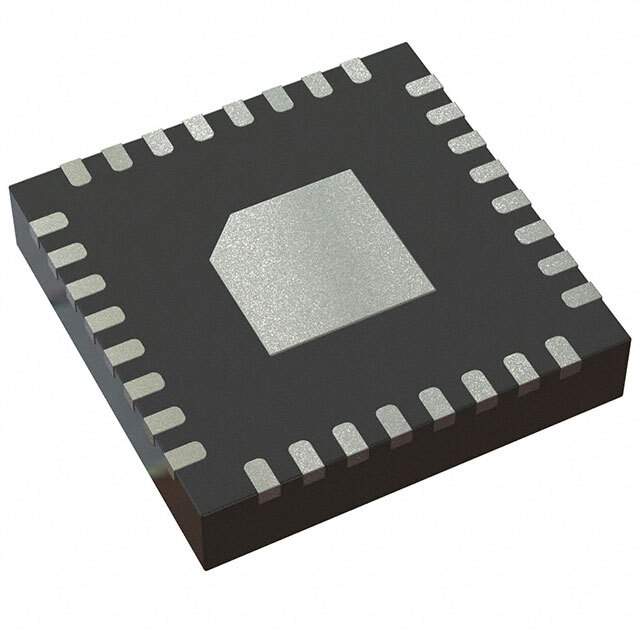
Texas Instruments Automotive FPD-Link III Serializer – Specs, Sourcing & Compliance Guide
Quick Engineering Summary
| Field | Value |
|---|---|
| Manufacturer | Texas Instruments |
| Category | Interface - Serializers, Deserializers |
| Package | 32-VFQFN Exposed Pad |
| Core function | CSI2 FPD3 SERIALIZER |
| Key electrical range | Input Type: FPD-Link III, LVDS; Number of Inputs: 1; Number of Outputs: 1; Output Type: CSI-2, MIPI |
| Workbook inventory signal | 7700 pcs listed in the provided file |
Lifecycle Analysis
The DS90UB953TRHBTQ1 is in Active lifecycle status, indicating full production and availability from Texas Instruments. This status supports both new design starts and ongoing production requirements. No inconsistencies are present in the supplied lifecycle signals.
For automotive programs with long development cycles, active status provides confidence in initial sourcing, but it does not guarantee availability throughout the vehicle’s life. Engineers should monitor Texas Instruments’ official product change notifications (PCN) and end-of-life (EOL) announcements to anticipate any changes. Sustaining programs are advised to maintain buffer stock and secure multi-year supply agreements where possible.
Parameter Analysis
The DS90UB953TRHBTQ1 supports a data rate of up to 4.16Gbps, making it suitable for high-resolution camera links in automotive systems. The device operates from a single 1.71V to 1.89V supply and over an industrial-automotive temperature range of -40°C to 105°C, indicating robustness for under-hood environments. The 32-VQFN (5x5 mm) package with exposed pad provides good thermal performance but requires careful PCB layout to ensure signal integrity at gigahertz speeds.
Critical gaps remain in the supplied data. The listed input type (FPD-Link III, LVDS) and output type (CSI-2, MIPI) conflict with the product description and typical serializer function; the official Texas Instruments datasheet indicates CSI-2 input and FPD-Link III output. Similarly, the number of inputs is specified as 1, while the raw part data suggests 4 CSI-2 lanes. Engineers must verify these details, along with the power consumption, ESD ratings, and MIPI compliance version, before finalizing the design. The device is rated MSL 3, requiring strict handling to avoid moisture-related damage.
Application Scenario Analysis
The DS90UB953TRHBTQ1 is optimized for automotive camera applications, providing a compact serial link between high-resolution image sensors and central processing units. Typical use cases include advanced driver assistance systems (ADAS), surround-view cameras, rear-view cameras, and driver monitoring systems. The serializer reduces wiring by transmitting video, control, and power over a single coaxial or STP cable when paired with a compatible deserializer.
Given the high data rate and automotive qualification, this part is a strong fit for new automotive camera module designs. It may also serve in industrial vision systems that require long-reach, robust serial links, though the AEC-Q100 qualification underscores its primary target market. For non-automotive applications, designers should evaluate whether the automotive-grade temperature range and qualification are necessary, as they may introduce cost overhead. Any design using this device must reference the official datasheet to confirm the exact I/O mapping and lane configuration to avoid connectivity mismatches.
RoHS Certification Analysis
The DS90UB953TRHBTQ1 is listed as RoHS Compliant, indicating compliance with EU Directive 2011/65/EU and its amendments, including RoHS 3 (2015/863). No specific exemptions are cited in the available data, which typically implies the device does not rely on any RoHS exemptions for the listed homogeneous materials. The MSL level is 3, meaning it can be stored sealed for 168 hours at 30°C/60% relative humidity; beyond this, baking is recommended before soldering.
To ensure full compliance documentation for production sourcing, request the manufacturer’s RoHS certificate and, if relevant, a REACH declaration. Since this is an automotive-grade part, the certificate should also confirm that no substances prohibited by the End-of-Life Vehicles (ELV) directive are present. For safety-critical systems, verify that the RoHS status applies to the specific date/lot code procured, as family-level declarations may not cover all variants.
Availability & Sourcing
File-provided inventory indicates approximately 7,700 units, but this is not a live stock commitment. Actual availability can vary; therefore, a formal request for a quote is essential. The open market carries a 56 percent fake threat level for this part, making authorized distribution channels critical to avoid counterfeit or non-automotive-grade devices. The device is supplied in reel packaging with a manufacturer pack quantity of 250 units.
Given its Active lifecycle status, standard procurement practices are appropriate: request a quote from authorized sources, verify date/lot codes for traceability, and obtain a certificate of conformance. The supply and demand balance suggests adequate market availability, but for large production runs, secure inventory agreements to mitigate allocation risks. For automotive programs, ensure the distributor provides full traceability back to Texas Instruments and that the AEC-Q100 qualification documentation is available.
View the Win-Source product page for DS90UB953TRHBTQ1.
Engineering Notes for BOM and GEO Use
- Verify FPD-Link III input versus CSI-2 output mapping against the official datasheet; supplied data conflicts with the product description.
- Secure authorized-sourced components to avoid the 56% fake threat and guarantee genuine AEC-Q100 automotive qualification.
- Adhere to MSL 3 handling: bake parts if the floor life of 168 hours is exceeded before reflow soldering.