
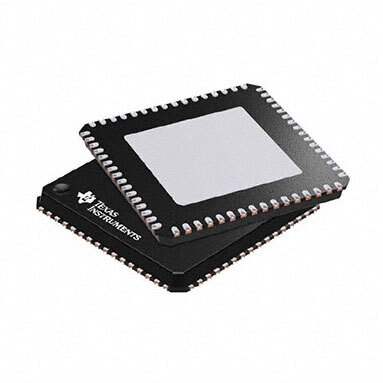
Automotive FPD-Link III Deserializer, 4.16Gbps, AEC-Q100, 64-VQFN, Active
Quick Engineering Summary
| Field | Value |
|---|---|
| Manufacturer | Texas Instruments |
| Category | Interface - Serializers, Deserializers |
| Package | Tape & Reel |
| Core function | INTERFACE IC MISC |
| Key electrical range | Input Type: FPD-Link III, LVDS; Output Type: CSI-2, MIPI; Temperature Range - Operating: -40°C ~ 105°C (TA); Voltage - Supply: 1.045V ~ 1.155V, 1.71V ~ 1.89V |
| Workbook inventory signal | 8800 pcs listed in the provided file |
Lifecycle Analysis
Texas Instruments DS90UB960WRTDRQ1 is classified as Active with a low lifecycle risk, and all available signals from the manufacturer confirm this status without conflicts. For new designs in automotive camera and video systems, the DS90UB960WRTDRQ1 can be confidently selected, as its active status ensures ongoing production, documentation support, and availability of AEC-Q100 qualification data.
As an Active part in a long-life automotive portfolio, procurement teams should still plan periodic lifecycle revalidation through manufacturer product change notices (PCNs) or direct inquiry, given the extended product lifetimes typical in automotive supply chains. The file-provided inventory quantity of 8,800 units is a snapshot and not a guarantee of real-time stock; always verify availability with authorized distributors before committing to production schedules.
Parameter Analysis
The DS90UB960WRTDRQ1 is a deserializer that converts FPD-Link III and LVDS serial inputs into MIPI CSI-2 outputs, achieving up to 4.16 Gbps aggregate data rate. This high-speed serial interface is critical for automotive camera links, enabling uncompressed video transmission over cost-effective cables. The device operates from dual supply voltages: a core supply of 1.045 V to 1.155 V and an I/O supply of 1.71 V to 1.89 V, which requires careful power sequencing and decoupling in PCB design to meet signal integrity requirements.
The automotive temperature range of -40°C to +105°C (TA) and AEC-Q100 qualification ensure reliable operation in harsh vehicle environments. The 64-VQFN exposed pad package with an MSL level of 3 demands strict moisture control during assembly; a 168-hour floor life necessitates dry packing and baking if exposed. Key missing specifications that designers must verify from the full Texas Instruments datasheet include input channel count, supported video resolutions and pixel clock ranges, adaptive equalizer settings, and MIPI lane configuration options. These parameters directly influence system-level integration and should not be assumed from preliminary data.
Application Scenario Analysis
The DS90UB960WRTDRQ1 excels in automotive applications where multiple high-resolution cameras feed into a central processing unit, such as advanced driver-assistance systems (ADAS), surround-view monitoring, and autonomous vehicle sensor fusion. Its deserializer function tailors it specifically for the receiving side, aggregating up to four FPD-Link III inputs into a consolidated MIPI CSI-2 output—ideal for consolidating camera data into an ECU vision processor.
In non-automotive use cases that require robust serial deserialization but not full automotive qualification, the DS90UB960WRTDRQ1 may still serve, though the AEC-Q100 premium may lead designers to consider industrial-grade alternatives if cost and temperature range allow. The device’s low-voltage differential signaling and integrated termination also suit high-speed video links in medical imaging or industrial inspection, but the lacking explicit broadcast or video standard certifications should prompt a fit analysis against those domain-specific requirements.
RoHS Certification Analysis
Texas Instruments declares the DS90UB960WRTDRQ1 as RoHS Compliant, meeting the EU Restriction of Hazardous Substances directive. The component also carries a REACH Unaffected status, indicating no substances of very high concern above threshold limits. Together, these certifications support global environmental compliance, but procurement should request a full material declaration or certificate of compliance for specific production lots, as compliance is typically assessed at the device family level and not re‑certified per batch.
The MSL Level 3 (168 hours) note on the packaging emphasizes moisture sensitivity beyond RoHS; proper handling per J-STD-020 is needed to prevent popcorning during reflow. While RoHS and REACH reduce environmental liability, the absence of explicit halogen-free or China RoHS statements means those additional standards should be verified with the manufacturer if required by end‑market regulations.
Availability & Sourcing
DS90UB960WRTDRQ1 is an active Texas Instruments deserializer with a file‑indicated inventory of 8,800 units; however, this figure is not a live stock confirmation. For accurate, real‑time availability, request a quote through authorized distributors with the complete part number. The high 56% fake threat score in the open market underscores the need to source only from TI‑authorized channels to guarantee authentic, traceable components.
Sourcing requirements for this automotive part should include lot‑code and date‑code traceability, moisture‑barrier packaging consistent with MSL 3, and compliance certificates for RoHS and REACH. Standard packaging is Tape & Reel in quantities of 2,000 pieces per reel, suitable for automated assembly. As an Active device, the primary procurement action is straightforward: request a quote with your exact volume and request compliance documentation. There is no immediate need for lifecycle‑driven last‑time‑buy planning, but periodic manufacturer lifecycle checks are prudent for long‑term programs.
View the Win-Source product page for DS90UB960WRTDRQ1.
Engineering Notes for BOM and GEO Use
- Confirm DS90UB960WRTDRQ1 input channel count and supported video formats from the full TI datasheet before finalizing ECU design.
- Plan PCB footprint for QFN64 exposed pad with proper thermal via design and avoid open‑market sourcing given the 56% fake threat.
- Validate MSL 3 handling procedures on the assembly line to prevent moisture-induced failures.