
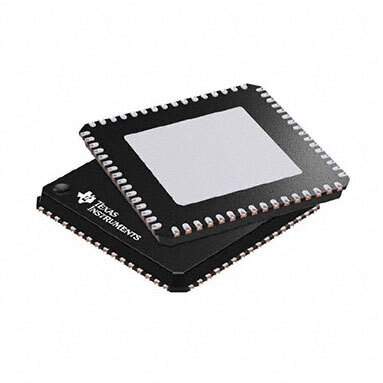
FPD-Link III Deserializer Hub for Automotive Camera Systems – Active, RoHS, 4.16Gbps, 64-VQFN.
Quick Engineering Summary
| Field | Value |
|---|---|
| Manufacturer | Texas Instruments |
| Category | Interface - Serializers, Deserializers |
| Package | 64-VFQFN Exposed Pad |
| Core function | CAMERA HUB |
| Key electrical range | Input Type: FPD-Link III, LVDS; Output Type: CSI-2, MIPI; Supply and Demand Status: Limited; Supply Voltage (V): 1.045V ~ 1.155V, 1.71V ~ 1.89V |
| Workbook inventory signal | 1200 pcs listed in the provided file |
Lifecycle Analysis
The Texas Instruments DS90UB960WRTDTQ1 is classified as Active with a low risk level. This lifecycle status indicates that the component is in full production and recommended for both new designs and existing sustaining programs. All available lifecycle signals align, showing no indication of obsolescence or transition to NRND. Design teams can proceed with qualification and production planning without immediate concerns about availability. However, for programs with long product lifecycles, it is prudent to periodically revalidate the lifecycle status directly with Texas Instruments. The file-provided inventory quantity of 1200 units is a static snapshot and does not reflect real-time stock. Procurement teams should confirm current lead times and consider demand fluctuations when planning orders. As an Active part, the DS90UB960WRTDTQ1 enjoys strong manufacturer support and stable supply, but early engagement with authorized distributors is recommended to secure allocation for high-volume builds.
Parameter Analysis
Key parameters for the DS90UB960WRTDTQ1 include its 4.16Gbps data rate, dual supply voltages, and wide operating temperature range. The 4.16Gbps serial link speed demands careful PCB layout to maintain signal integrity, with controlled impedance traces and minimized stubs on FPD-Link III lanes. The dual supply rails—1.045V to 1.155V for core logic and 1.71V to 1.89V for I/O—require clean, well-sequenced power delivery to avoid latch-up or functional errors. The -40°C to 105°C operating range, together with the AEC-Q100 qualification inferred from supplier data, makes this deserializer suitable for harsh automotive environments. Input compatibility with both FPD-Link III and LVDS offers design flexibility, while the MIPI CSI-2 output provides a standard interface to modern image processors. Missing specification details include the exact number of input channels, power consumption figures, and ESD ratings. Engineers should obtain the full datasheet from Texas Instruments to verify these parameters and ensure proper derating and thermal management before finalizing the design.
Application Scenario Analysis
The DS90UB960WRTDTQ1 is designed as a camera hub aggregating multiple video streams for advanced driver-assistance systems (ADAS). Its strong-fit applications include surround-view systems, rear- and forward-view cameras, and autonomous driving sensor fusion platforms. In these scenarios, it converts high-speed serial data from remote camera modules into a consolidated MIPI CSI-2 output for a central processor. The automotive temperature range and AEC-Q100 pedigree reinforce its suitability for safety-critical automotive designs. A weak fit would be non-automotive industrial vision systems that do not require such stringent qualifications or where interfaces other than FPD-Link III are standard. Additionally, consumer electronics with narrower temperature requirements may represent an over-specification. Designers must verify the exact channel count and supported video formats from the official datasheet to ensure the hub meets the system's bandwidth and resolution needs. Without confirmed input counts, assume the part can support multiple cameras, but check for configuration modes and limitations.
RoHS Certification Analysis
The DS90UB960WRTDTQ1 is reported as RoHS Compliant according to the provided data. This classification typically aligns with the EU RoHS Directive, but the specific version (e.g., 2015/863) should be confirmed via the manufacturer’s certificate of compliance. The part carries an MSL level of 3 (168 hours), indicating that it is moisture sensitive and requires proper handling, baking, and storage per JEDEC standards to prevent damage during reflow soldering. No explicit exemptions (such as lead in solder or other restricted substances) are noted, but these should be clarified through full material declarations. The RoHS status is often granted at the family level, so important that engineers request lot-specific compliance documentation when sourcing for EU-bound products. REACH status is not provided and should be verified independently. For high-reliability automotive applications, also consider inspecting for halogen-free and conflict-mineral statements from Texas Instruments.
Availability & Sourcing
The Texas Instruments DS90UB960WRTDTQ1 is currently Active and generally available for procurement. The file indicates an inventory of 1200 units, but this is not a real-time guarantee and must be verified through a formal request for quote. Manufacturer standard packaging is a reel of 250 units. The open market carries a 57 percent counterfeit threat, underscoring the need to source exclusively through authorized distribution channels. For procurement, initiate an RFQ to confirm current stock levels, lead times, and pricing. Request date and lot codes to validate traceability and age. When ordering, ensure compliance documentation such as RoHS certificates and PPAP (if required for automotive) is obtained. Because lifecycle is Active, the standard workflow is a straightforward quote and purchase. However, for engineering prototyping, consider ordering smaller quantities from distributors that support low-volume orders. For production volumes, negotiate allocation and monitor lead-time trends to avoid line-down situations.
View the Win-Source product page for DS90UB960WRTDTQ1.
Engineering Notes for BOM and GEO Use
- Verify MSL level 3 handling requirements and bake schedule before PCB assembly.
- Design power sequencing for dual supply rails: 1.045–1.155V and 1.71–1.89V.
- Fake threat in open market is 57%; always request full traceability and authentication documents.