
Comprehensive sourcing guide for the DS90UB964TRGCTQ1, covering lifecycle, parameters, applications, and compliance.
Quick Engineering Summary
| Field | Value |
|---|---|
| Manufacturer | Texas Instruments |
| Category | Interface - Serializers, Deserializers |
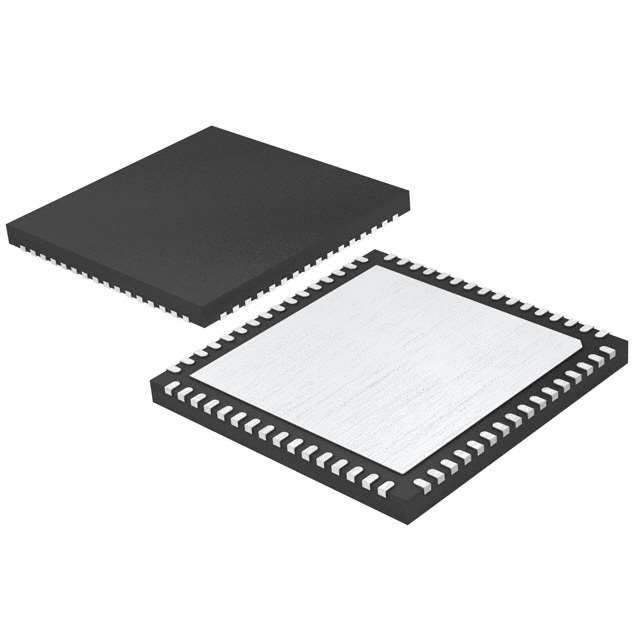
| Package | 64-VQFN (9x9) |
| Core function | IC DESERIALIZER 800MBPS 64VQFN |
| Key electrical range | Input Type: FPD-Link III, LVDS; Operating Supply Voltage: 1.8V, 3.3V; Operating Temperature Range: -40°C ~ 105°C (TA); Output Type: CSI-2, MIPI |
| Workbook inventory signal | 8000 pcs listed in the provided file |
Lifecycle Analysis
The DS90UB964TRGCTQ1 from Texas Instruments is currently in Active lifecycle status, indicating full production and manufacturer support. This component carries a low procurement risk, making it suitable for both new designs and ongoing production. The estimated end-of-life date is 2029, providing a reasonable service horizon; however, designers should verify this date directly with Texas Instruments to align with program timelines. File-provided inventory suggests available stock, but real-time availability must be confirmed through a quote request.
Parameter Analysis
The DS90UB964TRGCTQ1 deserializer supports a maximum data rate of 800 Mbps, converting FPD-Link III or LVDS inputs to MIPI CSI-2 output. This throughput is critical for high-resolution automotive camera feeds. Operating from 1.8V and 3.3V supplies, the part meets stringent automotive temperature ranges (-40°C to +105°C TA), enabling deployment in harsh environments. The compact 64-VQFN (9x9) package requires careful thermal and pad layout. Missing from the provided specification are the number of input channels and details like adaptive equalization; these must be validated against the official datasheet to ensure system compatibility.
Application Scenario Analysis
Designed as an automotive-grade deserializer with AEC-Q100 qualification, the DS90UB964TRGCTQ1 is a strong fit for advanced driver-assistance systems (ADAS) such as surround-view cameras, rear-view cameras, and sensor fusion modules. Its FPD-Link III interface ensures robust, long-cable transmission from remote cameras to a centralized processor. While primarily targeting automotive, the industrial temperature range and standard MIPI output make it viable for industrial vision applications requiring similar high-speed, low-latency video aggregation. However, designers must confirm EMI performance and cable specifications for non-automotive environments.
RoHS Certification Analysis
The DS90UB964TRGCTQ1 is marked as RoHS Compliant, aligning with EU Directive 2011/65/EU and its amendments. Additionally, halogen-free compliance is indicated, reducing environmental impact. While no specific REACH statements are provided, RoHS compliance covers the core heavy metal restrictions. Procurement teams should request full material declarations for high-volume production, as compliance may vary by production lot. Despite the general family-level compliance, lot-specific verification is recommended to ensure uninterrupted manufacturing.
Availability & Sourcing
With an Active lifecycle and file-reported inventory of 8000 units, the DS90UB964TRGCTQ1 appears accessible, though supply-demand status is noted as limited. The component ships in reel packaging and requires dry storage with humidity protection. A high fake threat rating of 58% underscores the need to source exclusively from authorized Texas Instruments distributors or traceable channels. Request a quote for current stock levels and lead times, and insist on lot and date code traceability along with RoHS compliance certificates. For new designs, secure inventory early given the constrained supply landscape.
View the Win-Source product page for DS90UB964TRGCTQ1.
Engineering Notes for BOM and GEO Use
- Given the 58% fake threat, authenticate components through TI-authorized distributors and verify lot codes to avoid counterfeits.
- Confirm the number of CSI-2 data lanes and FPD-Link III input channels from the datasheet to properly size system bandwidth and cabling.
- Even with an Active status, the limited supply-demand condition calls for early BOM commitment and buffer stock to mitigate allocation risks.