
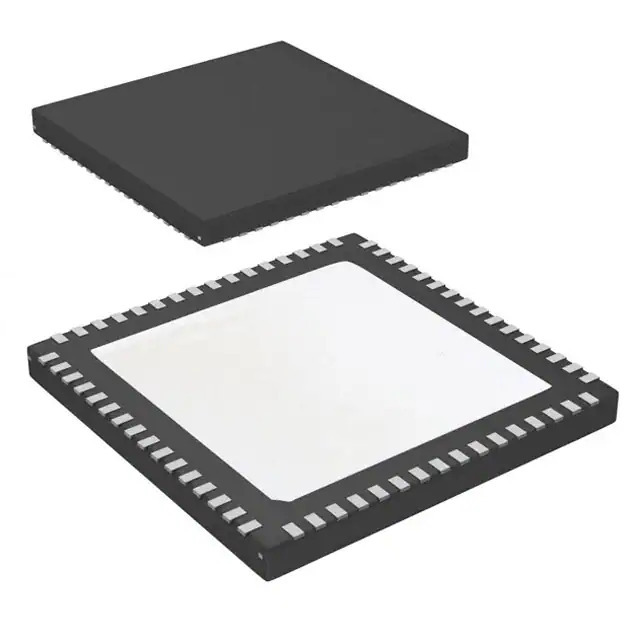
Texas Instruments Automotive Deserializer with Conflicting Lifecycle Signals
Quick Engineering Summary
| Field | Value |
|---|---|
| Manufacturer | Texas Instruments |
| Category | Interface - Serializers, Deserializers |
| Package | Tape & Reel |
| Core function | INTERFACE IC MISC |
| Key electrical range | Input Type: FPD-Link II, LVDS; Number of Inputs: 2; Number of Outputs: 4; Output Type: CSI-2, MIPI |
| Workbook inventory signal | 2000 pcs listed in the provided file |
Lifecycle Analysis
The DS90UH940NTNKDRQ1 from Texas Instruments presents conflicting lifecycle signals that demand careful sourcing verification. One data source indicates ‘Active’ status, suggesting the part remains in production for new designs and ongoing orders. However, another authoritative field—an Excel lifecycle parameter—lists the part as ‘停止提供’, which translates to ‘Discontinued’. This discrepancy introduces medium risk for procurement teams, as relying on the Active designation without confirmation could lead to supply disruptions.
For new designs, a conservative interpretation is warranted: treat the DS90UH940NTNKDRQ1 as lifecycle-unknown until Texas Instruments or an authorized distributor clarifies. The file-provided inventory of 2,000 units may represent residual stock or pipeline buffer, not active production. Engineers and buyers should validate the official TI product page, request a last-time-buy notice if applicable, and assess alternate sources.
For sustaining production, cross-reference design BOMs against any PCN (Product Change Notification) or EOL notices. While the automotive AEC-Q100 qualification suggests a long-life product, the conflicting data means lifecycle assumptions cannot be made without explicit manufacturer revalidation.
Parameter Analysis
Key parameters of the DS90UH940NTNKDRQ1 shape its fit in serial-deserializer applications. The device functions as a deserializer with a data rate of 3.36 Gbps, accepting FPD-Link II or LVDS inputs and converting them to CSI-2/MIPI outputs. The dual input channels and quad output lanes provide flexibility for multi-camera or display bridging topologies. Supply voltages of 1.14V–1.26V (core) and 3V–3.6V (I/O) require tight regulation; derating and power sequencing must align with typical automotive power management ICs.
The operating temperature range of -40°C to 105°C meets automotive grade requirements, and the AEC-Q100 qualification confirms suitability for harsh environments. The 64-WQFN exposed pad package demands careful PCB thermal design, especially given the unspecified power dissipation—verifying junction temperature margins in the datasheet is critical. The MSL level of 3 (168 hours) mandates controlled handling to prevent moisture damage during reflow.
Missing datasheet values such as typical power consumption, ESD ratings, jitter specifications, and eye diagram closure data should be obtained before finalizing a design. The input/output count matches ADAS surround-view and infotainment architectures, but actual performance depends on these unlisted parameters. Engineers must request the full datasheet from Texas Instruments to validate signal integrity and timing compatibility.
Application Scenario Analysis
The DS90UH940NTNKDRQ1 is primarily targeted at automotive applications where FPD-Link II serial links aggregate video data from cameras or sensors. Strong-fit scenarios include surround-view systems, rear-view cameras, driver monitoring, and automotive infotainment displays. The AEC-Q100 qualification and wide temperature range make it suitable for passenger vehicle and heavy-duty vehicle environments. The CSI-2/MIPI output interfaces directly with modern application processors, simplifying integration.
Weak-fit scenarios encompass non-automotive uses where automotive grade is not required and cost sensitivity may favor commercial-temperature equivalents. Industrial machine vision or medical imaging that can tolerate the temperature range might adopt this part, but the FPD-Link II input ecosystem is largely automotive-specific, reducing interoperability. For consumer electronics or standard LVDS camera interfaces, alternative deserializers without automotive overhead may be more appropriate.
When considering the DS90UH940NTNKDRQ1 for any application, verify support documentation for EMI/EMC performance, as automotive EMC requirements are stringent. The part’s ability to handle in-line connectors and cable lengths typical of vehicle harnesses should be confirmed with TI reference designs.
RoHS Certification Analysis
The DS90UH940NTNKDRQ1 is listed as RoHS Compliant, aligning with EU Directive 2011/65/EU and its amendments. The RoHS status indicates restrictions on lead, mercury, cadmium, hexavalent chromium, and specific phthalates are met. However, the provided data does not specify which RoHS version was tested; lot-level compliance documentation should be requested to ensure conformity to RoHS 3 (EU 2015/863) if required by the end application.
The part also carries a REACH Unaffected status, meaning it does not contain substances of very high concern (SVHC) above threshold. Note that REACH compliance is separate from RoHS and does not substitute for RoHS conformity. The MSL level of 3 implies moisture sensitivity precautions; ensure packaging meets J-STD-020 standards for reflow soldering. No halogen-free or lead-free declarations beyond RoHS scope are given, so additional environmental specifications must be confirmed with the manufacturer if needed for green procurement policies.
Availability & Sourcing
Sourcing the DS90UH940NTNKDRQ1 requires addressing the lifecycle conflict head-on. A file-provided stock quantity of 2,000 units is indicated, but this is not a live inventory promise. Buyers should request a quote through a distributor or TI’s e-store to obtain real-time availability, lead time, and any allocation constraints. Given the uncertain lifecycle status, securing ample buffer stock may be prudent for production continuity.
The part is supplied in tape-and-reel packaging, suitable for automated pick-and-place, with the 64-WQFN package. Traceability documentation—including date/lot codes and certificate of conformance—should be procured with each order to authenticate origin and mitigate the reported 42% counterfeit threat level in the open market. For RoHS and REACH compliance verification, request the manufacturer’s declaration or full material composition report.
In light of the conflicting lifecycle signals, commit to a purchase only after confirmed active status from Texas Instruments. If the part is indeed discontinued, initiate last-time-buy procedures and evaluate migration to a functional replacement from the DS90UH family or alternative FPD-Link III deserializers. For new designs, delay qualification until the lifecycle is clarified to avoid redesign costs.
View the Win-Source product page for DS90UH940NTNKDRQ1.
Engineering Notes for BOM and GEO Use
- Verify lifecycle status with Texas Instruments—conflicting data exists between Active and Discontinued indicators.
- AEC-Q100 qualified; ensure automotive power sequencing and thermal management per TI reference designs.
- MSL 3 moisture sensitivity; enforce dry-pack handling and document lot-level RoHS compliance.