
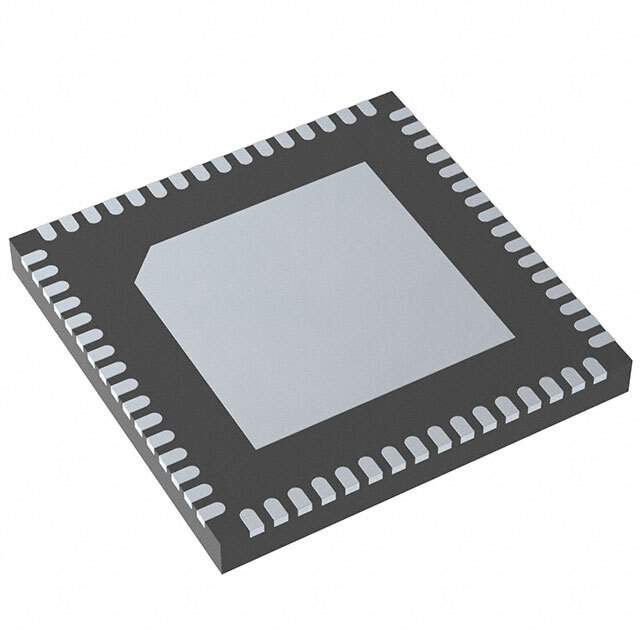
1080P LVDS to CML Serializer with automotive qualification and conflicting lifecycle signals.
Quick Engineering Summary
| Field | Value |
|---|---|
| Manufacturer | Texas Instruments |
| Category | Interface - Serializers, Deserializers |
| Package | 41-BQFN Module |
| Core function | 1080P LVDS TO CML SERIALIZER |
| Key electrical range | Operating Temperature: -40°C ~ 85°C; Voltage - Supply: 3V |
| Workbook inventory signal | 1 pcs listed in the provided file |
Lifecycle Analysis
The DS90UH947NTRGCTQ1 serializer from Texas Instruments exhibits conflicting lifecycle signals. While the manufacturer's Lifecycle Status is listed as Active, the Excel-based product status is recorded as 停止提供, which translates to discontinued or not recommended for new designs. This discrepancy means that engineers and procurement teams cannot safely treat the part as a stable Active component without further verification.
The risk level is elevated to medium because the conflict introduces uncertainty for both new design-ins and sustaining production. Any reliance on the Active label could lead to supply disruptions if the Excel status reflects a pending phase-out. Procurement should treat the DS90UH947NTRGCTQ1 with caution and seek direct clarification from Texas Instruments or authorized distributors.
For planning purposes, note that the file-provided quantity of 1 unit is not a live inventory number. It does not indicate real-time availability, and decisions should be based on a formal RFQ and lifecycle confirmation. Until TI resolves the status, it is prudent to explore alternative parts or secure last-time-buy agreements if the discontinuation signal is validated.
Parameter Analysis
The DS90UH947NTRGCTQ1 is a 1080p LVDS to CML serializer operating at a data rate of 3.36 Gbps. The operating temperature range is given as -40°C to 85°C, which supports industrial and some automotive environments, but conflicts with an alternate source showing -40°C to 105°C and automotive qualification. Engineers must verify the exact temperature grade against the official datasheet to ensure it meets application requirements.
Power supply specifications present another area of inconsistency. One set lists a single 3V supply, while parametric data from the Excel row indicates three rails: 1.045–1.155V, 1.71–1.89V, and 3.135–3.465V. This multi-rail configuration is typical for high-speed serializers, and design validation must confirm the correct voltage domains to avoid integration errors. The package information is also fragmented: 41-BQFN Module, 4-SMD No Lead, SOT-6, and 64-VQFN references appear across sources, suggesting that only the 64-VQFN (9x9) from the official spec should be trusted.
Missing parameters such as jitter performance, eye diagram characteristics, and ESD ratings are not provided in the source data but are critical for high-speed video links. Designers should obtain the full Texas Instruments datasheet to review these details before finalizing the schematic or layout.
Application Scenario Analysis
The DS90UH947NTRGCTQ1 is designed as a serialiser for FPD-Link III interfaces, converting LVDS video inputs to CML outputs for high-speed automotive video transmission. Its 1080p support and automotive-grade potential (AEC-Q100 designation appears in one source) make it a strong candidate for in-vehicle infotainment, advanced driver-assistance systems (ADAS) camera links, and digital cluster applications where robust, long-distance serial links are required.
In non-automotive scenarios, the part may still fit industrial video or machine vision systems that need low-speed LVDS to high-speed serial conversion, provided the temperature range and qualification are acceptable. However, the conflicting lifecycle status adds risk to any new design, particularly in automotive programs that require guaranteed long-term availability. Engineers should validate that the specific AEC-Q100 qualification grade aligns with their automotive safety integrity level and environmental requirements.
For consumer or commercial applications with less stringent reliability demands, the DS90UH947NTRGCTQ1 might be over-specified, and the uncertainties around supply could push the design towards a more clearly active replacement. In all cases, a thorough comparison with the official datasheet and an approved vendor list consultation is recommended before committing to this component.
RoHS Certification Analysis
The DS90UH947NTRGCTQ1 is listed as RoHS Compliant, indicating conformance to European Union environmental standards. The exact directive, such as RoHS 3 (EU 2015/863) or earlier RoHS 2, is not explicitly stated in the source data. To ensure compliance for your product’s target market, obtain the manufacturer’s certificate of compliance that specifies the directive and any applicable exemptions.
No exemptions are currently documented for this part, but that does not guarantee their absence. Certain high-reliability automotive components may carry exemptions for lead in solder or other materials. If your end product requires full exemption-free status, verify this with Texas Instruments and review the full material declaration.
RoHS compliance is typically assessed at the family level, but individual lots could differ. Request lot-specific documentation when sourcing, especially if stock is obtained from non-franchised distributors. REACH and halogen-free status are not provided, so these must be checked independently if needed for your compliance matrix.
Availability & Sourcing
Sourcing the DS90UH947NTRGCTQ1 requires careful attention due to the conflicting lifecycle signals. Even though Texas Instruments shows an Active status, the Excel data indicating discontinuation means buyers should not assume stable, long-term supply. A formal RFQ process should include a request for written confirmation of the current lifecycle status and any PCN (Product Change Notification) history.
The file-provided quantity of 1 unit is a static snapshot and does not represent live inventory. Actual availability can only be determined by contacting suppliers directly. When requesting quotes, specify the required packaging—the Excel row indicates tape and reel (TR) delivery—and confirm the manufacturer’s lot code and date code to ensure proper traceability. Compliance documentation, such as the RoHS certificate and PPAP reports for automotive use, should be requested upfront.
Given the medium risk level, if your design is in early development, consider evaluating a newer pin-compatible alternative or a functionally similar part with a clear Active lifecycle. For sustaining production, initiate a last-time-buy assessment if the discontinuation signal is confirmed. Always verify the latest status with Texas Instruments before committing to the DS90UH947NTRGCTQ1 in any volume production, and explore authorized distribution channels for the most reliable supply chain.
View the Win-Source product page for DS90UH947NTRGCTQ1.
Engineering Notes for BOM and GEO Use
- Confirm the exact lifecycle status with Texas Instruments, as Excel data indicates discontinuation while official status shows Active.
- Verify the correct package variant and footprint; multiple package references (41-BQFN, 64-VQFN, SOT-6) suggest data inconsistencies that must be resolved against the official datasheet.
- Validate voltage supply ranges: 3V versus the multi-rail ranges (1.045–1.155V, 1.71–1.89V, 3.135–3.465V) from the part's parametric data, and ensure design compliance.