
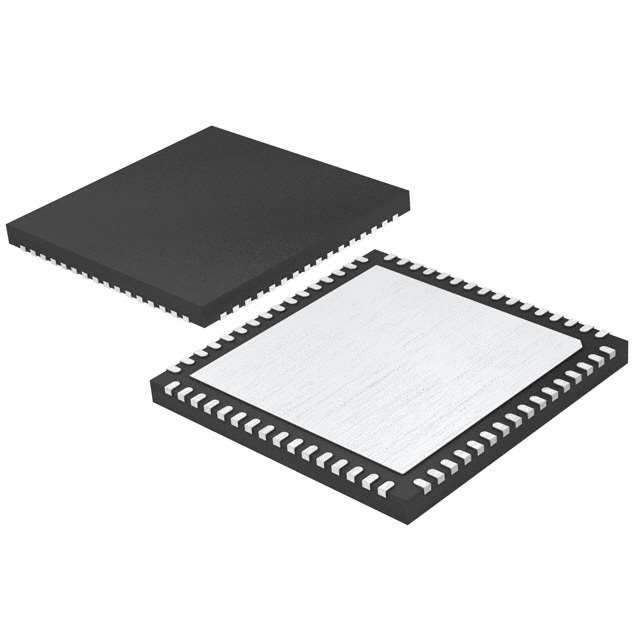
Automotive-grade serializer with FPD-Link III output, 8 LVDS inputs, and 5.95Gbps data rate. Suitable for infotainment and ADAS displays.
Quick Engineering Summary
| Field | Value |
|---|---|
| Manufacturer | Texas Instruments |
| Category | Interface - Serializers, Deserializers |
| Package | 64-VQFN (9x9) |
| Core function | IC SERIALIZER LDI TO FPD 64VQFN |
| Key electrical range | Input Type: LVDS; Number of Inputs: 8; Number of Outputs: 2; Operating Supply Voltage: 1.71 V ~ 1.89 V |
| Workbook inventory signal | 4860 pcs listed in the provided file |
Lifecycle Analysis
The DS90UH947TRGCRQ1 presents conflicting lifecycle indicators. One distributor data field lists it as 停止提供, meaning not supplied or discontinued, while the formal Lifecycle Status reports Active. This contradiction raises procurement risk, especially for new designs. Given the estimated EOL date of 2028, a conservative interpretation treats the part as NRND (Not Recommended for New Designs). Engineers should obtain official confirmation from Texas Instruments before integrating this serializer into new products.
For sustaining production, existing designs may continue if inventory is secured. The file‑provided quantity of 4860 units offers a snapshot, but real‑time availability must be verified. Because of the conflicting signals, any long‑term sourcing strategy should include a migration analysis to a recommended successor if TI announces a change. Monitoring TI’s PCN alerts is essential to avoid last‑time buy surprises.
Parameter Analysis
The DS90UH947TRGCRQ1 operates as a serializer converting LVDS inputs to FPD-Link III and LVDS outputs, making it central to high‑speed video transport. Its 5.95 Gbps data rate is a key decision factor, supporting high‑resolution displays and cameras in automotive systems. The 8 inputs and 2 outputs allow flexible channel aggregation, while the operating voltage range of 1.71 V to 1.89 V demands tight power supply regulation. The automotive temperature range of -40°C to 105°C qualifies it for under‑hood and in‑cabin environments.
Missing from the supplied data are critical signal‑integrity parameters such as jitter, eye‑diagram masks, and output swing. For high‑speed PCB layout, designers must consult the Texas Instruments datasheet for recommended impedance control, AC coupling, and power‑supply decoupling. The 64‑VQFN (9x9) package requires appropriate thermal management, especially when all outputs are active. Without detailed power dissipation figures, current consumption should be verified against the system’s thermal budget.
Application Scenario Analysis
The DS90UH947TRGCRQ1 is designed for automotive applications as indicated by its AEC-Q100 qualification and high popularity in the Infotainment and ADAS segments. It excels in systems that aggregate multiple LVDS video sources into a single FPD-Link III stream, such as central information displays, instrument clusters, and surround‑view camera modules. The 8:2 input‑to‑output ratio makes it suitable for architectures where multiple camera feeds are serialized before transmission to a processor.
Applications outside the automotive temperature range or those requiring lower data rates may find the DS90UH947TRGCRQ1 overly specified, though it can still function in industrial or medical imaging if the environmental requirements align. The 66% fake threat underscores the need for sourcing vigilance in any safety‑critical system. Designers should ensure that the selected image sensors and deserializer are compatible with the LVDS and FPD-Link III signaling levels to avoid interoperability issues.
RoHS Certification Analysis
The DS90UH947TRGCRQ1 is supplied as RoHS Compliant and Halogen Free Compliant, aligning with the EU RoHS 3 directive (2015/863). No specific exemptions are noted in the provided data. Texas Instruments typically certifies entire product families, so the DS90UH947 series falls under a general compliance declaration.
For procurement in regions with strict environmental regulations, purchasers should request lot‑level certificates of compliance. This is especially important when the part enters markets where RoHS 3 compliance is mandatory. The presence of both RoHS and halogen‑free labels suggests that the material set meets low‑halogen requirements as well, which may be relevant for certain OEM specifications. Always confirm that the actual date/lot code on the reel matches the latest compliance documentation.
Availability & Sourcing
Sourcing the DS90UH947TRGCRQ1 requires careful verification due to its conflicting lifecycle status and high counterfeit risk (66%). The file‑provided inventory lists 4860 units in reel packaging (TR), stored in dry, humidity‑protected conditions. However, this is not a real‑time guarantee; actual availability must be confirmed through a request for quote (RFQ). Supply and demand is noted as Limited, so lead times may be extended.
Given the NRND assessment, buyers should secure enough inventory to cover production needs while evaluating a migration path to Texas Instruments’ recommended replacements. Always request full traceability documentation, including date and lot codes, and verify authenticity with the manufacturer. Ensure that the reels are sealed and have been stored per the dry storage condition specified. For RoHS and halogen‑free compliance, obtain certificates tied to the specific delivery lot. Direct purchasing from authorized distributors is strongly advised to mitigate counterfeit risks.
View the Win-Source product page for DS90UH947TRGCRQ1.
Engineering Notes for BOM and GEO Use
- Verify lifecycle directly with Texas Instruments; conflicting data suggests potential NRND transition. Do not start new designs without confirmation.
- 66% fake threat in the open market mandates sourcing only from authorized distributors. Request full traceability and date/lot code documentation.
- The 5.95 Gbps data rate and AEC-Q100 qualification suit high‑resolution automotive video links, but confirm jitter and eye‑diagram performance from the datasheet.