
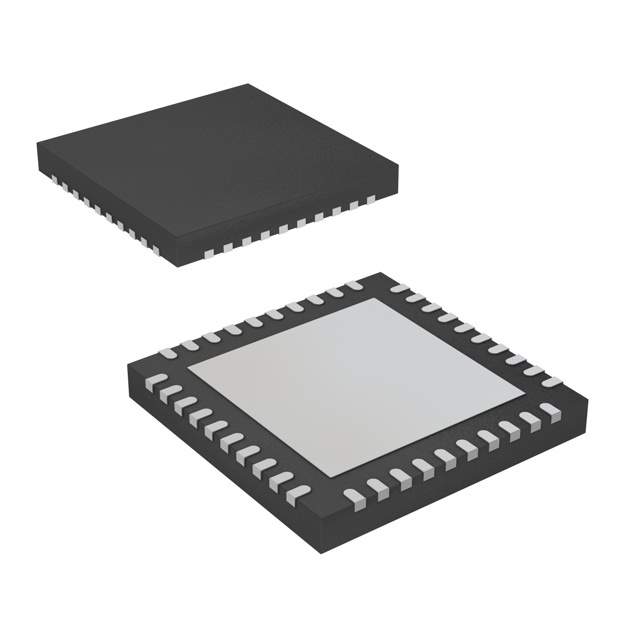
Active automotive deserializer, FPD-Link II to CSI-2, RoHS compliant, supply verification needed.
Quick Engineering Summary
| Field | Value |
|---|---|
| Manufacturer | Texas Instruments |
| Category | Interface - Serializers, Deserializers |
| Package | 40-WQFN (6x6) |
| Core function | IC SERIALIZER FPD-CSI2 48WQFN |
| Key electrical range | Input Type: FPD-Link II, LVDS; Number of Inputs: 1; Number of Outputs: 3; Operating Supply Voltage: 1.71 V ~ 1.89 V, 3 V ~ 3.6 V |
| Workbook inventory signal | 9460 pcs listed in the provided file |
Lifecycle Analysis
The Texas Instruments DS90UR910QSQE/NOPB is currently classified as Active by the manufacturer, indicating full production support and suitability for both new designs and sustaining production. All provided lifecycle signals—manufacturer status, parametric data, and inventory records—point to an active part with low obsolescence risk. The estimated end-of-life date is projected for 2029, offering a stable multi-year supply window for automotive and industrial programs.
However, lifecycle status should be re-confirmed through TI’s official product page or PCN alerts before committing to high-volume new designs. The file-provided inventory quantity of 9,460 units is a snapshot and does not represent real-time availability; actual stock must be verified at the time of procurement. For long-life safety-critical applications, an alternate source or second supplier qualification may be prudent despite the active lifecycle.
Parameter Analysis
The DS90UR910QSQE/NOPB is a deserializer in the DS90UR910Q family, converting FPD-Link II or LVDS input into MIPI CSI-2 output. Key parameters include a data rate of 900 Mbps, a dual supply voltage range of 1.71 V to 1.89 V and 3 V to 3.6 V, and an automotive temperature range of -40°C to +105°C. These specs are critical for ensuring signal integrity and thermal margin in embedded vision systems.
The device features 1 input and 3 outputs, suiting it for camera-to-processor links. The 40-WQFN (6x6 mm) exposed pad package requires careful thermal management, especially near upper temperature limits. Missing from the datasheet highlights are power consumption, jitter tolerance, and eye diagram requirements; engineers should verify these for their specific link budget. Additionally, confirm that the MIPI CSI-2 output configuration (lane count and data format) matches the receiving processor’s requirements.
Application Scenario Analysis
This part is primarily intended for automotive camera and infotainment applications where serialized video data must be deserialized to a MIPI interface for processing. It is AEC-Q100 qualified, making it a strong fit for advanced driver-assistance systems (ADAS), surround-view cameras, and rear-seat entertainment modules. The device can also serve in industrial vision systems that benefit from FPD-Link II’s robust coaxial or STP cable support, provided the automotive qualification is acceptable for the use case.
For non-automotive designs where cost optimization is a priority and AEC-Q100 is not required, a commercial-grade alternative might be evaluated, though the DS90UR910QSQE/NOPB’s extended temperature range adds reliability. When used in medical or aerospace imaging, additional radiation or safety certifications not provided in the base datasheet would need independent assessment. Overall, the part aligns best with automotive video links requiring high data integrity over cable lengths up to 15 meters.
RoHS Certification Analysis
The DS90UR910QSQE/NOPB is marked as RoHS Compliant, indicating conformity to the European Union’s Restriction of Hazardous Substances directive. Given Texas Instruments’ general compliance posture, this likely meets the current RoHS 3 (EU 2015/863) requirements, including the ten restricted substances. The specification also lists the part as Halogen Free Compliant, addressing low-halogen demands often required in environmentally conscious programs.
Buyers should request the full certificate of compliance for the specific production lot, as RoHS status can vary by manufacturing date or assembly site. While REACH data is not explicitly provided, TI typically provides REACH declarations upon request. For designs requiring additional substance restrictions beyond RoHS, verify compliance through the manufacturer’s material declaration sheet.
Availability & Sourcing
The DS90UR910QSQE/NOPB is supplied in reel packaging and requires dry storage with humidity protection, as indicated by the storage condition specification. An inventory quantity of 9,460 units is noted in the file, but this is not a real-time guarantee; actual availability must be confirmed through a request for quote. With a supply-and-demand status of Limited, proactive procurement planning is advised.
Given a reported 67% fake threat in the open market, sourcing from authorized Texas Instruments distributors is essential to avoid counterfeit risks. Verify lot codes, date stamps, and traceability certificates when procuring. For active lifecycle components, request a quote that includes lead time, full reel minimums or cut tape options, and compliance documentation. If inventory levels appear low, secure allocation through long-term agreements. Always re-confirm lifecycle status with the manufacturer’s formal update before placing high-volume orders.
View the Win-Source product page for DS90UR910QSQE/NOPB.
Engineering Notes for BOM and GEO Use
- Verify 900 Mbps data rate and dual supply voltages (1.8 V / 3.3 V) for proper system integration and deserialization stability.
- AEC-Q100 qualification and -40°C to +105°C temperature range require thermal management; validate PCB layout and heatsinking for exposed pad package.
- Counterfeit risk at 67% in open market demands sourcing only from authorized TI distributors with full lot traceability and compliance documentation.