
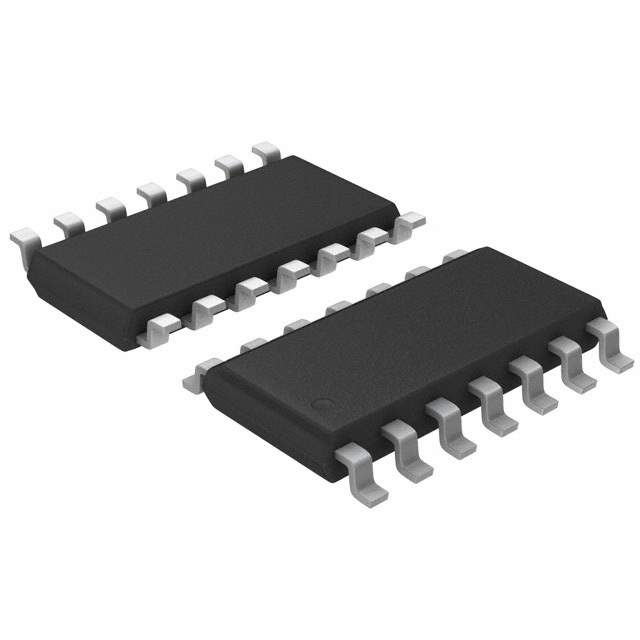
Texas Instruments DS91C180TMAX – End-of-Life 200 Mbps LVDS Full-Duplex Transceiver, 14-SOIC Package.
Quick Engineering Summary
| Field | Value |
|---|---|
| Manufacturer | Texas Instruments |
| Category | Interface - Drivers, Receivers, Transceivers |
| Package | 14-SOIC |
| Core function | IC TRANSCEIVER FULL 1/1 14SOIC |
| Key electrical range | Operating Temperature Range: -40°C ~ 85°C; Supply and Demand Status: Limited |
| Workbook inventory signal | 3740 pcs listed in the provided file |
Lifecycle Analysis
The DS91C180TMAX from Texas Instruments is officially listed as End-of-Life (EOL), with a part status of Obsolete. This means the device is no longer recommended for new designs and may have limited or no remaining production. For existing designs in sustained production, it is critical to reassess inventory levels and plan for an immediate transition to an alternative component to avoid supply chain interruptions.
File-provided data indicates a stock quantity of 3740 units, but this does not guarantee real-time availability and should be verified with suppliers. The EOL status also means that manufacturer documentation may not receive updates, so it is wise to revalidate the latest datasheet and any EOL notices from Texas Instruments. Procurement teams should approach this part with the highest caution, prioritizing last-time-buy opportunities and exploring pin-compatible or functionally equivalent replacements if they exist.
Parameter Analysis
The DS91C180TMAX is a 1/1 full-duplex LVDS transceiver designed for high-speed data transmission at up to 200 Mbps. It operates from a 3.0V to 3.6V supply, making it compatible with standard 3.3V LVDS signaling levels. The industrial temperature range of -40°C to 85°C allows deployment in moderate to harsh environments. Housed in a 14-SOIC surface-mount package, it is suitable for automated assembly but requires careful PCB layout to maintain signal integrity at these data rates.
Key missing parameters from the provided summary include receiver input sensitivity, differential output voltage, propagation delay, and channel-to-channel skew. Engineers should consult the official Texas Instruments datasheet to confirm these values and ensure compatibility with link budgets and timing requirements. The device’s 200 Mbps rating is adequate for many industrial backplane and clock distribution applications, but for newer designs requiring higher bandwidth, a more modern LVDS or M-LVDS transceiver may be necessary.
Application Scenario Analysis
Given its LVDS full-duplex capability, the DS91C180TMAX is well-suited for point-to-point differential data communication in legacy systems, such as industrial backplanes, telecom line cards, and network switches. It can also serve in clock and data distribution networks where noise immunity and low power are essential. However, its EOL status makes it a poor fit for any new design; engineers should actively seek a replacement.
The 200 Mbps data rate, while sufficient for many existing applications, may be inadequate for emerging high-speed interfaces. Additionally, the 3.3V-only supply excludes use in lower-voltage or mixed-voltage systems without level translation. For designs still in production, this part may be used to sustain existing equipment, but procurement of long-term inventory must account for the high counterfeit risk and diminishing supplier sources. In all cases, a migration plan to an alternative transceiver from Texas Instruments or another supplier should be a top priority.
RoHS Certification Analysis
The DS91C180TMAX is marked as RoHS Compliant, indicating that it conforms to the EU Restriction of Hazardous Substances Directive (likely EU 2015/863). Additionally, it is REACH Unaffected, meaning it does not contain substances of very high concern above the threshold. The moisture sensitivity level (MSL) is 1, allowing unlimited floor life and simplifying handling during assembly.
While the RoHS status is specified at the component level, it is advisable to request lot-specific certificates of conformance to ensure compliance for each procurement batch. No explicit exemptions are noted, so the part should be free of lead and other restricted materials. However, as the device is EOL, manufacturers may not update compliance documentation, and any remaining stock should be verified for compliance with current regulations. For EU market requirements, the combination of RoHS and REACH declarations provides a solid compliance baseline, but it is recommended to confirm with the supplier that these certifications are still valid for the specific date codes being sourced.
Availability & Sourcing
As an EOL component, the DS91C180TMAX presents significant sourcing challenges. File-provided inventory indicates a stock of 3740 units, but this may not reflect real-time availability and must be confirmed through a request for quote. The open market shows a high counterfeit threat rating of 93%, so it is critical to source only through authenticated distributors or verified suppliers that provide full traceability, including date codes, lot codes, and manufacturer certificates of conformance.
The part is supplied in reel packaging with 2500 units per reel, which is standard for production volumes. Procurement teams should immediately evaluate last-time-buy possibilities and consider holding a small buffer stock if this component is essential for existing products. However, given its obsolete status, the primary focus should be on qualifying a replacement. When requesting a quote, specify a need for RoHS and REACH compliance documentation, as well as MSL and counterfeit mitigation plans. For any new sourcing, verify lifecycle status directly with Texas Instruments or authorized distributors to avoid inadvertently purchasing discontinued stock.
View the Win-Source product page for DS91C180TMAX.
Engineering Notes for BOM and GEO Use
- Due to high counterfeit risk (93% open market threat), procure DS91C180TMAX only through authorized or verified channels with full traceability.
- As an EOL component, immediately initiate migration to a recommended replacement to avoid production disruptions.
- Verify critical LVDS parameters (e.g., propagation delay, skew, input thresholds) from the official Texas Instruments datasheet before finalizing design integration.