
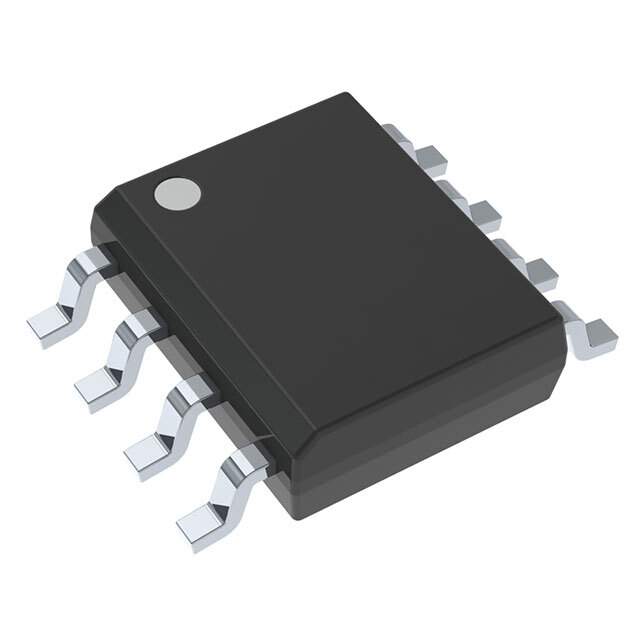
Half-duplex LVDS transceiver, 200Mbps, 1/1 driver/receiver, 8-SOIC, active part from Texas Instruments.
Quick Engineering Summary
| Field | Value |
|---|---|
| Manufacturer | Texas Instruments |
| Category | Interface - Drivers, Receivers, Transceivers |
| Package | 8-SOIC |
| Core function | IC TRANSCEIVER HALF 1/1 8SOIC |
| Key electrical range | Supply and Demand Status: Balance; Supply Voltage - Operating: 3 V to 3.6 V; Temperature Range - Operating: -40°C to 85°C |
| Workbook inventory signal | 40111 pcs listed in the provided file |
Lifecycle Analysis
The DS91D176TMAX/NOPB from Texas Instruments carries an Active lifecycle status with a low risk level. All available signals, including the official lifecycle parameter and product status entries, confirm the part is in full production and supported by the manufacturer. This means it can be safely designed into new projects and is appropriate for sustaining production in existing platforms. Engineering teams can proceed with design-in activities, but should still verify the lifecycle status directly through Texas Instruments' product page or authorized distributors before finalizing high-volume bill-of-materials decisions.
Despite the active designation, procurement teams should note that the supplied inventory figure of 40,111 units is file-provided and not a real-time stock indication. While it suggests a healthy production pipeline, actual availability may vary. The balance in supply and demand status further supports that no major shortages are expected, but for production scheduling, always request current lead times and lot dates. Given the part's popularity level is medium, it is not subject to the same allocation risks as high-demand components, but it is still prudent to monitor factory lead times and alternate source options.
Parameter Analysis
The DS91D176TMAX/NOPB is defined by several key parameters that directly impact design fit and performance. First, the data rate of 200 Mbps combined with LVDS signaling makes it suitable for high-speed differential data transmission with low power consumption and reduced electromagnetic interference. The half-duplex configuration (1 driver / 1 receiver) limits operation to bidirectional communication where transmission and reception are time-multiplexed, which is common in backplane and cable extension applications. The supply voltage range is tightly specified at 3 V to 3.6 V, requiring a well-regulated 3.3 V rail; any deviation outside this window may degrade performance or cause functional failure.
The industrial operating temperature range of -40°C to 85°C ensures reliable operation in non-automotive harsh environments, but designers should verify junction temperature and derating if the 8-SOIC package is used in confined enclosures with limited airflow. Critical parameters missing from the supplied data include receiver input thresholds, propagation delay, skew, and jitter specifications. Without these, validating signal integrity at 200 Mbps over long traces or cables is incomplete. Additionally, ESD ratings and latch-up immunity are not provided. Engineers must consult the full Texas Instruments datasheet for these parameters and perform signal integrity simulations or lab measurements to confirm system robustness. The surface-mount 8-SOIC package with tape-and-reel packaging aligns with standard automated assembly processes.
Application Scenario Analysis
As an LVDS half-duplex transceiver, the DS91D176TMAX/NOPB is well-suited for industrial automation, instrumentation, and communication backplanes where bidirectional data flow is bursty or asymmetric. Typical strong-fit applications include sensor interfaces, clock distribution, and control bus extensions in factory automation equipment. The combination of 200 Mbps speed and LVDS noise immunity supports medium-bandwidth links over differential twisted-pair or PCB traces up to several meters. The part can also be used in telecommunications line cards or embedded computing modules that require a compact single-channel transceiver.
Weak-fit scenarios involve systems that demand full-duplex communication without turnaround delays, such as high-speed continuous streaming interfaces or multi-master buses requiring simultaneous transmission and reception. In these cases, a full-duplex LVDS transceiver or a different protocol like RS-485 might be more appropriate. The operating temperature range covers standard industrial grades, but applications requiring extended cold or hot ranges (e.g., outdoor or underhood) are not supported. Moreover, the part's supply voltage does not accommodate legacy 5 V logic directly; level translators may be needed if interfacing with older components. These constraints should guide component selection during the architecture phase.
RoHS Certification Analysis
The DS91D176TMAX/NOPB is listed as RoHS Compliant according to the supplier's data. This classification indicates that the component meets the restrictions on hazardous substances as defined by the European Union's RoHS directive, which typically covers lead, mercury, cadmium, hexavalent chromium, and certain flame retardants. However, the specific standard revision (e.g., RoHS 3, 2015/863) is not explicitly stated, so users should verify that the compliance aligns with the latest regulatory requirements applicable to their target market.
Although the RoHS status is asserted at the part-number level, compliance can sometimes be lot-specific, especially when manufacturing processes change. Requesting a certificate of compliance (CoC) or a full material declaration from Texas Instruments for the specific date codes procured is a best practice. There is no indication of exemptions, such as lead in solders or glass, but if the design relies on any exemption, this must be confirmed. Additionally, while not explicitly provided, information regarding REACH compliance may be available upon request. The availability of a Material Safety Data Sheet (MSDS) on request suggests that documentation support is accessible, but buyers should integrate compliance verification into their incoming inspection process to maintain audit readiness.
Availability & Sourcing
For current availability of the DS91D176TMAX/NOPB, potential buyers should request a quotation through authorized channels such as Win Source. The file-provided quantity of 40,111 units serves as a snapshot and does not represent real-time stock; therefore, confirm live inventory and lead times before placing orders. The part is supplied in tape-and-reel packaging, which is compatible with automated pick-and-place assembly lines. Storage conditions indicated are dry storage cabinet with humidity protection, suggesting moisture sensitivity; users should consult the manufacturer's moisture sensitivity level (MSL) rating to determine baking requirements prior to reflow soldering.
Given the lifecycle status is active, sourcing is straightforward, but procurement professionals must be vigilant about counterfeit risks. The open market fake threat level is reported at 62 percent, which is significant. To mitigate this, source exclusively from Texas Instruments authorized distributors or implement stringent anti-counterfeiting measures such as visual inspection, electrical testing, and decapsulation analysis. When placing an RFQ, request date and lot codes, certificates of conformance, and RoHS/REACH documentation. For production orders, consider establishing a long-term agreement to lock in supply and pricing stability, though no pricing details are provided here.
View the Win-Source product page for DS91D176TMAX/NOPB.
Engineering Notes for BOM and GEO Use
- Verify LVDS receiver input thresholds and jitter from the manufacturer datasheet to ensure signal integrity at 200Mbps.
- The high open-market counterfeit threat (62%) mandates procurement only through authorized Texas Instruments distributors or rigorous incoming inspection.
- Confirm RoHS and REACH compliance for specific date codes before EU market shipment.