
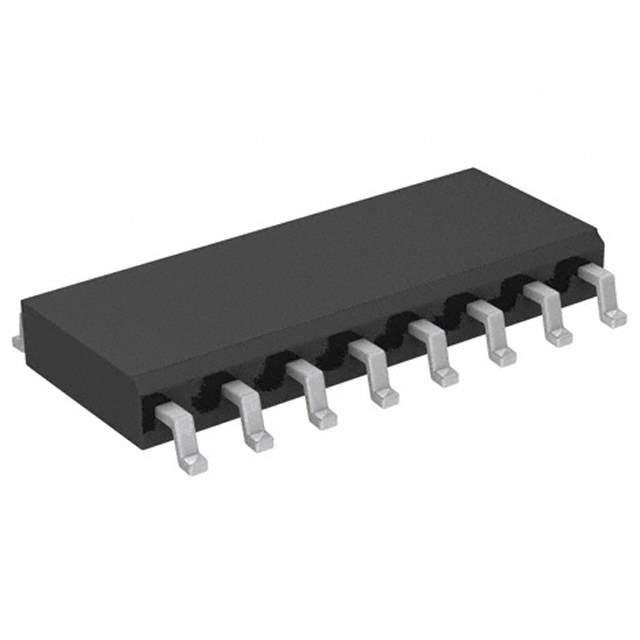
Texas Instruments DS91M047TMAX 4/0 MLVDS Driver – EOL Part Sourcing & Compliance
Quick Engineering Summary
| Field | Value |
|---|---|
| Manufacturer | Texas Instruments |
| Category | Interface - Drivers, Receivers, Transceivers |
| Package | Reel - TR |
| Core function | IC LINE DRVR 4/0 MLVDS 16SOIC |
| Key electrical range | Operating Temperature Range: -40°C ~ 85°C; Supply and Demand Status: Limited |
| Workbook inventory signal | 1 pcs listed in the provided file |
Lifecycle Analysis
The DS91M047TMAX is classified as End-of-Life (EOL) by Texas Instruments. All available lifecycle signals confirm this status, meaning the device is no longer recommended for new designs and may have limited or no future production. Engineers must treat this part with a high-risk procurement strategy.
For sustaining production, it is critical to verify last-time buy (LTB) dates and any final order windows directly with TI, as the part is officially obsolete. The file-provided inventory indicates only a single unit in stock, which is not a real-time guarantee and underscores the urgency to secure remaining channel stock if continued use is unavoidable.
No lifecycle conflicts exist in the supplied data. However, due to EOL status and a 91% counterfeit threat on the open market, procurement teams should validate all stock authenticity and consider a migration path to an active alternative as soon as feasible.
Parameter Analysis
The DS91M047TMAX is a 4-channel, non-inverting LVDS driver with multipoint capability, supporting up to 250 Mbps data rate. Supply voltage ranges from 3.0V to 3.6V, and the operating temperature spans -40°C to 85°C, making it suitable for industrial environments. The device comes in a 16-pin SOIC package with surface mount termination and is delivered on tape-and-reel with 2500 units per reel.
Key parameters for integration include its MSL Level 1 rating, which indicates unlimited floor life and eases handling during assembly. The multipoint feature allows multiple drivers/receivers to share a differential bus, but designers must carefully manage termination and stub lengths to maintain signal integrity. Missing from the provided specs are typical LVDS output voltage swing, propagation delay, channel-to-channel skew, and supply current—these must be confirmed from the official datasheet or TI application notes before finalizing a design.
For EOL parts, verifying parameter compliance with the original datasheet is essential, especially if substitute parts are considered later. Buyers should request test reports or perform incoming inspection to ensure the part meets the original timing and electrical specifications.
Application Scenario Analysis
The DS91M047TMAX is targeted at multipoint LVDS (M-LVDS) bus applications where multiple nodes communicate over a shared differential pair. Typical scenarios include backplane interconnects in telecom and datacom equipment, clock distribution networks, and industrial control buses requiring moderate speed and robust noise immunity.
Given its 250 Mbps capability and wide temperature range, it fits well in legacy industrial backplanes that demand reliable data transmission in harsh environments. However, as a line driver only, it is unsuitable for applications needing transceiver or receiver functionality. For point-to-point LVDS links, the multipoint capability may add unnecessary complexity, and a simpler driver could be used.
Before committing to this part for legacy maintenance, evaluate whether existing bus topologies, termination schemes, and receiver compatibility align with the DS91M047TMAX’s driver characteristics. Since it’s EOL, the application scenario must also account for the risk of not being able to source the part long-term, which may force a redesign even in proven designs.
RoHS Certification Analysis
According to the supplied data, the DS91M047TMAX is RoHS compliant. The REACH status is listed as unaffected, and the moisture sensitivity level is MSL 1, indicating no special baking requirements prior to reflow. These points are positive for legacy assemblies that must still meet environmental regulations.
However, because the part is EOL, the original RoHS compliance may have been certified under an earlier EU directive. For new production destined for the EU market, it is advisable to verify compliance with the current RoHS 3 (2015/863) standard, as exemptions or substance restrictions may have changed. Additionally, any old stock should undergo lot-level verification to ensure no non-compliant materials are present, especially if the stock has been stored for an extended period.
In the absence of a full material declaration, request a certificate of compliance from the supplier for the specific date/lot code you intend to purchase. This step is critical given the high counterfeit risk and the EOL nature of the device.
Availability & Sourcing
The DS91M047TMAX is an EOL component with extremely limited availability. File-provided data indicates only one unit in stock, which is not a real-time guarantee and underscores the need to request a current quote. The open market is rated with a 91% counterfeit threat, so sourcing must proceed with exceptional caution.
For any procurement, use an RFQ process that mandates traceability, including manufacturer date/lot codes, certificates of conformance, and test documentation. Avoid unauthorized or gray-market distributors. Given the part’s obsolescence, consider a last-time buy from Texas Instruments if still possible, or secure remaining authorized distributor inventory immediately.
For long-term production, begin evaluating a migration to an alternative LVDS driver. Since the DS91M047TMAX is not pin-for-pin replaced by an active part from the provided data, a redesign may be necessary. Buyers should engage with TI or a knowledgeable distributor to identify a functionally equivalent path forward.
View the Win-Source product page for DS91M047TMAX.
Engineering Notes for BOM and GEO Use
- Verify TI’s official EOL notice for last-time buy dates and consider lifetime buys if production life extends beyond stock.
- Counterfeit threat is high; obtain certificates of conformance and consider third-party testing before use in critical systems.
- Ensure the driver’s multipoint capability matches the bus topology; mismatched terminations can degrade signal integrity at 250 Mbps.