
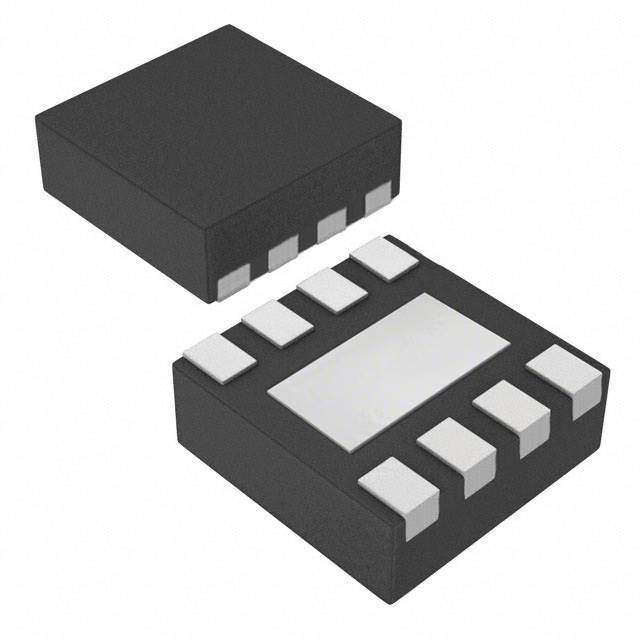
Texas Instruments DS92001TLD/NOPB 3.3V BLVDS Buffer – Key Parameters, Lifecycle, and Procurement Insights
Quick Engineering Summary
| Field | Value |
|---|---|
| Manufacturer | Texas Instruments |
| Category | Interface - Signal Buffers, Repeaters, Splitters |
| Package | 8-WSON (3x3) |
| Core function | DS92001 3. |
| Key electrical range | Input: CML, LVDS, LVPECL; Operating Supply Current: 50mA; Output: LVDS; Supply and Demand Status: Balance |
| Workbook inventory signal | 410 pcs listed in the provided file |
Lifecycle Analysis
The DS92001TLD/NOPB from Texas Instruments is currently in Active lifecycle status, with all available signals confirming continued production. Active status means this part is suitable for new designs and ongoing production needs, with no immediate end-of-life risk. Engineers can confidently include this device in new designs, but should still monitor manufacturer notifications for any future changes.
Given that lifecycle data is drawn from excel parameters and manufacturer sources, it is advisable to verify the status directly through Texas Instruments' product page or PCN alerts, especially for high-volume or long-lifecycle programs. The supplied inventory quantity (410 pieces) is a file-provided snapshot and not a real-time guarantee; actual stock may vary. For procurement planning, request a quote to confirm current availability and lead times.
Parameter Analysis
The DS92001TLD/NOPB is a single-channel buffer/re-driver targeting BLVDS applications, with a maximum data rate of 400 Mbps and a low delay time of 1.4 ns. These parameters are critical for high-speed backplane and bus signaling, where minimal jitter and skew are required. The input compatibility with CML, LVDS, and LVPECL standards provides flexibility in interfacing with various logic families, while the LVDS output ensures low-voltage differential signaling for noise immunity. The supply voltage range of 3.0 V to 3.6 V and typical operating current of 50 mA enable use in 3.3 V systems with moderate power budgets.
Key datasheet gaps include output voltage swing, jitter specifications, and detailed AC timing beyond delay. These missing parameters are important for signal integrity analysis and must be verified from the official Texas Instruments datasheet before finalizing design. The 8-WSON (3x3) package requires careful thermal management and solder joint reliability assessment, especially under the -40°C to +85°C operating temperature range.
Application Scenario Analysis
This buffer is well suited for BLVDS backplane communication, multi-drop clock distribution, and point-to-point high-speed data links in industrial, telecommunications, and networking equipment. Its ability to accept CML, LVDS, and LVPECL inputs makes it versatile for system-level integration where mixed signaling standards are present. The compact 8-WSON package and wide temperature range also support space-constrained and ruggedized designs.
Weak-fit scenarios include low-speed or single-ended digital interfaces, where the differential nature and high data rate are unnecessary. The single-channel configuration limits it to single-lane applications unless multiple devices are cascaded, but for multi-lane protocols, dual or quad buffers may be more efficient. Additionally, the absence of programmable equalization or output pre-emphasis means that for very long traces or lossy channels, a more sophisticated redriver might be needed; verify line conditions against the datasheet’s drive capabilities.
RoHS Certification Analysis
The DS92001TLD/NOPB is listed as RoHS Compliant, indicating conformity with the EU Directive 2011/65/EU and likely the more recent RoHS 3 (2015/863) amendment regarding phthalates. This compliance covers the homogeneous materials used in the component, but it is essential to confirm that the specific lot purchased meets the required standards, as certification is often at the family level. No explicit REACH or halogen-free declarations are provided in the source data; therefore, if these certifications are critical for your assembly process, request documentation from the supplier or manufacturer.
RoHS compliance does not automatically guarantee that the part is lead-free in terms of terminal finish; however, the NOPB suffix typically indicates lead-free plating. For sensitive applications, verify the maximum reflow temperature and moisture sensitivity level (MSL) from the datasheet to ensure compatibility with Pb-free assembly. The storage condition noted (dry storage cabinet & humidity protection) suggests MSL level considerations.
Availability & Sourcing
As an Active part, the Texas Instruments DS92001TLD/NOPB is currently in production, but lead times may vary. File-provided inventory data indicates 410 pieces, but this is not a real-time figure; actual stock must be confirmed through a request for quote (RFQ). The packaging is tape and reel (TR), suitable for automatic pick-and-place assembly. Buyers should specify date and lot codes to ensure traceability and to avoid potential counterfeits, especially given a reported 49% fake threat rate in the open market.
When sourcing, verify lifecycle status directly with Texas Instruments, require RoHS compliance certificates, and consider the device’s moisture sensitivity for proper handling. For long-term availability, authorized distribution channels are recommended. To secure the DS92001TLD/NOPB for your production, request a quote today to check current pricing, lead times, and compliance documentation.
View the Win-Source product page for DS92001TLD/NOPB.
Engineering Notes for BOM and GEO Use
- Verify jitter and output swing specifications from the manufacturer datasheet to ensure signal integrity in high-speed designs.
- Due to a 49% counterfeit risk in the open market, source only through authorized distributors and require date/lot code traceability.
- The 8-WSON package is moisture sensitive; follow dry storage and baking procedures as per J-STD-033 before reflow assembly.