
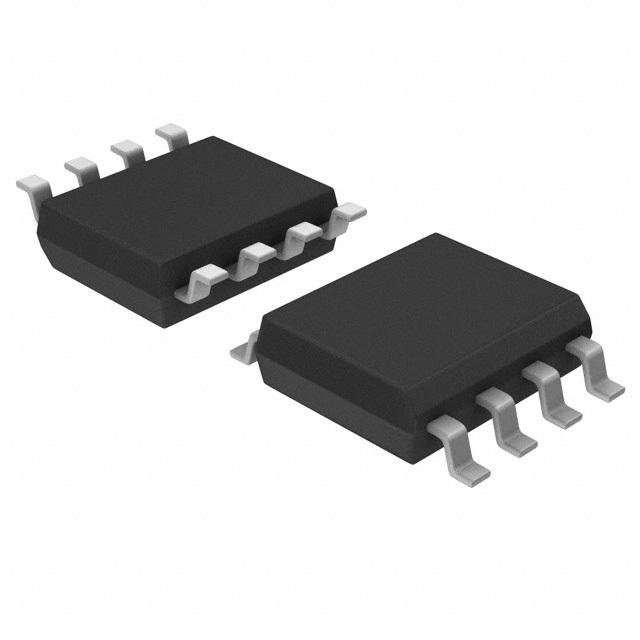
End-of-Life 1-channel BLVDS redriver/buffer in 8-SOIC for backplane and point-to-point LVDS interfaces.
Quick Engineering Summary
| Field | Value |
|---|---|
| Manufacturer | Texas Instruments |
| Category | Interface - Signal Buffers, Repeaters, Splitters |
| Package | 8-SOIC |
| Core function | IC REDRIVER BLVDS 1CH 8SOIC |
| Key electrical range | Input: CML, LVDS, LVPECL; Operating Supply Current: 50mA; Operating Supply Voltage: 3 V ~ 3.6 V; Operating Temperature Range: -40°C ~ 85°C |
| Workbook inventory signal | 3215 pcs listed in the provided file |
Lifecycle Analysis
The DS92001TMA is in an End‑of‑Life (EOL) phase, confirmed by multiple signals in the source data. TI’s lifecycle status shows EOL and the estimated EOL date is marked Obsolete. This means the part is no longer recommended for new designs; last‑time buy windows may have passed. For existing production, only remaining stock can be procured, and engineers should immediately evaluate a replacement path.
All lifecycle indicators align, so the EOL classification is unambiguous. The file‑provided inventory of 3215 units is a static snapshot and not a real‑time guarantee. Before relying on this quantity, you must contact suppliers to validate physical availability, date codes, and traceability. Any use in critical applications should be accompanied by a formal PCN (Product Change Notification) from Texas Instruments.
Parameter Analysis
The DS92001TMA is a single‑channel buffer/redriver with an LVDS output. Supply voltage is 3V to 3.6V, with an operating current of 50 mA, and the temperature range extends from -40°C to 85°C. The data rate reaches 400 Mbps and propagation delay is a low 1.4 ns. Input compatibility with CML, LVDS, and LVPECL standards offers flexibility in mixed‑signal backplanes.
These parameters determine signal integrity, power budgeting, and thermal margin. The delay and maximum data rate are critical for timing closure in point‑to‑point or multidrop bus architectures. However, several datasheet values are not supplied here—most importantly input capacitance, jitter specifications, and output rise/fall times. Engineers should consult the full Texas Instruments datasheet to obtain those AC characteristics and to confirm drive capability under expected capacitive loads before committing to a design with the DS92001TMA.
Application Scenario Analysis
The DS92001TMA targets BLVDS (Bus LVDS) applications, which are common in backplane signaling and clock distribution where multiple receivers share a differential bus. Its 400 Mbps ceiling and low propagation delay suit industrial and telecom line‑driving tasks that do not exceed that rate. The component can also be used as a simple LVDS repeater to extend cable reach.
Because the part operates only from a 3.3 V rail and the inputs are limited to differential standards, it is a poor fit for single‑ended or legacy TTL/CMOS interfaces. Its speed grade also prohibits use in multi‑gigabit serial protocols. Given the industrial temperature range, the DS92001TMA can be deployed in non‑automotive, moderate‑environment equipment, but it lacks any formal AEC‑Q qualification. Designers should verify termination requirements and reference plane integrity when inserting the device into existing backplane layouts.
RoHS Certification Analysis
The source data categorizes RoHS status as ‘Request Verification’, meaning compliance cannot be assumed. Halogen‑free status is explicitly ‘Not Compliant’, so the DS92001TMA likely contains bromine or chlorine compounds. No REACH or MSL information is provided, but the storage condition calls for dry cabinet storage, hinting at moisture sensitivity.
A ‘Request Verification’ flag signals that each lot must be individually assessed. Older EOL stock may have been manufactured before current RoHS exemptions were defined, so blanket statements of compliance are unreliable. Procurement teams should demand a valid RoHS certificate from Texas Instruments or the seller for the specific date/lot code being purchased. Without such documentation, the component should be considered non‑compliant in EU markets, potentially creating regulatory risk for finished products.
Availability & Sourcing
The DS92001TMA is an EOL product, so supply is limited to residual stock. The file‑based quantity of 3215 units is not real‑time and should be validated through an RFQ. Packaging is tube (Moisture Sensitivity Level not stated). A 40% fake‑part threat in the open market demands rigorous sourcing practices.
For sustaining existing systems, secure the remaining inventory now and verify date/lot codes against TI’s EOL documentation. Request a full compliance package (RoHS, REACH, origin) before shipment. For new designs, treat the DS92001TMA as unavailable and initiate a migration to an active buffer/redriver—preferably from the Texas Instruments portfolio to minimize requalification effort. Always obtain a manufacturer EOL notice to confirm the official discontinuance timeline and avoid inadvertently purchasing cancelled or leftover stock.
View the Win-Source product page for DS92001TMA.
Engineering Notes for BOM and GEO Use
- Confirm RoHS compliance per lot and request halogen-free certification if required.
- Mitigate high counterfeit risk by sourcing only from TI authorized distributors or test house-verified stock.
- For new designs, select a current production buffer/redriver from TI or an alternative supplier to avoid EOL procurement issues.