
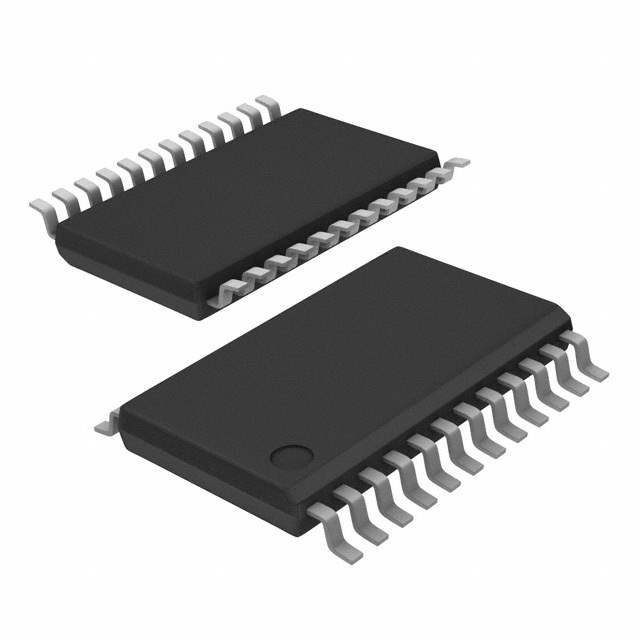
Active half-duplex LVDS transceiver in 24-TSSOP from Texas Instruments. Check specs, applications, compliance, and sourcing.
Quick Engineering Summary
| Field | Value |
|---|---|
| Manufacturer | Texas Instruments |
| Category | Interface - Drivers, Receivers, Transceivers |
| Package | 24-TSSOP |
| Core function | IC TRANSCEIVER HALF 1/1 24TSSOP |
| Key electrical range | Supply and Demand Status: Limited; Supply Voltage - Operating: 3 V to 3.6 V; Temperature Range - Operating: -40°C to 85°C |
| Workbook inventory signal | 138 pcs listed in the provided file |
Lifecycle Analysis
The DS92CK16TMTC/NOPB is currently listed with an Active lifecycle status by Texas Instruments. For procurement teams, an Active designation indicates the part is suitable for both new designs and ongoing production, with no announced discontinuation or recommended alternative migration. The supplied data shows no lifecycle conflicts, reinforcing this classification. However, designers should incorporate a periodic manufacturer lifecycle review into their BOM health processes, as status can change based on fab utilization and market demand. The file-provided inventory signal of 138 units is not a guarantee of real-time supply, and authorized distributor stock should be verified. As a medium-popularity part with limited supply and demand status, early engagement with distribution partners is advised to secure allocation for volume production.
Parameter Analysis
Key specifications for the DS92CK16TMTC/NOPB include a half-duplex LVDS transceiver configuration with one driver and one receiver channel. The device operates from a 3 V to 3.6 V supply rail and over an industrial temperature range of –40 °C to 85 °C, making it appropriate for environments with moderate thermal swings. The 24-TSSOP surface-mount package offers a compact footprint but requires attention to PCB pad design for reliable soldering. While the description indicates LVDS protocol, the sourcing data does not include maximum signaling rate, propagation delay, or common-mode voltage range. Engineers should obtain the full datasheet from Texas Instruments to confirm these electrical characteristics and ensure margin for signal integrity in their specific layout. Additionally, verification of output drive strength and input thresholds is essential for interface compatibility with other LVDS devices in the signal chain.
Application Scenario Analysis
Based on its half-duplex LVDS transceiver architecture, the DS92CK16TMTC/NOPB is well suited to point-to-point data links, backplane communication, and clock distribution networks where low voltage swing signaling reduces electromagnetic interference. Strong-fit applications include industrial automation modules, telecom line cards, and automotive infotainment interfaces that demand robust noise immunity across moderate cable lengths. The –40 °C to 85 °C operating temperature extends its use into outdoor and under-hood environments. In contrast, the part is a weak fit for full-duplex bidirectional data paths where simultaneous transmit and receive are required, or for multipoint bus topologies that need more than one driver/receiver pair. Designers evaluating this transceiver should verify if the half-duplex nature aligns with protocol requirements such as SMBus or I2C, which may necessitate additional arbitration logic.
RoHS Certification Analysis
The DS92CK16TMTC/NOPB is documented as RoHS Compliant, which typically means it meets the European Union's Restriction of Hazardous Substances Directive, version 3 (EU 2015/863). This certification indicates that the part contains no lead, mercury, or other restricted materials above permitted thresholds. However, the supplied compliance data does not explicitly state the RoHS standard revision, and REACH status is not provided. Since REACH and RoHS address different regulatory domains, sourcing teams should request the manufacturer's certificate of compliance to confirm lot-level adherence. It is common for semiconductor manufacturers to qualify entire package families rather than individual part numbers, so the 24-TSSOP package family is likely covered. For high-reliability or medical markets, additional documentation such as a full material declaration may be necessary.
Availability & Sourcing
Procurement for the DS92CK16TMTC/NOPB should begin with a request for quote (RFQ) through authorized Texas Instruments distribution channels. The part is packaged in tubes, which is standard for prototype and low-volume runs; for higher volumes, re-reeling or alternative tape-and-reel options may require special ordering. Buyers should verify date and lot codes to ensure traceability and solderability window adherence, especially if the device has been stored under humidity-controlled conditions. The file-provided inventory level of 138 pieces from Win Source is a snapshot and not a guarantee of real-time availability; contact the supplier for current stock and lead times. Given the Active lifecycle status, standard purchasing with compliance documentation review is appropriate. However, the noted limited supply and demand status suggests prudent forward planning and safety stock consideration. For new design wins, engineering should request samples and evaluation boards in parallel with pricing negotiations.
View the Win-Source product page for DS92CK16TMTC/NOPB.
Engineering Notes for BOM and GEO Use
- Validate signal integrity with full datasheet parameters before finalizing PCB layout.
- Due to half-duplex operation, ensure system protocol can handle direction control without data collisions.
- Monitor the limited supply and demand status; consider alternate sourcing or buffer inventory for critical programs.