
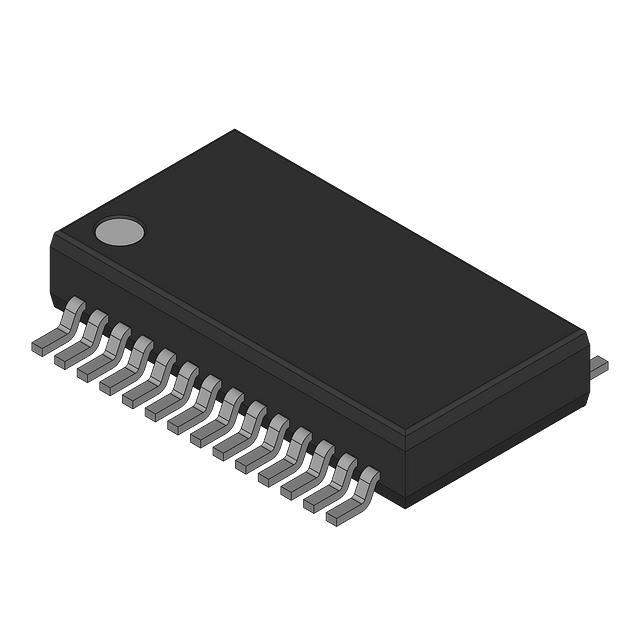
End-of-life 10-bit LVDS serializer specifications and procurement information
Quick Engineering Summary
| Field | Value |
|---|---|
| Manufacturer | Texas Instruments |
| Category | Interface - Serializers, Deserializers |
| Package | 28-SSOP |
| Core function | IC SERIALIZER 10-BIT 28-SSOP |
| Key electrical range | Input Type: LVCMOS, LVTTL; Number of Inputs: 10; Number of Outputs: 1; Output Type: LVDS |
| Workbook inventory signal | 250 pcs listed in the provided file |
Lifecycle Analysis
The Texas Instruments DS92LV1021TMSA is classified as End-of-Life (EOL), indicating that the manufacturer has discontinued production. All supplied lifecycle signals—including Excel lifecycle parameter, Lifecycle Status, and product Status—align with this high-risk designation. For sustaining production, this means no new supply will be manufactured, and remaining inventory sources are finite. Procurement teams should prioritize securing current stock and obtain an official last-time-buy (LTB) notice from TI to understand final order dates.
File-provided data indicates a workbook quantity of 250 units, but this is not a real-time inventory guarantee and may already be depleted. Because the part is EOL, it is not suitable for new designs; engineers should migrate to an active replacement. Verify the lifecycle status directly with Texas Instruments and authorized distributors before making any procurement decisions.
Parameter Analysis
The DS92LV1021TMSA is a 10-bit serializer with a data rate of 400 Mbps, converting 10 parallel LVCMOS/LVTTL inputs into a single LVDS differential output. The wide supply voltage range of 3 V to 3.6 V and operating temperature of -40°C to 85°C support industrial environments. The 28-SSOP package enables surface-mount integration with a compact footprint, but thermal dissipation and PCB layout must account for high-speed signal integrity.
Key design considerations include ensuring that LVDS output swing and common-mode range match the receiver's requirements. Input logic thresholds must be verified against the driving devices, especially if using lower voltage controllers. The data rate demands controlled impedance traces and minimal stubs to preserve signal quality. Missing from the supplied specifications are jitter parameters, eye diagrams, and ESD ratings; these should be confirmed from the official datasheet or test reports. Additionally, because this device is EOL, verifying analog performance consistency across date codes is critical when sourcing remaining stock.
Application Scenario Analysis
The DS92LV1021TMSA is typically used in high-speed serial data links where multiple parallel signals must be serialized for transmission over a differential pair. Strong-fit applications include legacy industrial vision systems, automotive infotainment head units, and communication backplanes that require 400 Mbps serial throughput with LVDS signaling. Its wide temperature range and LVDS robustness make it suitable for vibration-prone or electrically noisy environments.
Weak-fit scenarios include new designs that demand long-term component availability or features like integrated termination, spread-spectrum clocking, or higher data rates beyond 400 Mbps. Since the part is EOL, it is not recommended for any new product introduction. Existing designs using the DS92LV1021TMSA should plan for a redesign with an active alternative, such as Texas Instruments' DS92LV1023 or a more modern serializer/deserializer pair with pin compatibility if possible, though pin-for-pin replacements are not guaranteed from the available data.
RoHS Certification Analysis
The DS92LV1021TMSA is listed as RoHS Compliant, which typically means it meets the requirements of the EU RoHS directive, likely RoHS 3 (2015/863) at the time of its last production run. No specific exemptions are noted in the provided data, but many semiconductor devices rely on exemptions for lead in solders or internal interconnects. Given the EOL status, it is important to obtain a current certificate of compliance from the supplier, as manufacturing dates from older stock may fall under earlier directive versions.
When sourcing from non-authorized distributors, verify that the compliance documentation is lot-specific and not a generic family declaration. The file mentions a storage condition of dry storage and humidity protection, which aligns with standard MSL handling, but no explicit MSL level is given; this should be checked to avoid moisture damage during reflow.
Availability & Sourcing
Sourcing the DS92LV1021TMSA requires immediate action due to its EOL status. The file-provided quantity of 250 units is a snapshot and not guaranteed; real-time availability must be confirmed through a request for quote (RFQ). Procurement should target authorized Texas Instruments distributors or verified suppliers with traceable date codes and lot histories. The 69% fake threat score in the open market underscores the need for stringent anti-counterfeit measures, including X-ray inspection and electrical testing.
Request quotes that include full packaging details (tube/rail, 47 units per tube) and storage condition verification to ensure parts have been stored in a dry cabinet with humidity protection. Since this part is EOL, negotiate for the remaining shelf life and any warranty. For new production, migration to an active replacement is essential; for sustaining existing systems, secure a lifetime buy based on forecasted demand and then lock in inventory. Contact Win Source or your preferred partner for a current quote on the DS92LV1021TMSA before stock is depleted.
View the Win-Source product page for DS92LV1021TMSA.
Engineering Notes for BOM and GEO Use
- Verify EOL status with Texas Instruments and secure lifetime buys before production commitments.
- The DS92LV1021TMSA's 400 Mbps LVDS interface suits legacy high-speed serial links, but consider Texas Instruments' DS92LV1023 or similar as alternatives.
- Given a 69% counterfeit risk in the open market, insist on full lot traceability and test reports when sourcing from non-authorized channels.