
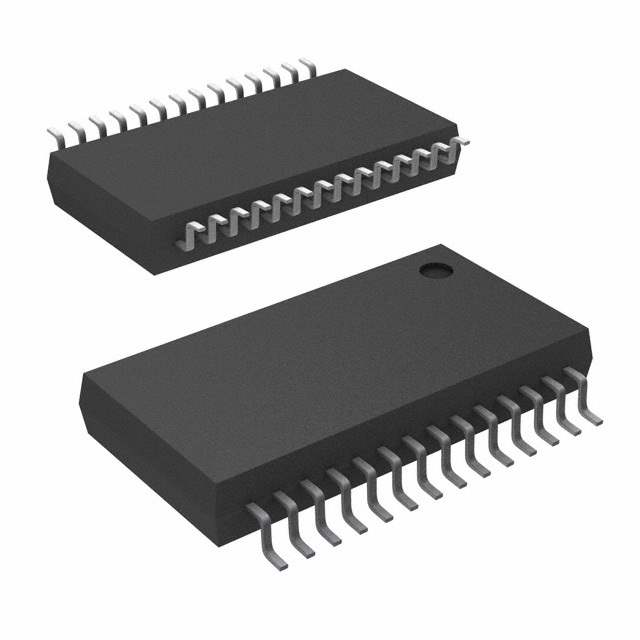
Discontinued Texas Instruments Serializer – Verify Lifecycle & Source Carefully
Quick Engineering Summary
| Field | Value |
|---|---|
| Manufacturer | Texas Instruments |
| Category | Interface - Serializers, Deserializers |
| Package | Tube |
| Core function | IC SERIALIZER 10-BIT 28-SSOP |
| Key electrical range | Input Type: LVCMOS, LVTTL; Number of Inputs: 10; Number of Outputs: 1; Output Type: LVDS |
| Workbook inventory signal | 6080 pcs listed in the provided file |
Lifecycle Analysis
Texas Instruments has marked the DS92LV1023EMQ as Discontinued, with additional signals from Excel data showing EOL. All available lifecycle indicators point to end-of-life, meaning the device is no longer manufactured and is not recommended for new designs. For existing production, sustaining engineering must verify last-time buy (LTB) dates and assess remaining authorized channel stock.
The file-provided inventory quantity of 6080 units may represent legacy distributor holdings, but this figure is not guaranteed and may change without notice. Engineers should treat any available stock as finite and prioritize qualification of an alternative serializer to avoid supply disruption.
Because lifecycle signals conflict slightly (EOL vs. Discontinued), conservative procurement is essential. Contact Texas Instruments or an authorized distributor to confirm the official obsolescence notice and obtain a product change notification (PCN) before committing to any purchase.
Parameter Analysis
The DS92LV1023EMQ operates as a 10-bit serializer, converting LVCMOS/LVTTL parallel inputs to a single LVDS serial output at data rates up to 660Mbps. This speed suits moderate-bandwidth serial links in imaging or data-transfer backplanes. The 3V–3.6V supply range and -40°C to 85°C operating temperature make it viable for industrial environments, but the 28-SSOP package and surface-mount mounting require careful PCB layout to maintain signal integrity.
An MSL level of 1 indicates unlimited floor life, which simplifies handling during assembly. However, key parameters such as jitter, propagation delay, and power consumption are not provided in the source data—these must be verified against the original datasheet for timing-critical designs. Additionally, the 28-SSOP footprint is relatively large by modern standards, and pin-compatible replacements may not exist.
The source data flags a 54% fake threat in the open market. This does not affect the electrical parameters but is a critical procurement parameter: engineers must ensure that parts are genuine through date/lot code verification and authorized sourcing.
Application Scenario Analysis
The DS92LV1023EMQ is designed for point-to-point serial data transmission where parallel LVCMOS or LVTTL buses need to be reduced to a single differential pair. Typical applications include industrial camera interfaces, video signal transport, and legacy telecom line cards that require 10-bit payload serialization. The 660Mbps data rate supports moderate-resolution video or sensor data streams.
This part is a poor fit for new designs that demand higher bandwidth, lower pin count packages, or guaranteed long-term availability. Active alternatives from Texas Instruments in the Gigabit serializers family may better serve modern requirements. It is also unsuitable for battery-powered, space-constrained, or high-reliability applications unless stock is secured and qualification tests are repeated.
Because the part is discontinued, any use should be limited to sustaining existing systems. Engineers considering this serializer for a new platform should re-evaluate the risk of obsolescence and the difficulty of re-qualification if supply runs out.
RoHS Certification Analysis
The RoHS status of the DS92LV1023EMQ is ambiguous. A high-level compliance field shows RoHS Compliant, but the detailed specifications explicitly state RoHS Non-Compliant. This contradiction likely arises from different data sources or updates over time. REACH status is unaffected, which does not equate to RoHS compliance.
For EU market products, the default assumption must be that the part is non-compliant with RoHS directive 2015/863 unless proven otherwise. Many discontinued components were originally manufactured under older material sets that did not meet lead-free requirements. Even if some production lots were compliant, lot-level verification is necessary.
Engineers should request a full material declaration and a certificate of compliance from the supplier. Texas Instruments’ official product page (if still accessible) may clarify the RoHS status. Without this documentation, the DS92LV1023EMQ should not be considered RoHS compliant, and any claim of compliance must be treated as unverified.
Availability & Sourcing
As a discontinued Texas Instruments serializer, the DS92LV1023EMQ is available only through excess inventory or spot market channels. The source data shows a file-provided quantity of 6080 units, but this is not a live stock level and must be confirmed via RFQ. Authorized distributors rarely hold discontinued parts, so most supply will come from independent distributors or brokers, requiring heightened scrutiny.
Any purchase must include date/lot code verification, re-testing for electrical performance, and full traceability documentation. The fake threat rate of 54% underscores the need for rigorous counterfeit avoidance measures, including X-ray inspection and decapsulation for high-reliability applications.
To proceed, request a quote for the DS92LV1023EMQ, specifying required quantity, packaging preferences (tube), and target date codes. Compliance certificates for RoHS and REACH should be requested simultaneously. Because the lifecycle is Discontinued, buyers should also evaluate migration to an active serial-deserializer pair from Texas Instruments or an equivalent supplier, and secure sufficient stock to cover transition and lifetime buys.
View the Win-Source product page for DS92LV1023EMQ.
Engineering Notes for BOM and GEO Use
- DS92LV1023EMQ is discontinued; new designs should consider TI's active serializers or verify last-time buy status directly with TI.
- Counterfeit risk is high (54% fake threat in open market); insist on authorized distribution and full traceability documentation.
- RoHS compliance is ambiguous – obtain a Certificate of Compliance from the supplier and cross-check with TI’s material declaration.