
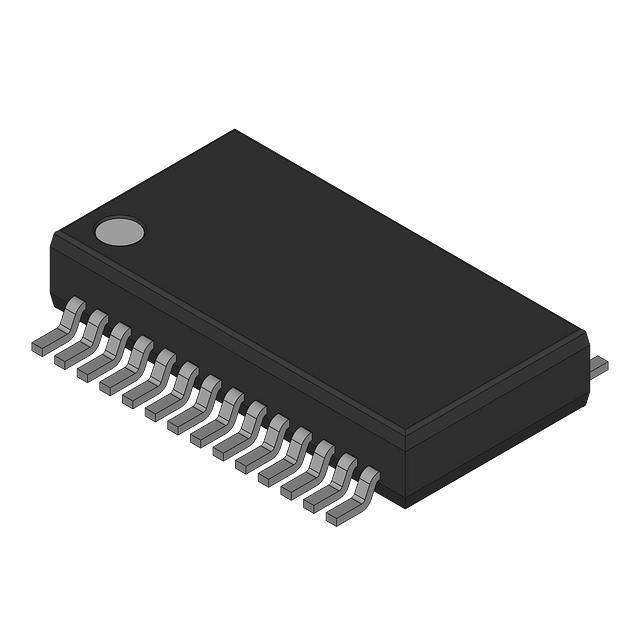
10:1 LVDS Serializer, 660Mbps, 28-SSOP Package
Quick Engineering Summary
| Field | Value |
|---|---|
| Manufacturer | Texas Instruments |
| Category | Interface - Serializers, Deserializers |
| Package | 28-SSOP |
| Core function | LINE DRIVER, PDSO28 |
| Key electrical range | Input Type: LVCMOS, LVTTL; Number of Inputs: 10; Number of Outputs: 1; Output Type: LVDS |
| Workbook inventory signal | 3960 pcs listed in the provided file |
Lifecycle Analysis
The DS92LV1023TMSA from Texas Instruments is classified as Active, indicating ongoing production and full manufacturer support. This status means the part is suitable for both new design-in and volume procurement. Engineers can integrate this serializer without immediate risk of obsolescence, but should still consider long-term product roadmaps and second-source options where feasible.
While the lifecycle signals from the sourcing data align, it is prudent to verify the status directly through Texas Instruments’ official product page or PCN alerts, especially for safety-critical or long-lifecycle applications. The file-provided inventory quantity of 3960 units is not a real-time guarantee, so actual availability should be confirmed with a distributor. No lifecycle conflicts are present, which reinforces confidence for new designs, but periodic revalidation is recommended.
Parameter Analysis
The DS92LV1023TMSA is a 10:1 serializer that converts 10 parallel LVCMOS/LVTTL inputs into a single high-speed LVDS output, achieving a data rate of 660 Mbps. This capability is critical for reducing the number of traces or cables in high-speed point-to-point links, improving signal integrity and lowering EMI. The operating supply voltage range of 3V to 3.6V aligns with many standard logic levels, simplifying power design. The -40°C to 85°C temperature range supports industrial environments, and the 28-SSOP package offers a compact SMD footprint suitable for space-constrained PCBs.
Several key parameters are not specified in the provided snapshot, such as jitter performance, power consumption, propagation delay, and ESD ratings. These parameters directly influence system reliability and timing closure. Engineers must consult the official Texas Instruments datasheet for worst-case values, derating guidelines, and detailed pin descriptions. Thermal resistance and recommended PCB layout patterns should also be verified to ensure proper operation under full load.
Application Scenario Analysis
This serializer excels in applications that demand high-speed unidirectional data transfer over twisted-pair or backplane traces, such as industrial machine vision, video links, automotive infotainment, and telecommunications line cards. By serializing 10 parallel bits into a single LVDS stream, it reduces connector pin count and cabling weight, making it a good fit for systems where physical space and cost are at a premium. The device typically pairs with a compatible deserializer like Texas Instruments’ DS92LV1224, forming a complete chipset.
Conversely, the DS92LV1023TMSA is not designed for bidirectional communication protocols or ultra-low-power sleep-mode applications unless the system can accommodate continuous operation and the LVDS power budget. For designs requiring integrated termination or small swing differential signaling with different voltage thresholds, a validation phase comparing datasheet limits against system specs is essential to avoid signal compatibility issues.
RoHS Certification Analysis
The DS92LV1023TMSA is listed as RoHS Compliant, meaning it meets the restriction of hazardous substances per EU directives. Although the exact RoHS revision (e.g., RoHS 2 or RoHS 3) is not explicitly detailed in the source data, Texas Instruments typically certifies active parts to the latest applicable standard, often RoHS 3 (EU 2015/863) which includes additional phthalates. For documentation, request a full material declaration or certificate of compliance from the distributor.
No specific exemptions are noted, but if the device contains any exempted substances (e.g., lead in glass of electronic components), this would be documented by the manufacturer. The storage condition recommendation of a dry cabinet and humidity-protected packaging indicates moisture sensitivity, which is separate from RoHS but relevant to handling; verify the exact MSL level for proper bake and floor-life procedures.
Availability & Sourcing
As a popular and active interface component, the DS92LV1023TMSA is generally obtainable through authorized channels, though supply and demand are currently noted as limited. The provided workbook quantity of 3960 units should be treated as a snapshot for quoting purposes only—real-time inventory must be confirmed via RFQ. The device is supplied in reel packaging with a dry storage requirement, so procurement should ensure that moisture barrier bags remain intact until use.
A significant 37 percent fake threat in the open market underscores the importance of robust sourcing practices. Always purchase from Texas Instruments authorized distributors or directly from the manufacturer, and request traceability documentation including date codes, lot numbers, and RoHS certificates. For volume production, engage early with distribution to secure allocation, and consider qualifying an alternate source if business continuity is critical. Given the Active lifecycle, the immediate focus should be on obtaining competitive quotes and verifying compliance rather than obsolescence management.
View the Win-Source product page for DS92LV1023TMSA.
Engineering Notes for BOM and GEO Use
- Verify LVDS termination impedance and PCB layout per TI application notes to maintain signal integrity at 660 Mbps.
- Given a 37% counterfeit risk, purchase only from TI authorized distributors and validate lot codes.
- Confirm MSL and dry-pack storage requirements; follow J-STD-033 for floor life after opening to prevent moisture damage.