
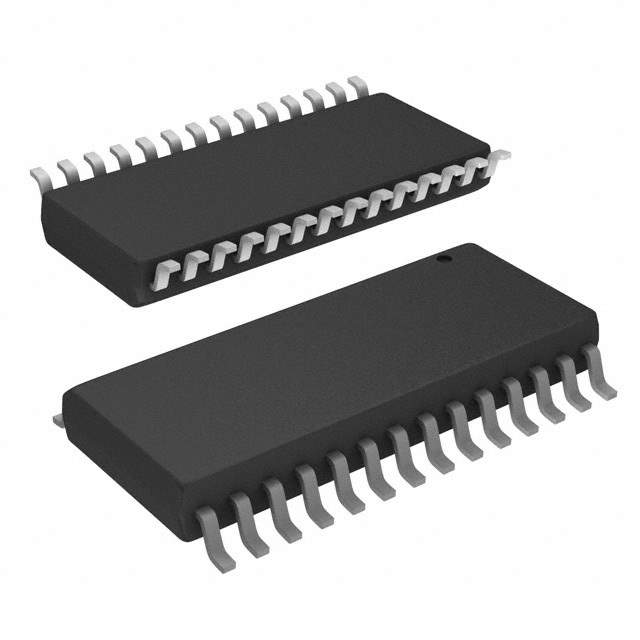
DS92LV1210TMSAX sourcing guide: EOL deserializer specs, applications, and procurement tips.
Quick Engineering Summary
| Field | Value |
|---|---|
| Manufacturer | Texas Instruments |
| Category | Interface - Serializers, Deserializers |
| Package | 28-SSOP |
| Core function | IC DESERIALIZER 10BIT 28-SSOP |
| Key electrical range | Input Type: LVCMOS, LVTTL; Number of Inputs: 1; Number of Outputs: 10; Output Type: LVDS |
| Workbook inventory signal | 1 pcs listed in the provided file |
Lifecycle Analysis
The DS92LV1210TMSAX from Texas Instruments is designated End-of-Life (EOL). This lifecycle status means the manufacturer has discontinued production and no longer recommends this part for new designs. For engineering teams, EOL introduces high procurement risk: limited availability, potential long lead times, and the need for last-time buy arrangements. All supplied lifecycle signals—from internal databases and supplier status—align without conflict, confirming the device is no longer in active production.
With an EOL classification, the DS92LV1210TMSAX should only be considered for sustaining existing products where a redesign is not feasible. Buyers must verify last-time buy windows and any remaining factory stock directly with Texas Instruments. Inventory data provided shows only 1 unit, which is not a real-time guarantee and represents a snapshot from a single source. Engineers should immediately begin evaluating alternative serializers/deserializers with similar specifications and updated lifecycle status to ensure long-term supply continuity.
Parameter Analysis
Key parameters for the DS92LV1210TMSAX include a maximum data rate of 400Mbps, 10-bit deserialization, 1 LVDS input, and 10 LVCMOS/LVTTL outputs. The supply voltage range is 3V to 3.6V, requiring a well-regulated power supply to maintain signal integrity. The operating temperature range of -40°C to 85°C qualifies it for industrial applications, but designers must verify thermal margins in their specific enclosures.
From a PCB layout perspective, the 28-SSOP surface-mount package demands standard reflow processes and occupies moderate board area. Critical parameters not provided in the available data include power consumption, input jitter tolerance, ESD ratings, and detailed timing specifications. Engineers must consult the official Texas Instruments datasheet for these values to ensure proper termination, impedance matching, and compliance with system-level requirements. Without this information, full qualification for high-reliability applications is not possible.
Application Scenario Analysis
The DS92LV1210TMSAX functions as a deserializer, converting a single LVDS serial data stream into 10-bit parallel data with LVCMOS/LVTTL voltage levels. This makes it suitable in systems that require high-speed data aggregation from sensors, cameras, or communication buses where LVDS signaling provides noise immunity. Typical applications include industrial vision systems, medical imaging interfaces, automotive infotainment, and backplane data communication.
However, the device's EOL status severely limits its applicability in new projects. While it may still serve repair or replacement needs in legacy equipment, new designs should migrate to active-lifecycle alternatives. The moderate 400Mbps data rate is adequate for many existing systems but may be insufficient for emerging high-bandwidth standards. Additionally, the 3V minimum supply voltage excludes ultra-low-power designs. The through-hole-less 28-SSOP package is less compact than contemporary QFN or BGA options, further constraining modern space-sensitive applications.
RoHS Certification Analysis
The DS92LV1210TMSAX is listed as RoHS Compliant, indicating that Texas Instruments manufactured this part with materials meeting restrictions on hazardous substances. The specific RoHS directive version (e.g., EU 2015/863) is not explicitly stated in the provided data, but for components of this vintage, compliance is typically to the applicable EU RoHS standard. As an EOL part, it is crucial to verify that the specific production lot being purchased is RoHS compliant, as older batches may have been produced under earlier regulations.
While RoHS status addresses lead and other restricted substances, REACH compliance information is not available in the source data. If full chemical compliance documentation is required for your market, request a Certificate of Compliance from the supplier. Note that RoHS compliance does not automatically cover halogen-free or low-halogen requirements; confirm these if needed. For international shipments, ensure that the packaging and labeling meet the importer's environmental regulations.
Availability & Sourcing
Procurement of the DS92LV1210TMSAX is challenging due to its EOL lifecycle. The file-provided inventory shows only 1 unit, which is not a guarantee of real-time availability. Buyers should immediately submit a request for quote (RFQ) to verify current stock levels, exact date/lot codes, and packaging condition. The part is stored in dry-pack per the supplier, and the packaging is reel (TR), typical for automated assembly.
Given the 47% counterfeit risk indicated in open-market data, sourcing must be restricted to authorized Texas Instruments distributors or reputable partners with full traceability. Request compliance certificates, date codes, and photographs before purchase. For sustaining production, evaluate last-time buy options and secure sufficient stock. Engineering teams should concurrently identify pin-compatible or functionally equivalent replacements with active lifecycle status to mitigate future supply disruptions. Never rely on a single-source for EOL components without a validated migration plan.
View the Win-Source product page for DS92LV1210TMSAX.
Engineering Notes for BOM and GEO Use
- The DS92LV1210TMSAX carries a 47% counterfeit threat in the open market; exclusively source from traceable, authorized distributors.
- EOL status requires immediate migration planning for new designs; avoid relying on this part for production ramps.
- Verify datasheet parameters such as power dissipation, jitter, and ESD ratings before integration, as these are not provided here.