
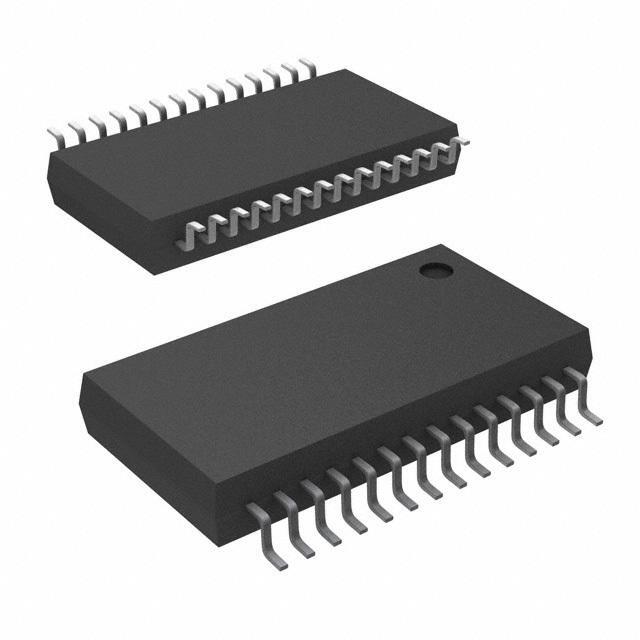
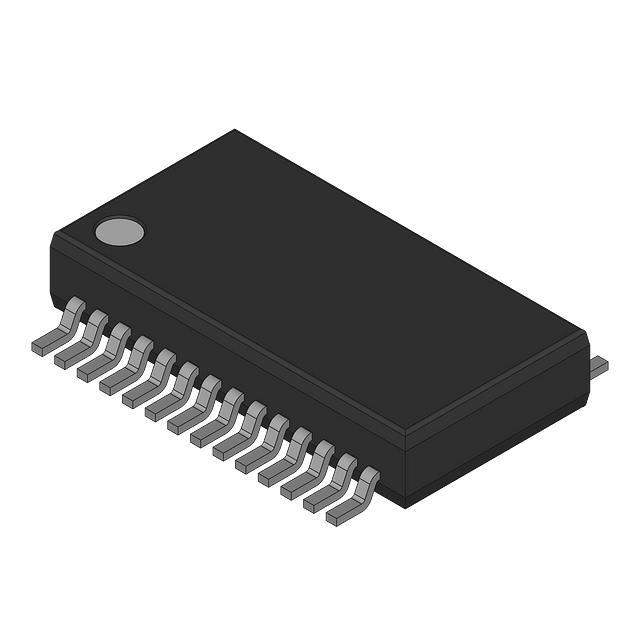
EOL 10-bit deserializer with 400Mbps LVDS input and LVTTL output in 28-SSOP package. Verify lifecycles and inventory before sourcing.
Quick Engineering Summary
| Field | Value |
|---|---|
| Manufacturer | Texas Instruments |
| Category | Interface - Serializers, Deserializers |
| Package | 28-SSOP |
| Core function | IC DESERIALIZER 10-BIT 28-SSOP |
| Key electrical range | Input Type: LVDS; Number of Inputs: 1; Number of Outputs: 10; Output Type: LVTTL |
| Workbook inventory signal | 2500 pcs listed in the provided file |
Lifecycle Analysis
The DS92LV1212AMSA from Texas Instruments is officially designated as End-of-Life (EOL), meaning the manufacturer has ceased or will shortly cease production. This status carries high procurement risk for new designs, as future availability cannot be assured. Buyers should immediately verify the manufacturer’s product discontinuation notice and last-time buy dates to understand the remaining window for purchases.
Although one data field may display 'Active' as a general status, the authoritative lifecycle signal for this part is EOL. Any new design incorporation is strongly discouraged; the part should only be considered for sustaining existing systems where an exact form, fit, and function replacement is required. Engineering teams should begin qualification of a suitable replacement if continuity is needed beyond the current inventory.
According to the supplied inventory file, 2500 units are available, but this quantity is not guaranteed in real-time and may reflect aggregated or historical data. Procuring from this file requires direct RFQ confirmation, as the pool may deplete quickly given the EOL status. Be aware that counterfeit risk is reported at 50% in the open market, so sourcing must be limited to authorized or highly trusted distribution.
Parameter Analysis
The DS92LV1212AMSA is a 10-bit deserializer supporting a data rate of 400 Mbps, designed to convert a single LVDS serial input stream into 10 parallel LVTTL outputs. The supply voltage range of 3 V to 3.6 V is compatible with standard nominal 3.3 V rails, and the operating temperature range from -40°C to 85°C makes it viable for industrial-grade applications within this envelope. The 28-SSOP surface-mount package is a common narrow-body footprint, which simplifies PCB layout but requires attention to pin pitch and coplanarity during assembly.
Key parameters such as propagation delay, jitter tolerance, and power consumption per channel are not provided in this dataset and must be verified from the manufacturer’s official datasheet to ensure signal integrity and timing margins in the target design. Similarly, MSL rating and ESD protection levels are absent, which are critical for manufacturing and handling processes. Designers should cross-check these missing specifications before finalizing a board spin or performing pressure, temperature, and voltage (PVT) margin analysis.
Given the EOL status, parameter verification also becomes important for second-source or replacement evaluation. Any alternate device must match the LVDS input levels, output drive strength, and timing characteristics to avoid system-level re-qualification. The supplied data indicates a family name of DS92LV1212A, suggesting possible variants, but no pin-compatible replacements are offered in this sourcing guide.
Application Scenario Analysis
The DS92LV1212AMSA is typically deployed in high-speed data transmission systems requiring LVDS-to-LVTTL conversion, such as industrial backplane interconnects, telecom baseband processing, and imaging or video data links. Its 400 Mbps rate and 10-bit parallel output suit moderate-bandwidth deserialization tasks where noise immunity and low EMI are critical, thanks to LVDS signaling. Existing designs that already use this part in active production are the primary application today, though new implementations should move to a newer, active device from Texas Instruments or another supplier.
Because the part is EOL, it is a weak fit for any new product development, especially for programs with long lifecycles or stringent qualification requirements (e.g., automotive ISO 26262 or medical IEC 60601). The halogen-free status is not compliant, which may disqualify it from certain green procurement policies. Additionally, applications that rely on active lifecycle availability for long-term maintenance contracts will face supply continuity risk.
If used in legacy systems, the DS92LV1212AMSA can be a cost-effective bridge until a redesign is warranted. However, buyers should account for the 50% fake part risk when sourcing for repair or small-volume builds, and insist on lot traceability and X-ray or electrical testing for incoming inspection. Temperature range and LVTTL output compatibility should be cross-checked with the downstream logic family to avoid signal integrity surprises.
RoHS Certification Analysis
The DS92LV1212AMSA is marked as RoHS Compliant in the provided data. This typically indicates conformance to EU Directive 2011/65/EU and its amendments (RoHS 2 or RoHS 3), though the exact standard version is not specified. Since RoHS compliance is declared at the component level, it is essential to confirm that the specific lots being purchased have not been exempted or reclassified. No exemptions were noted in the supplied information.
An important caveat is that the part is listed as 'Not Compliant' for halogen-free, meaning it may contain bromine or chlorine above the IEC 61249-2-21 thresholds. This could conflict with low-halogen requirements in certain industries. If halogen-free is a design requirement, alternative parts should be considered. REACH status is not provided, so customers must independently verify EU REACH SVHC content if needed.
For full compliance documentation, request a certificate of conformance (CoC) or RoHS certificate from Texas Instruments or the distributor for the specific date code. In high-reliability applications, consider periodic lot-testing to confirm the absence of restricted substances, especially since this is an older part and manufacturing processes may have evolved.
Availability & Sourcing
Sourcing the DS92LV1212AMSA demands caution due to its EOL lifecycle and the reported 50% counterfeit threat in the open market. The supplied workbook indicates a file-based quantity of 2500 pieces, but this figure does not represent live inventory. Buyers must request a current quote and confirm availability with the supplier, specifying exact date and lot code requirements. The part is packaged in tubes/rails, which is typical for SSOP devices and suitable for manual or low-volume assembly.
Traceability is paramount: insist on full documentation of chain of custody, original manufacturer packaging, and date codes. Given the dry storage condition recommendation, parts should be handled with appropriate moisture-sensitive precautions. The DS92LV1212AMSA has a limited supply outlook, so for any ongoing production, securing a safety stock or negotiating a last-time buy with the manufacturer or an authorized distributor is critical.
Before placing a large order, validate the lifecycle status directly with Texas Instruments and review the product notification for obsolescence timelines. If only small quantities are needed for repair or maintenance, a test and inspection protocol—including X-ray, electrical testing, and visual comparison against known good samples—helps mitigate counterfeit risk. For new applications, this sourcing guide recommends transitioning to an active deserializer alternative to avoid long-term supply challenges.
View the Win-Source product page for DS92LV1212AMSA.
Engineering Notes for BOM and GEO Use
- The DS92LV1212AMSA is EOL; verify last-time buy dates and avoid in new designs unless absolutely necessary.
- With a 50% fake threat in the open market, source only from authorized or traceable distributors.
- Confirm RoHS compliance and halogen-free status with lot-specific testing before soldering.