
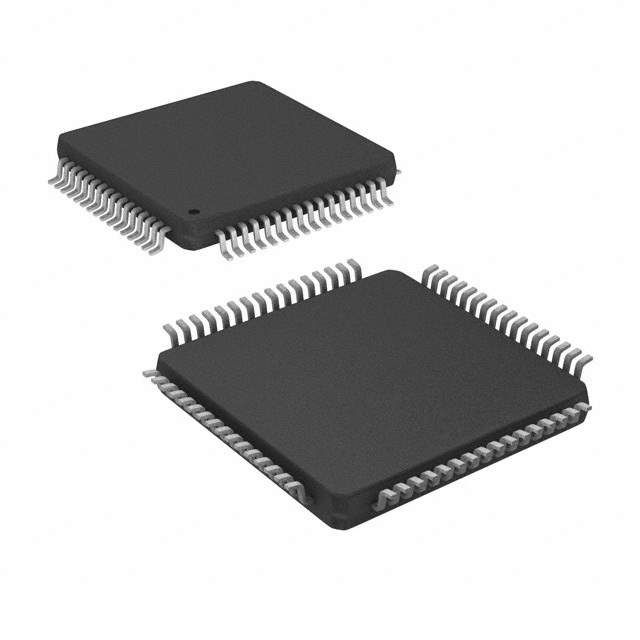
EOL 32-bit LVDS serializer with 2.72Gbps data rate in 64-TQFP
Quick Engineering Summary
| Field | Value |
|---|---|
| Manufacturer | Texas Instruments |
| Category | Interface - Serializers, Deserializers |
| Package | 64-TQFP (10x10) |
| Core function | IC SERIALIZER LVDS 32BIT 64TQFP |
| Key electrical range | Input Type: Channel Link II (LVCMOS); Number of Inputs: 32; Number of Outputs: 4; Operating Supply Voltage: 3.135 V ~ 3.465 V |
| Workbook inventory signal | 40 pcs listed in the provided file |
Lifecycle Analysis
The DS92LV3241TVS/NOPB is officially End-of-Life (EOL), confirmed consistently across all provided lifecycle signals. An estimated EOL date of 2029 is listed, but this should not be relied upon without direct validation from Texas Instruments. For engineers, this means the part is no longer recommended for new designs. Existing production can continue only if adequate inventory has been secured and a migration strategy is in place.
The high risk level reflects the limited availability and the documented 59% counterfeit threat in the open market. The file-provided inventory of 40 units is not a real-time guarantee and must be confirmed during the RFQ process. Procurement teams should immediately assess their required annual volumes against available stock and request formal last-time buy notifications from the manufacturer.
For sustaining applications, it is critical to verify the exact EOL schedule, including the final order date and final shipment date. Any design still in the qualification phase should be reevaluated to adopt a newer pin-compatible or functionally compatible serializer from Texas Instruments or a competing supplier.
Parameter Analysis
The DS92LV3241TVS/NOPB is characterized by a 32:4 serialization ratio, converting 32 parallel LVCMOS input channels into four high-speed LVDS serial streams. Its maximum data rate is 2.72Gbps, which determines the effective aggregate throughput for the parallel interface. The operating supply voltage range is tight at 3.135V to 3.465V, requiring careful power rail design and decoupling. The industrial temperature range of -40°C to 85°C makes it suitable for moderate environmental conditions but not extreme automotive or outdoor extremes.
The 64-TQFP package offers a 10x10 mm footprint, which is relatively large by modern standards and may influence PCB layout for dense designs. Input compatibility with Channel Link II (LVCMOS) suggests a straightforward interface to FPGAs or image sensors using 3.3V logic. The output type is Channel Link II (LVDS), which provides common-mode noise rejection and low EMI for cable transmission.
Key missing parameters from the provided data include power consumption (static and dynamic), jitter specifications, setup/hold timing, and ESD ratings. These must be obtained from the official Texas Instruments datasheet before finalizing any design integration. Additionally, verify that the 2.72Gbps data rate is per channel or aggregate, as this impacts system throughput calculations.
Application Scenario Analysis
The DS92LV3241TVS/NOPB is primarily used in systems that require reduction of wide parallel busses into compact serial links. Strong-fit applications include industrial machine vision cameras, where multiple LVCMOS sensor outputs are serialized for transmission over a single LVDS cable. It also fits well in automotive infotainment or ADAS modules (if temperature constraints allow) to connect a camera or display processor to a central unit. Medical imaging equipment that relies on parallel daisy-chained sensors can benefit from the serializer's ability to reduce connector pin count and cable size.
Weak-fit scenarios include low-speed digital interfaces where simpler level shifters suffice, or applications already migrated to newer serial standards like FPD-Link III or V³Link. Because the part is EOL, it is not suitable for any new design that requires long-term supply assurance. Even in existing designs, if the application has strict temperature or reliability requirements beyond 85°C, this serializer may not meet the needed margin.
Designers should note that the 32-bit width is generous but must be mapped correctly to the parallel source. The lack of published jitter characteristics means signal integrity over long cables should be modeled carefully using available IBIS or SPICE models from TI. For brand-new developments, consider newer serializer families that offer better integration and active product status.
RoHS Certification Analysis
The DS92LV3241TVS/NOPB is listed as RoHS Compliant in the source data, which implies adherence to EU Directive 2011/65/EU and its amendments (typically RoHS 3 or the applicable version at the time of manufacture). An additional Halogen Free Compliant attribute indicates that the part meets low-halogen requirements per IEC 61249-2-21, which is important for environmentally sensitive applications.
However, the provided compliance status is typically at the family or part-number level, not at the individual date-code level. Procurement teams should request a full material declaration or certificate of compliance for each lot to ensure ongoing conformity, especially since the part is EOL and stocks may include older date codes that were compliant at the time of production but not necessarily to the latest amendment.
REACH status is not provided, so it should be verified separately if the end application requires SVHC declarations. No exemptions are noted, but exemptions can exist for lead in certain high-reliability solders; check with TI documentation. The compliance data is sufficient for initial qualification but should be revalidated with the supplier before committing to a large purchase during the EOL procurement window.
Availability & Sourcing
As an EOL part, availability of the DS92LV3241TVS/NOPB is limited and tightening. The file-provided inventory of 40 units represents a snapshot and does not guarantee immediate fulfillment. Demand is rated as limited, and the open-market counterfeit risk is alarmingly high at 59 percent. Any sourcing must start with a request for quote (RFQ) to confirm real-time stock, pricing, and origin.
When procuring, require full traceability documentation, including manufacturer certificate of origin, date/lot codes, and evidence that the parts have been stored in dry, humidity-protected conditions as specified. The standard packaging is tray (TQFP), which should be verified to avoid damage in transit. Because the part is halogen-free and RoHS compliant, confirm that the offered stock matches these properties for the specific date codes.
Given the high risk, consider alternatives proactively. For existing production that must continue, secure inventory now and evaluate whether a last-time buy quantity is sufficient to cover the remaining product lifespan. For any new project, selecting a current Texas Instruments serializer such as those from the DS90UB or DS92LV series with active status is strongly advised. Direct engagement with TI or authorized distributors for migration support is recommended.
View the Win-Source product page for DS92LV3241TVS/NOPB.
Engineering Notes for BOM and GEO Use
- Verify remaining production lifetime and last-time buy dates directly with Texas Instruments before committing to new production.
- Given the 59% counterfeit threat in the open market, source only from authorized distributors and insist on traceability documentation.
- For new designs, migrate to a recommended alternative such as a newer TI FPD-Link or V³Link serializer to ensure long-term availability.