
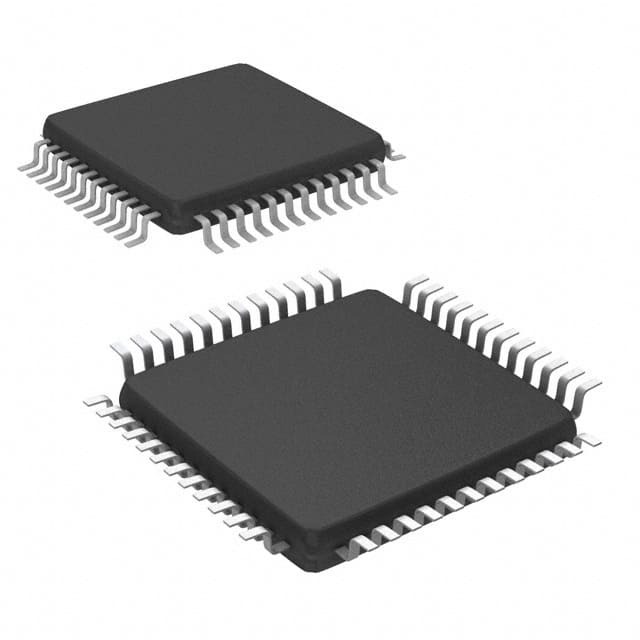
Active lifecycle, RoHS compliant, 24-bit DC-balanced FPD‑Link serializer for flat panel displays and video links.
Quick Engineering Summary
| Field | Value |
|---|---|
| Manufacturer | Texas Instruments |
| Category | Interface - Serializers, Deserializers |
| Package | 48-TQFP (7x7) |
| Core function | DS99R101 3-40MHZ DC-BALANCED 24- |
| Key electrical range | Operating Temperature Range: 0°C ~ 70°C (TA); Supply and Demand Status: Limited |
| Workbook inventory signal | 1 pcs listed in the provided file |
Lifecycle Analysis
The Texas Instruments DS99R101VS/NOPB is in Active lifecycle status, as confirmed by multiple signals in the provided data. This classification carries a low risk for new designs, indicating that TI continues to manufacture and support the device for both prototyping and production. Design engineers can safely incorporate the DS99R101VS/NOPB into new projects, provided they verify long-term availability with authorized distributors or TI directly.
Though the status is Active, the inventory sample shows only one unit from the file source, which is not a real-time stock level. Buyers should treat this as indicative and request a quote for current quantities. The part number belongs to the DS99R101 family, originally developed by National Semiconductor and now produced under Texas Instruments; the lifecycle alignment across portfolios appears consistent. No conflicting signals such as NRND notices or discontinuation warnings were noted. For sustaining production, monitor TI’s product change notifications and evaluate early if migration plans become necessary. Overall, the DS99R101VS/NOPB’s Active status supports conventional procurement and design-in cycles with standard lead time expectations.
Parameter Analysis
The DS99R101VS/NOPB is a serializer featuring a maximum data rate of 960 Mbps, converting 24 parallel LVCMOS inputs into a single FPD-Link or LVDS output. The supply voltage range of 3.0V to 3.6V aligns with typical 3.3V system rails, requiring only basic decoupling for stable operation. The 48-pin TQFP package (7×7 mm) offers a compact footprint suitable for space-constrained digital boards, with surface mount termination. Operating temperature is rated for commercial grade (0°C to 70°C), which limits its use in industrial or automotive environments without additional thermal management.
The DC-balanced design helps maintain signal integrity and reduce jitter, crucial for high-speed serial links, but the datasheet does not provide specific jitter or eye-diagram parameters in the sourced data. Designers must verify AC characteristics, output swing, and power consumption from the full TI datasheet to ensure compatibility with target serial interfaces. Additionally, ESD ratings are not listed; these should be confirmed for robustness. The MSL 3 moisture sensitivity level requires precautions during PCB assembly, including baking if the package exceeds its floor life. For integration, the 24-bit input width accommodates common parallel video standards like RGB888, but the 960 Mbps rate limits the maximum pixel clock to about 40 MHz when using 24-bit color. Engineers should evaluate these parameters against system requirements and perform signal integrity simulations if using long cables.
Application Scenario Analysis
The DS99R101VS/NOPB excels in applications that require parallel-to-serial conversion of 24-bit data streams, particularly for video transmission. Its primary target is flat panel display interfaces where LVDS is prevalent, such as LCD monitors, infotainment screens, and industrial HMI panels. The serializer accepts LVCMOS inputs from a graphics controller and outputs a serialized FPD-Link signal, simplifying cabling and reducing EMI. With a 960 Mbps rate, it can support resolutions up to approximately WXGA at 60 Hz, depending on blanking overhead.
Strong-fit scenarios also include camera serializers, medical imaging, and instrumentation where multiple parallel data lines need to be aggregated over a single twisted-pair or coaxial cable. The commercial temperature range and standard packaging make it suitable for indoor or benign environments. Weak-fit applications include automotive radar or under-hood systems that require extended temperature ranges (–40°C to +105°C) and higher reliability certifications like AEC-Q100, which the DS99R101VS/NOPB lacks. Similarly, next-generation displays demanding 2K or 4K resolution with higher bandwidth would exceed its 960 Mbps limit. For simple bidirectional serial links, a single serializer without a companion deserializer (such as DS99R102) would be insufficient, necessitating a full chipset solution. Engineers should confirm that the 24-bit input width matches the data source and that the output interface (FPD-Link) is compatible with the receiver’s expected LVDS or FPD-Link coding.
RoHS Certification Analysis
The Texas Instruments DS99R101VS/NOPB is declared RoHS Compliant in the source data, indicating it meets the substance restrictions of EU Directive 2011/65/EU and its amendment 2015/863 (RoHS 3). This compliance covers the six restricted substances plus the four added phthalates, making it suitable for products sold in the European Union and many other markets that follow similar regulations. Additionally, the REACH status is listed as Unaffected, meaning the part does not contain Substances of Very High Concern (SVHC) above 0.1% weight. However, REACH is a separate regulation; RoHS and REACH should be evaluated independently.
No exemptions are explicitly mentioned for this part, but some serializers may use lead in solder bumps or glass die attach under exempted categories. It is critical to request the full material declaration or certificate of compliance from TI for the specific lot being procured. The MSL rating of 3 with a 168-hour floor life influences storage and handling but does not directly affect RoHS status. For high-volume manufacturing, verify that the tray packaging and labels carry the appropriate environmental symbols. Given that compliance data is provided at the family level in some databases, lot-level verification ensures that no material substitutions have occurred that could invalidate the RoHS declaration.
Availability & Sourcing
Procurement of the DS99R101VS/NOPB should follow a standard RFQ process with authorized Texas Instruments distributors or trusted independent sources. The device is Active, and the estimated production lead time is 5 weeks, which suggests reasonable availability for planning. However, the file-provided quantity of 1 unit is a snapshot and not real-time; always confirm live stock when placing orders. The part is supplied in tray packaging with 250 units per tray, making it suitable for medium-volume production runs.
Given the 74% fake threat in the open market reported in the source data, it is essential to source from franchised or reputable suppliers and request authenticity verification, including date and lot code traceability. The many alternate part numbers (e.g., DS99R101VSNOPB, DS99R101VS) may help in locating stock but should be cross-checked for exact equivalence. Buyers should also request compliance documentation (RoHS, REACH, and MSL certificates) for each lot to maintain traceability. The supply-and-demand status is listed as Limited, so larger quantities may require allocation or scheduling. For new designs, engaging TI’s field application engineers early can secure samples and support. While not a substitute or drop-in replacement guide, if seeking alternatives, note the DS99R102 deserializer is the companion chip. For end-of-life or migration scenarios, which are not relevant here given Active status, standard lifecycle management applies. To obtain current pricing and availability, submit a quote request through a Win Source or other distributor portal, specifying the TI part number DS99R101VS/NOPB.
View the Win-Source product page for DS99R101VS/NOPB.
Engineering Notes for BOM and GEO Use
- Verify supply voltage is strictly within 3.0V–3.6V; tolerance outside may cause malfunction.
- MSL Level 3 requires baking before reflow if exposed beyond 168 hours; follow J-STD-033 guidelines.
- Operating temperature limited to 0°C–70°C; not suitable for extended temperature applications without thermal management.