
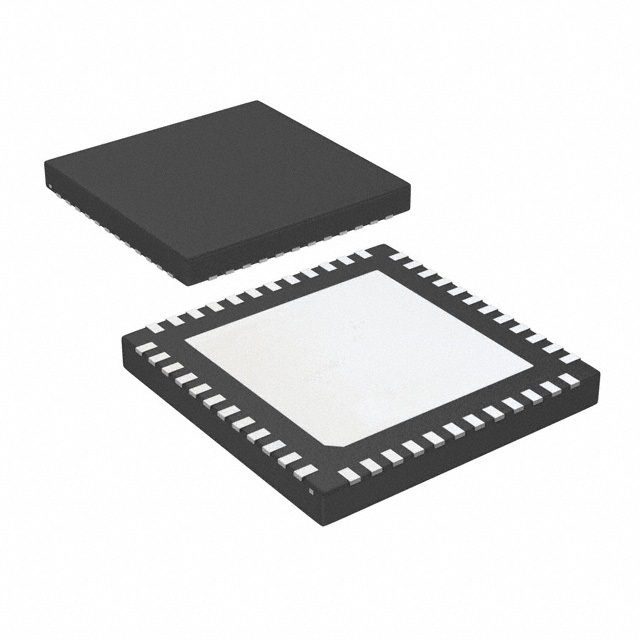
Discontinued 960Mbps Serializer – Verify Inventory and Compliance Before Design-In
Quick Engineering Summary
| Field | Value |
|---|---|
| Manufacturer | National Semiconductor (TI) |
| Category | Interface - Serializers, Deserializers |
| Package | 48-TQFP |
| Core function | LINE DRIVER, PQFP48 |
| Key electrical range | Input Type: LVCMOS; Number of Inputs: 24; Number of Outputs: 1; Output Type: FPD-Link, LVDS |
| Workbook inventory signal | 2469 pcs listed in the provided file |
Lifecycle Analysis
The DS99R101VSX/NOPB from National Semiconductor (TI) is officially discontinued. Multiple sources confirm an end‑of‑life status, though some internal records may list EOL parameters inconsistently. For engineers and procurement teams, this means the part should not be considered for new designs. Any remaining inventory is finite, and no further production is planned. The workbook‑quantity signal of 2469 units is file‑provided and not a guarantee of real‑time availability. Validating actual distributor stock and obtaining a last‑time‑buy notice from the manufacturer are critical steps.
For existing production lines, immediate action is required to secure stock and begin a migration path to an alternative serializer if long‑term supply is necessary. The high risk level underscores the urgency: relying on this part without confirmed inventory could lead to production gaps.
Parameter Analysis
The DS99R101VSX/NOPB operates as a 24:1 serializer, converting 24 LVCMOS inputs into a single FPD‑Link or LVDS output stream at up to 960Mbps. The 48‑TQFP package with a 7x7 mm body is surface‑mountable. Supply voltage is specified from 3V to 3.6V, and the commercial temperature range is 0°C to 70°C, making it suitable for controlled indoor environments.
When integrating this device, engineers must verify LVCMOS input voltage thresholds (VIL/VIH) and ensure that the differential output complies with FPD‑Link or LVDS standards as required by the downstream receiver. Missing datasheet details—such as jitter performance, eye‑diagram characteristics, power‑on reset timing, and detailed AC timing parameters—must be obtained from original TI documentation before finalizing any legacy design. The high input count and single output suggest the device was intended to parallelize many low‑speed signals into a high‑speed serial link, reducing cabling and connector count. Thermal management is straightforward at the stated supply range, but PCB layout for controlled impedance on the serial output is essential.
Application Scenario Analysis
This serializer fits legacy applications where multiple parallel LVCMOS signals need to be transmitted over a single differential pair. Typical uses include video data aggregation in machine vision cameras, medical imaging modules, or industrial inspection systems where the 24‑bit parallel input captures pixel data. The FPD‑Link output hints at an automotive‑inspired interface, but the commercial temperature rating limits use to non‑automotive, indoor equipment.
The device is poorly suited for high‑temperature environments, automotive underhood, or outdoor applications without extended temperature range. Because it is discontinued, any new design incorporating the DS99R101VSX/NOPB would face immediate obsolescence risk. For engineers maintaining existing systems, verifying signal integrity and ensuring sufficient end‑of‑life stock are the primary concerns. If a replacement is unavoidable, a functionally equivalent serializer with similar input count and LVDS output should be evaluated, though no direct pin‑compatible substitute is provided here.
RoHS Certification Analysis
The DS99R101VSX/NOPB is designated as RoHS Compliant, meaning it meets EU directive requirements for hazardous substances. The supplied data does not specify the exact RoHS standard, but for most commercial applications, this declaration is sufficient. Buyers should request a full material declaration or certificate of compliance from the distributor to confirm compliance batch‑by‑batch, especially since the part is no longer in production and may have been manufactured under various revisions.
REACH status is not indicated in the provided information; if SVHC concerns exist, a separate REACH statement should be obtained. The device is lead‑free, and the 48‑TQFP package likely has a moisture sensitivity level (MSL) that must be followed during assembly—this information should be verified from the original datasheet. Halogen‑free status is not specified and may require additional documentation.
Availability & Sourcing
As a discontinued component, sourcing the DS99R101VSX/NOPB requires careful verification. The file‑reported quantity of 2469 units should be treated as a snapshot only; actual availability may vary. Procurement teams must request current quotes and confirm date/lot codes to ensure the parts meet traceability and authenticity requirements.
Since the manufacturer has discontinued the device, authorized distribution channels may have depleted stock, making independent distributors a potential source—but with heightened counterfeit risk. Requesting a written compliance statement (RoHS, MSL, etc.) alongside the quote is recommended. For production lines still dependent on this serializer, secure sufficient inventory to cover the remaining product lifecycle and begin qualifying a migration path. Because the supply‑and‑demand status is noted as Shortage, immediate action is advisable to avoid supply disruptions.
View the Win-Source product page for DS99R101VSX/NOPB.
Engineering Notes for BOM and GEO Use
- DS99R101VSX/NOPB is discontinued; do not design in. Secure remaining stock for existing products and plan a migration.
- Verify LVCMOS input thresholds and FPD‑Link/LVDS output compliance from original datasheet; missing jitter and timing specs require manufacturer data.
- Request batch‑specific RoHS/REACH certificates and check MSL before assembly; bulk packaging may need repacking for automated lines.