
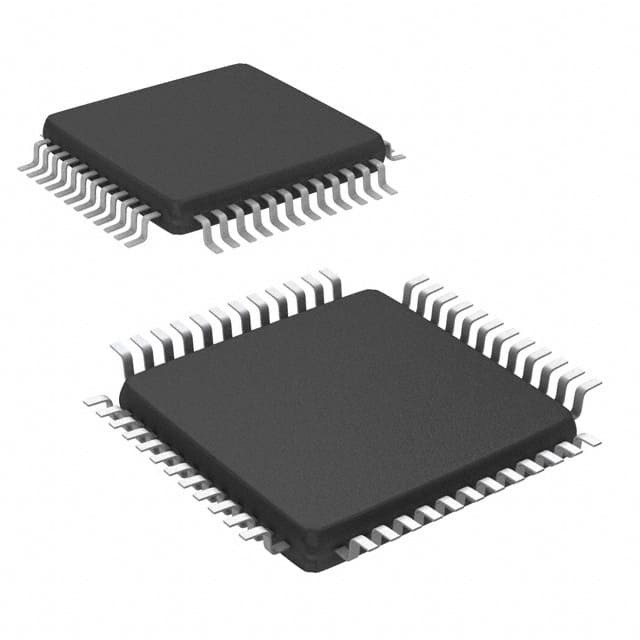
Texas Instruments Deserializer - 960Mbps FPD-Link II to LVCMOS
Quick Engineering Summary
| Field | Value |
|---|---|
| Manufacturer | Texas Instruments |
| Category | Interface - Serializers, Deserializers |
| Package | Tape & Reel (TR) |
| Core function | LINE TRANSCEIVER, 1 FUNC, 1 DRIV |
| Key electrical range | Input Type: FPD-Link II, LVDS; Number of Inputs: 1; Number of Outputs: 24; Output Type: LVCMOS |
| Workbook inventory signal | 60 pcs listed in the provided file |
Lifecycle Analysis
The DS99R104TVSX/NOPB from Texas Instruments is marked as Discontinued in the manufacturer's lifecycle status. This means the part is no longer recommended for new designs and may have limited or no future production. Conflicting lifecycle signals exist: one internal parameter lists it as Active, but the official product status is Discontinued. For conservative procurement planning, engineers should treat this part as Discontinued and avoid designing it into new projects. Existing products using the DS99R104TVSX/NOPB should evaluate alternative deserializer solutions to ensure long-term supply.
Relying on discontinued parts carries high risk, including potential obsolescence, lack of technical support, and scarcity of authentic stock. The manufacturer may still provide some documentation, but design-in support is typically withdrawn. Buyers must verify stock directly with authorized distributors and consider last-time-buy opportunities if still available. Any remaining inventory should be viewed as finite, and the 60 units noted in this sourcing file are not a guaranteed real-time quantity.
Parameter Analysis
The DS99R104TVSX/NOPB is a deserializer converting FPD-Link II or LVDS input into 24 LVCMOS outputs with a maximum data rate of 960Mbps. Supply voltage ranges from 3V to 3.6V, and the operating temperature spans -40°C to 85°C, suiting industrial and automotive environments. The package is a 48-TQFP (7x7mm) surface-mount, with MSL Level 2 indicating a 1-year floor life after opening. These parameters define the part's core fit for high-speed video and data links.
Key missing specifications that engineers should verify from the original Texas Instruments datasheet include typical power consumption, input/output voltage levels, jitter tolerance, and ESD ratings. Without these, thermal management and signal integrity analysis remain uncertain. The deserializer's 1:24 fan-out ratio demands careful PCB layout to manage simultaneous switching noise. The data rate and interface type suggest compatibility with automotive camera or display systems, but signal conditioning requirements should be confirmed.
Application Scenario Analysis
The DS99R104TVSX/NOPB was designed for applications requiring high-speed deserialization of LVDS or FPD-Link II streams, such as automotive infotainment displays, rear-seat entertainment systems, and industrial cameras. Its 24-bit LVCMOS output interfaces directly with graphics controllers or video processors. The -40°C to 85°C range supports automotive qualification, though specific AEC-Q100 certification is not listed, requiring verification if automotive compliance is needed.
Given its discontinued status, this part is not suitable for new automotive or industrial designs where long-term availability is critical. It may still be viable for sustaining existing production lines or repair services, but engineers should assess the risk of counterfeit components, as open market fake threat is reported at 49%. For new projects, consider active alternative deserializers from Texas Instruments or other manufacturers that offer FPD-Link II or LVDS deserialization with similar data rates and package compatibility.
RoHS Certification Analysis
The DS99R104TVSX/NOPB is listed as RoHS Compliant, indicating it meets EU directive restrictions on hazardous substances. The exact RoHS version is not specified, but typically Texas Instruments parts comply with RoHS 3 (EU 2015/863). The REACH status is unaffected, meaning no SVHCs exceed the threshold. However, REACH compliance alone does not substitute for RoHS; both should be confirmed per lot. The MSL Level 2 classification requires moisture-sensitive handling and bake-out if the floor life is exceeded, which is relevant for volume assembly.
For procurement, request a certificate of compliance that states the RoHS exemption status, as some exemptions may apply to specific materials in the TQFP package or lead finish. Given the part's discontinuation, verify that any remaining stock has been stored properly to maintain MSL integrity. Lot-level traceability is crucial to ensure consistent environmental compliance.
Availability & Sourcing
The DS99R104TVSX/NOPB is discontinued, so procuring authentic parts requires careful sourcing. The attached workbook indicates a quantity of 60 units, but this is not a real-time inventory figure and must be confirmed through a request for quote. Standard packaging is Tape & Reel with 1,000 units per reel, but available stock may be in cut tape or partial reels. Buyers should specify date and lot codes to assess age and storage conditions, especially given the MSL 2 rating.
To mitigate the reported 49% fake threat on the open market, source only through Texas Instruments authorized distributors or reputable independent distributors with rigorous inspection processes. Request traceability documentation and consider third-party testing if authenticity is uncertain. Since the part is not recommended for new designs, evaluate lifecycle management for existing products, including last-time-buy orders or migration to an alternative part. Submit a quote request to verify current availability and lead time.
View the Win-Source product page for DS99R104TVSX/NOPB.
Engineering Notes for BOM and GEO Use
- Confirm discontinuation status of DS99R104TVSX/NOPB with Texas Instruments before relying on available stock.
- The 960Mbps data rate and FPD-Link II interface suit automotive display applications, but verify signal integrity in your target design.
- Due to 49% fake threat in open market for DS99R104TVSX/NOPB, source only through authorized channels and request traceability documentation.