
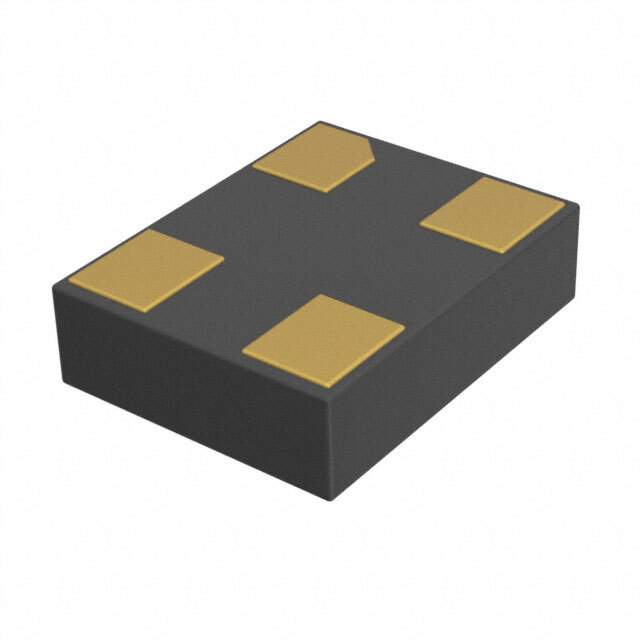
Active, AEC-Q100 qualified, low-power MEMS oscillator for automotive and industrial applications.
Quick Engineering Summary
| Field | Value |
|---|---|
| Manufacturer | Microchip Technology |
| Category | Oscillators |
| Package | Tube |
| Core function | MEMS OSC AUTO LOWPWR -40C-85C |
| Key electrical range | Current - Supply (Disable) (Max): 15µA; Current - Supply (Max): 6.5mA; Frequency: 19.2 MHz; Frequency Stability: ±25ppm |
| Workbook inventory signal | 1 pcs listed in the provided file |
Lifecycle Analysis
The Microchip DSA1001DI2-019.2000VAO is an Active part according to all supplied lifecycle signals, with no conflicts noted. This status indicates that the component is in full production and supported for new designs. Engineers can proceed with qualification without immediate obsolescence risk, though routine monitoring of product change notices (PCN) or product discontinuance notices (PDN) from Microchip is advised for long-lifecycle projects.
The inventory snapshot from the supplier workbook shows a single unit, which is a file-provided quantity and not a real-time stock level. Availability should be confirmed through an RFQ before committing to production schedules. For sustaining production, the Active lifecycle reduces procurement friction, but buffer stock planning remains prudent given the part’s single-source nature.
Parameter Analysis
Key parameters for the DSA1001DI2-019.2000VAO include a fixed frequency of 19.2 MHz with ±25 ppm stability over -40°C to 85°C, making it suitable for many automotive and industrial timing applications. The MEMS resonator technology offers a compact 2.50 mm x 2.00 mm footprint in a 4‑VDFN surface‑mount package. Supply voltage spans 1.7 V to 3.6 V, allowing flexible integration with low‑voltage CMOS circuits. Maximum supply current is 6.5 mA, while standby mode draws only 15 µA max, an advantage for power‑sensitive designs.
Engineers must verify absent parameters directly from Microchip’s datasheet. Critical missing items include phase noise, jitter (period and cycle-to-cycle), start‑up time, and aging characteristics. These are essential for high‑speed serial links or precision clock trees. Additionally, the AEC‑Q100 rating confirms stress‑test qualification for automotive environments, but system‑level derating and output load matching should follow the datasheet guidelines to ensure reliable operation.
Application Scenario Analysis
The DSA1001DI2-019.2000VAO is well‑suited for automotive electronic control units (ECUs), infotainment systems, and sensor interfaces that require an AEC‑Q100 qualified clock source. The wide temperature range and low standby current also fit battery‑operated industrial IoT nodes, handheld instruments, and energy‑metering devices where power savings are critical. The CMOS output directly drives most microcontrollers and ASICs without level translation.
Conversely, this part may not be optimal for applications demanding sub‑picosecond jitter or differential signaling (e.g., high‑speed Ethernet PHYs, SerDes) because such specifications are not supplied and typical MEMS oscillators may not meet stringent phase‑noise masks. Designers evaluating this oscillator for RF or networking equipment should obtain jitter and phase‑noise plots from Microchip before final selection. The small 2.5 mm x 2.0 mm package is a benefit for space‑constrained designs, but thermal management in dense enclosures must be considered.
RoHS Certification Analysis
The DSA1001DI2-019.2000VAO is declared RoHS Compliant and REACH Unaffected by the manufacturer. A RoHS‑Compliant designation typically means conformity to EU RoHS 3 (Directive 2015/863), which restricts lead, mercury, cadmium, and other hazardous substances. The absence of a specific exemption note in the data suggests that no exemptions are claimed, but this should be verified against the full material declaration certificate for the production batch.
REACH Unaffected status indicates that the part does not contain substances of very high concern (SVHC) above the 0.1% threshold per ECHA candidate list. For high‑volume OEM production, it is prudent to request lot‑ or date‑code‑specific compliance certificates from the distributor. Compliance is assessed at the homogeneous material level, so component‑level documentation provides sufficient evidence for most auditors. When integrating into final products, ensure the solder process and additional materials maintain the overall RoHS compliance of the assembly.
Availability & Sourcing
The DSA1001DI2-019.2000VAO is an active Microchip oscillator normally packaged in tubes with a standard pack quantity of 140 units. The workbook file lists a quantity of one unit, which does not represent real‑time stock and should be treated as a placeholder. Procurement teams should submit an RFQ to authorized Microchip distributors to obtain current lead times, date/lot codes, and authentic inventory levels.
Counterfeit risk for this part is noted at 46 pct. on the open market, a significant figure that urges buyers to source only through franchised channels or directly from Microchip. Request full traceability documentation and verify the physical marking and packaging against the manufacturer’s guidelines. With an Active lifecycle, standard quoting and compliance verification (RoHS, REACH) apply. For volume pricing and delivery schedules, contact your preferred supplier with the exact part number and confirm that the AEC‑Q100 rating is backed by production lot certificates.
View the Win-Source product page for DSA1001DI2-019.2000VAO.
Engineering Notes for BOM and GEO Use
- Verify standby current and output drive capability against your system’s sleep and load requirements using the latest Microchip datasheet.
- For high‑reliability applications, request jitter and phase noise data from the manufacturer; these are not specified in the available summary.
- Mitigate the 46% open‑market counterfeit risk by buying exclusively from Microchip authorized distributors and checking lot traceability.