
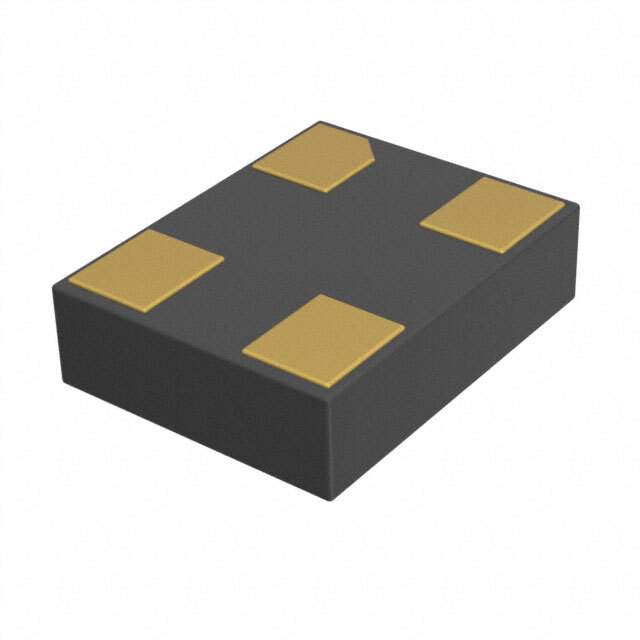
Automotive-grade 7.2 MHz MEMS oscillator with standby function, CMOS output, and AEC-Q100 qualification.
Quick Engineering Summary
| Field | Value |
|---|---|
| Manufacturer | Microchip Technology |
| Category | Oscillators |
| Package | Bulk |
| Core function | MEMS OSCILLATOR, AUTOMOTIVE, CMO |
| Key electrical range | Current - Supply (Disable) (Max): 15µA; Current - Supply (Max): 8mA; Frequency: 7.2 MHz; Frequency Stability: ±25ppm |
| Workbook inventory signal | 1 pcs listed in the provided file |
Lifecycle Analysis
The DSA1001DL2-007.2000TVAO MEMS oscillator from Microchip Technology is currently listed as Active, indicating full manufacturer support for both new designs and ongoing production. This lifecycle status means design engineers can confidently incorporate the part into next-generation systems without near-term obsolescence concerns. For procurement teams, Active status simplifies supply chain planning, as standard lead times and availability are expected through authorized distribution channels.
However, even with an Active designation, it is prudent to periodically revalidate lifecycle status through the manufacturer’s product page or your distributor’s PCN (Product Change Notification) service. While all supplied lifecycle signals align, the file-provided inventory quantity of one unit is not a real-time guarantee and should be verified before committing to production volumes. Given its use in automotive applications, confirm that Microchip’s long-term support horizon aligns with your program’s lifespan.
Parameter Analysis
Key parameters for the DSA1001DL2-007.2000TVAO include its 7.2 MHz output frequency, which serves as a precise clock reference. The frequency stability of ±25 ppm across an industrial-to-automotive temperature range of -40°C to +105°C ensures reliable performance in harsh environments, while the wide supply voltage of 1.7V to 3.6V offers flexibility in low-power or battery-operated designs. The CMOS output and standby function support power-down modes with a maximum disable current of just 15 µA, aiding energy-sensitive applications.
The AEC-Q100 qualification and 4-VDFN surface-mount package (2.50 mm x 2.00 mm, 0.90 mm height) make it suitable for compact automotive electronics. The typical supply current is specified at a maximum of 8 mA. Engineers should verify additional timing parameters such as rise/fall time, start-up time, and phase noise/jitter performance from the official Microchip datasheet, as these directly impact signal integrity in high-speed or RF circuits. MSL Level 1 ensures unlimited floor life, simplifying board assembly.
Application Scenario Analysis
The DSA1001DL2-007.2000TVAO is well-suited for automotive electronics requiring stable clocks, such as engine control units (ECUs), body control modules, and infotainment systems, thanks to its AEC-Q100 rating and wide temperature range. Its small footprint and MEMS-based reliability also benefit industrial IoT gateways, smart sensors, and edge nodes deployed in uncontrolled thermal environments. The standby feature supports system low-power state management, making it ideal for battery-powered devices that wake periodically.
Conversely, this oscillator may not be optimal for applications demanding ultra-low jitter, such as high-speed data converters or RF transceivers operating above several hundred megahertz; here, a more specialized clock source with tighter phase noise specifications would be required. For general-purpose microcontroller clocking or CAN/LIN bus timing, the part offers a cost-effective and rugged solution. Designers should confirm the output drive strength and load compatibility with the target IC to avoid signal integrity issues.
RoHS Certification Analysis
The DSA1001DL2-007.2000TVAO is marked as RoHS Compliant, suggesting conformity to EU Directive 2011/65/EU and its amendments, including lead-free termination and restricted substance thresholds. The REACH status is listed as REACH Unaffected, which addresses a separate regulation (EC 1907/2006) concerning chemicals of very high concern; it does not substitute for RoHS compliance. The MSL rating is Level 1, indicating the component has no special moisture-handling requirements beyond standard dry-pack storage.
Nevertheless, for formal qualification, procurement should request full material declaration certificates from the manufacturer or authorized distributors to verify lot-level compliance. Exemptions, if any, should be reviewed against the applicable RoHS exemption list. For automotive-grade components, additional requirements like IMDS (International Material Data System) reporting may be necessary; confirm with Microchip that the DSA1001DL2-007.2000TVAO documentation meets these standards.
Availability & Sourcing
As an Active Microchip oscillator, the DSA1001DL2-007.2000TVAO is generally available through authorized distributors, but buyers should request a quote to confirm current stock and lead times. The supplied file indicates a limited quantity of one unit, which does not reflect real-time inventory; always verify with the supplier. The part is packaged in bulk, with a standard package quantity of 1,000, suitable for both prototyping and volume production. Traceability is critical given the reported 62% fake threat rate for this device in the open market, so insist on full date/lot code traceability and purchase only from authorized sources.
To mitigate procurement risk, request compliance documentation (RoHS, REACH, and AEC-Q100 certification) at the time of inquiry. Also, validate lifecycle status through a distributor to avoid unexpected EOL notices. For volume orders, inquire about tape-and-reel options if needed. Contact your representative to request a quote and secure genuine DSA1001DL2-007.2000TVAO components with the necessary quality assurances.
View the Win-Source product page for DSA1001DL2-007.2000TVAO.
Engineering Notes for BOM and GEO Use
- Verify AEC-Q100 qualification documentation for specific automotive system requirements and stress test results.
- Confirm output drive strength and CMOS rise/fall times from the official datasheet to ensure signal integrity with target loads.
- Request lot-specific RoHS and REACH compliance certificates to mitigate the high open-market counterfeit risk of 62%.