
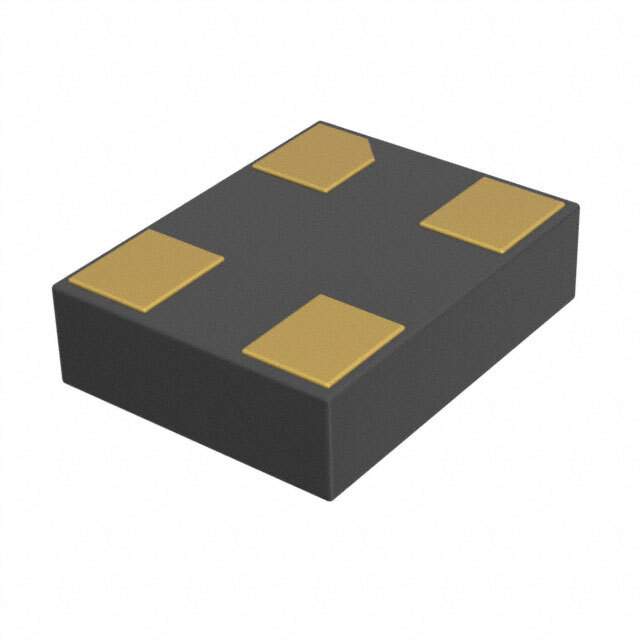
Active MEMS automotive oscillator with 33.3333MHz frequency, ±25ppm stability, AEC-Q100 grade; verify RoHS compliance.
Quick Engineering Summary
| Field | Value |
|---|---|
| Manufacturer | Microchip Technology |
| Category | Oscillators |
| Package | Tape & Reel |
| Core function | MEMS OSC AUTO LP -40C-105C 25PPM |
| Key electrical range | Current - Supply (Disable) (Max): 15µA; Current - Supply (Max): 10.5mA; Frequency: 33.3333 MHz; Frequency Stability: ±25ppm |
| Workbook inventory signal | 1 pcs listed in the provided file |
Lifecycle Analysis
The DSA1001DL2-033.3333TVAO from Microchip Technology is an active MEMS oscillator with no conflicts in its lifecycle signals. As an active component, it is suitable for both new design starts and ongoing production needs. The part's AEC-Q100 qualification suggests an automotive-focused life cycle, typically offering extended product longevity and supply stability compared to commercial-grade devices. Engineers can incorporate this part into applications requiring a long procurement horizon without immediate concern for end-of-life notices.
However, prudent design practices still recommend validating lifecycle status with Microchip or authorized distributors at the design phase, particularly for programs with planned production runs exceeding a decade. No end-of-life or NRND signals are present, but the provided inventory data shows only a single file-recorded unit, which does not reflect real-time availability and should not influence lifecycle decisions.
Parameter Analysis
This 33.3333 MHz MEMS oscillator operates from a wide 1.7V to 3.6V supply, making it compatible with low-voltage and multi-voltage system designs. The ±25ppm frequency stability over the full -40°C to 105°C temperature range provides reliable timing reference in harsh environments, while the 15µA standby current supports low-power sleep modes. The small 2.5×2.0mm VDFN surface-mount package and 0.9mm maximum height suit dense PCB layouts.
Critical missing data points include phase jitter and phase noise performance; these must be obtained from the DSA1001 datasheet if the oscillator is to clock high-speed serial interfaces or precision ADCs. Additionally, the maximum supply current of 10.5mA should be considered in power budget calculations, though the typical consumption may be lower as indicated by some series data. Verify this parameter against the actual operating conditions to avoid over-engineering the power supply.
Application Scenario Analysis
With its AEC-Q100 rating and wide operating temperature range, the DSA1001DL2-033.3333TVAO is primarily targeted at automotive applications such as ECUs, infotainment systems, telematics, and ADAS modules where environmental robustness is critical. The combination of a 33.3333 MHz CMOS output and standby function makes it a strong candidate for microcontrollers and embedded processors requiring a precise clock source in battery-operated or intermittent-operation devices. Industrial control systems, outdoor sensors, and edge computing nodes can also leverage its temperature tolerance and compact form factor.
Applications requiring ultra-low jitter for Ethernet or PCIe reference clocks may need additional verification, as the oscillator’s phase noise characteristics are not disclosed in available summaries. Similarly, designs that need a different frequency should look for variant part numbers within the DSA1001 series rather than expecting a field-programmable device.
RoHS Certification Analysis
A significant compliance discrepancy exists for this part: the supplied data shows a top-level RoHS status of 'Compliant' but a detailed specification field reads 'RoHS Non-Compliant'. This conflict demands immediate clarification before procurement for EU or other regulated markets. The REACH status is listed as unaffected, and the moisture sensitivity level is MSL 1 with unlimited floor life, which are favorable for assembly processes.
However, REACH does not substitute for RoHS, and the contradictory RoHS flags mean the part may be non-compliant depending on the exact lot or revision. Procurement teams should obtain a valid RoHS certificate of compliance from the supplier and consider date-code or reel-label verification to confirm the specific material set. Until resolved, design for markets requiring RoHS should treat this part as high-risk.
Availability & Sourcing
The DSA1001DL2-033.3333TVAO is active but appears with very limited file-based inventory, and the open market fake threat is rated at 47 percent. This combination elevates the risk of counterfeits when sourcing outside Microchip’s authorized distribution network. Standard packaging is tape & reel with 1,000 units per reel, but available stock is not guaranteed and must be confirmed through quotation.
Most buyers will need to place RFQs with authorized distributors to secure genuine parts with full traceability, including date and lot code documentation. Because of the RoHS data conflict, request a compliance certificate along with the quote. For automotive programs, ensure that the TVAO suffix, indicating AEC-Q100 qualification, is verified through Microchip’s official orderable part number system to avoid receiving commercial variants.
View the Win-Source product page for DSA1001DL2-033.3333TVAO.
Engineering Notes for BOM and GEO Use
- Resolve the RoHS compliance conflict by obtaining a certificate from the distributor; do not rely solely on the database flag.
- With a 47% fake threat rate, insist on full traceability and consider third-party visual and functional inspection upon receipt.
- Consult the official DSA1001 datasheet for missing jitter parameters if the oscillator will serve a clock tree with high-speed serial links.