
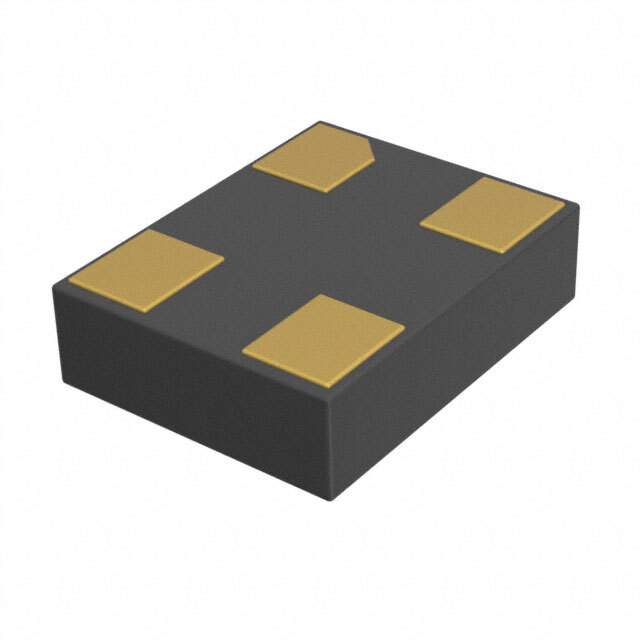
Automotive-grade 33.3333 MHz MEMS oscillator with CMOS output and standby function.
Quick Engineering Summary
| Field | Value |
|---|---|
| Manufacturer | Microchip Technology |
| Category | Oscillators |
| Package | Tube |
| Core function | MEMS OSC AUTO LP -40C-105C 25PPM |
| Key electrical range | Current - Supply (Disable) (Max): 15µA; Current - Supply (Max): 10.5mA; Frequency: 33.3333 MHz; Frequency Stability: ±25ppm |
| Workbook inventory signal | 1 pcs listed in the provided file |
Lifecycle Analysis
The DSA1001DL2-033.3333VAO is listed as Active across all available lifecycle signals from Microchip Technology. An Active lifecycle status means the part is in full production, supported for new designs, and generally has stable pricing and lead times. For procurement, this is the lowest risk classification; however, designers should still review the latest Microchip product change notices (PCN) and EOL notifications for this specific ordering code.
Given that the part carries AEC‑Q100 qualification, its Active status is especially important for automotive programs with long design cycles. Any change in lifecycle could impact requalification costs. The file‑provided workbook inventory shows a quantity of 1, but this is not a guarantee of real‑time availability. Buyers must request a current quote to confirm stock and lead times.
For new designs, proceed with confidence but always revalidate lifecycle status through official channels at the design review gate. The lack of any NRND or EOL signals in the provided data supports its suitability for upcoming production ramps.
Parameter Analysis
The most decision‑relevant parameters for the DSA1001DL2-033.3333VAO begin with the output frequency of 33.3333 MHz and frequency stability of ±25 ppm. These numbers directly determine timing accuracy and must be matched to the target application’s clock tolerance. The CMOS output type implies a rail‑to‑rail swing that should be compatible with standard logic levels, but the designer must confirm the output voltage levels under the chosen supply voltage (1.7 V to 3.6 V range).
The wide supply voltage range eases integration into mixed‑voltage systems, while the maximum supply current of 10.5 mA (and standby disable current of 15 µA) helps size voltage regulators and estimate battery life in low‑power designs. The operating temperature range of -40°C to 105°C aligns with automotive grade‑2 requirements, and the AEC‑Q100 rating confirms it has passed industry‑standard stress tests. The small 2.5 mm x 2.0 mm VDFN package saves board space but requires careful thermal layout due to its low profile (0.9 mm max height).
Critical missing datasheet items that should be verified include phase jitter, start‑up time, and output rise/fall times, as these are not provided in the source data. These specifications are essential for high‑speed digital interfaces and signal integrity analysis.
Application Scenario Analysis
The DSA1001DL2-033.3333VAO is purpose‑built for automotive and harsh‑environment applications that demand a reliable clock source across a wide temperature range. The combination of AEC‑Q100 qualification, MEMS technology (resistant to shock and vibration), and standby function makes it a strong fit for automotive infotainment systems, body control modules, camera modules, and sensor nodes where 33.3333 MHz is a common reference frequency for Ethernet or LVDS interfaces.
In industrial and communications equipment that operates within -40°C to 105°C, this oscillator can serve as a general‑purpose clock. Its low disable current (15 µA) is advantageous in power‑sensitive designs that require the clock to enter a deep‑sleep state.
This part may be a weaker fit for applications requiring ultra‑low phase noise (e.g., RF local oscillators or high‑speed SerDes) because the source data lacks jitter specifications. Similarly, for space‑constrained wearable or IoT devices, the 2.5 x 2.0 mm footprint may still be too large; a wafer‑level chip‑scale package might be preferred. Designers should perform a thorough jitter analysis if using this oscillator in timing‑critical paths.
RoHS Certification Analysis
RoHS compliance for the DSA1001DL2-033.3333VAO is ambiguous in the provided data. The top‑level compliance object reports ‘RoHS Compliant’, but the detailed specifications entry lists ‘RoHS Non‑Compliant’. This conflict requires immediate resolution before procurement, especially for products destined for EU markets.
The part has a REACH status of ‘Unaffected’, which addresses chemical substance registration but does not substitute for RoHS conformity. The MSL rating of Level 1 (unlimited floor life) is beneficial for manufacturing but has no bearing on restricted substance content.
To avoid compliance risk, engineers and buyers should request the manufacturer’s RoHS certificate of compliance for the exact part number and date/lot code. If the part is indeed non‑compliant by design, it may contain lead or other restricted substances and cannot be used in many consumer and industrial products. Until the conflict is resolved, treat this component as potentially non‑RoHS and plan alternative sourcing accordingly.
Availability & Sourcing
Sourcing the DSA1001DL2-033.3333VAO requires standard RFQ procedures to obtain live pricing, lead time, and stock positions. The file‑provided inventory shows a workbook quantity of 1, which is a snapshot and should not be considered a guarantee of immediate shipment. Request a current quote from Microchip authorized distributors to lock in availability.
Key sourcing factors include verifying the lifecycle status (Active), obtaining lot‑specific RoHS compliance documentation due to the internal conflict, and confirming the packaging type (Tube) and standard package quantity (140 units). For automotive applications, request full traceability documentation, including date/lot codes and AEC‑Q100 test reports. The reported fake threat in the open market is 48 percent, which reinforces the importance of purchasing only through authorized channels to avoid counterfeit devices.
Given the Active lifecycle, this part is suitable for new design and volume procurement. Ensure your sourcing agreement covers PCN and EOL notification terms to protect against unexpected changes. For immediate design‑in activities, order samples from authorized distributors and conduct incoming inspection per your company’s quality procedures.
View the Win-Source product page for DSA1001DL2-033.3333VAO.
Engineering Notes for BOM and GEO Use
- Verify RoHS compliance at the lot level because conflicting reports exist between top‑level and detailed specification data.
- As an AEC-Q100 qualified device, confirm the full qualification report before use in safety‑critical automotive applications.
- The wide supply voltage (1.7V–3.6V) and low maximum current (10.5 mA) simplify power supply design across multiple rails.