
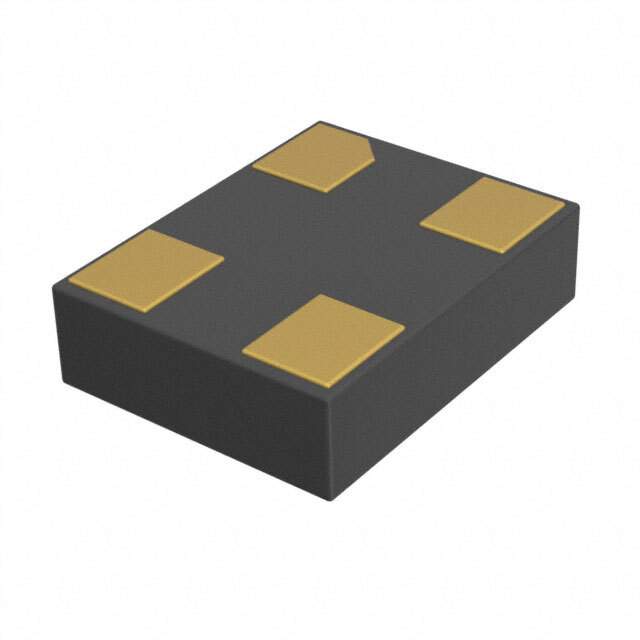
Active MEMS oscillator with AEC-Q100 qualification for automotive and industrial clock generation.
Quick Engineering Summary
| Field | Value |
|---|---|
| Manufacturer | Microchip Technology |
| Category | Oscillators |
| Package | Tube |
| Core function | OSC MEMS -40C-85C, 50PPM, 2. |
| Key electrical range | Current - Supply (Disable) (Max): 15µA; Current - Supply (Max): 16.6mA; Frequency: 80 MHz; Frequency Stability: ±20ppm |
| Workbook inventory signal | 1 pcs listed in the provided file |
Lifecycle Analysis
The DSA1001DL3-080.0000VAO is reported as Active by all supplied lifecycle signals, with no conflicts among manufacturer designations. An Active status means Microchip continues to manufacture and promote this part, making it suitable for both new designs and ongoing production. Procurement teams can incorporate this MEMS oscillator into long-life products, but should periodically revalidate the lifecycle status through official Microchip EOL notices or PCN alerts to avoid unexpected changes.
Risk is assessed as low for new design incorporation, given the consistent Active signals. However, the file-provided inventory quantity of one unit is not a real-time guarantee and reflects a snapshot only. Engineers and buyers should request current production and inventory status directly from authorized distributors, especially if planning volume orders. The DSA1001DL3-080.0000VAO’s AEC-Q100 rating further supports sustained production for automotive-qualified platforms.
Parameter Analysis
Key parameters extracted for the DSA1001DL3-080.0000VAO include a 80 MHz fixed frequency, ±20ppm stability, CMOS output, and a supply voltage range of 1.7 V to 3.6 V. The ±20ppm stability over -40°C to 105°C ensures reliable clocking across wide temperature swings, critical for under-hood automotive ECUs and outdoor industrial controllers. The 1.7–3.6 V input flexibility allows seamless integration with low-voltage FPGA and MCU rails without additional regulation, while the 15 µA standby current helps designers meet power-down budget constraints.
The AEC-Q100 qualification indicates the component has passed stress tests for automotive reliability, making it a strong candidate for infotainment, ADAS, and body electronics. Missing from the available data are phase noise, start-up time, and output drive strength—specifications that strongly affect signal integrity and EMI. Engineers should verify these parameters in the official DSA1001 datasheet. Additionally, note a potential discrepancy in the maximum supply current specification (16.6 mA vs. 8.5 mA); confirm the correct value from the manufacturer to ensure power supply sizing is accurate.
Application Scenario Analysis
The DSA1001DL3-080.0000VAO MEMS oscillator is a strong fit for automotive systems that demand AEC-Q100 qualification and a 80 MHz CMOS clock. Its extended temperature range and ±20ppm stability suit microcontroller clocking in engine control units, transmission controllers, and safety-related modules. Industrial applications such as motor drives, PLCs, and sensor hubs also benefit from the part’s robust temperature performance and compact 2.5×2.0 mm footprint.
Weak-fit scenarios emerge where the application requires differential signaling (e.g., LVDS, LVPECL) or ultra-low jitter performance for high-speed serial links. The CMOS output and absence of phase noise data in the supplied specs suggest that this DSA1001DL3-080.0000VAO may not be optimal for high-precision telecom or data-center clocking. Similarly, if the design must operate below -40°C, this part is not rated for it. Designers should evaluate these limitations against their system requirements and review the full Microchip datasheet for detailed waveform characteristics.
RoHS Certification Analysis
RoHS compliance for the DSA1001DL3-080.0000VAO is ambiguous based on the provided source data. The main compliance object lists a status of 'RoHS Compliant,' but the component-level specifications include a field labeled 'RoHS Status' with a value of 'RoHS Non-Compliant.' This conflict requires immediate attention from purchasing and quality teams. Unless clarified, the part cannot be assumed compliant for EU RoHS (2015/863) or similar directives.
REACH status is reported as 'REACH Unaffected,' which addresses substance registration but does not substitute for RoHS certification. No exemption details are available in the supplied files. Engineers specifying the DSA1001DL3-080.0000VAO for RoHS-sensitive designs must obtain a current certificate of conformity from Microchip or an authorized distributor and confirm the compliance status on a lot-by-lot basis before ordering. Failure to resolve this conflict could lead to non-compliant product shipments.
Availability & Sourcing
As an Active product, the DSA1001DL3-080.0000VAO is generally available through Microchip’s authorized distribution network, with standard tube packaging and a package quantity of 140 units per tube. The file-provided inventory snapshot shows a single unit, which is not a real-time stocking level; users should request a quote for current lead times and channel availability. A notable 35% fake threat rate in the open market underscores the need to source exclusively from authorized Microchip distributors or trusted channels that provide full traceability.
For procurement, the RFQ process should include requests for date/lot code information, original manufacturer certification, and compliance documentation (RoHS and AEC-Q100). Verify that the offered stock matches the exact part number DSA1001DL3-080.0000VAO, as other DSA1001 variants may differ in frequency, stability, or temperature range. To secure supply for production, consider negotiating long-term order agreements with Microchip while the lifecycle remains Active.
View the Win-Source product page for DSA1001DL3-080.0000VAO.
Engineering Notes for BOM and GEO Use
- Verify RoHS compliance status with Microchip due to conflicting manufacturer data before finalizing BOM.
- Leverage AEC-Q100 rating for automotive applications requiring wide temperature and reliability; validate actual phase noise and jitter against system requirements.
- Mitigate 35% open-market fake threat by sourcing exclusively from authorized Microchip distributors or requesting traceability documentation.