
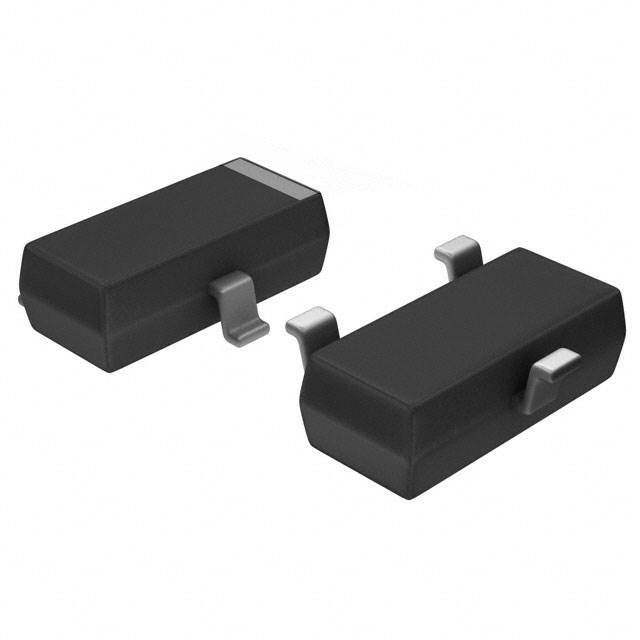
Procurement and engineering analysis for the Panasonic DSA2001R0L PNP BJT
Quick Engineering Summary
| Field | Value |
|---|---|
| Manufacturer | Panasonic |
| Category | Transistors (BJT) - Single |
| Package | Mini3-G3-B |
| Core function | TRANS PNP 50V 0. |
| Key electrical range | Collector Cut-off Current(Max): 100μA; Frequency - Transition: 150MHz; Maximum Current Collector: 100mA; Maximum Power Dissipation: 200mW |
| Workbook inventory signal | 21000 pcs listed in the provided file |
Lifecycle Analysis
The Panasonic DSA2001R0L shows conflicting lifecycle signals: one data source indicates 停止提供 (discontinued), while another lists the status as Active. This contradiction forces a conservative procurement stance, classifying the part as NRND (Not Recommended for New Design).
For new designs, engineering teams should not rely on the DSA2001R0L without explicit confirmation from Panasonic. Existing production lines may continue to receive support, but long-term availability is uncertain. The risk level is assessed as medium due to the ambiguity. Procure only after validating lifecycle status directly with the manufacturer and securing adequate buffer stock for ongoing needs.
Documentation revalidation is essential. Request the latest product change notice (PCN) and lifecycle declaration from Panasonic. A file‑provided inventory quantity of 21,000 units appears, but this is not a real‑time guarantee and should not be used as the sole basis for supply assurance.
Parameter Analysis
The DSA2001R0L is a PNP bipolar junction transistor in a Mini3‑G3‑B surface‑mount package, a variant of the common SOT‑23 footprint. Key DC ratings include a maximum collector‑emitter voltage (VCEO) of 50 V and a continuous collector current (Ic) capped at 100 mA. The maximum power dissipation is 200 mW, which demands careful thermal management in densely packed PCBs.
Small‑signal performance parameters are critical for design‑in. The minimum DC current gain (hFE) is 210 at 2 mA collector current and 10 V VCE, ensuring decent linearity for amplification tasks. The collector‑emitter saturation voltage (Vce(sat)) is specified at 500 mV maximum when Ib = 10 mA and Ic = 100 mA, which influences switching efficiency. A transition frequency (fT) of 150 MHz allows operation in moderate‑speed circuits, but not in RF or very high‑frequency domains.
Missing parameters that typically appear on full datasheets include thermal resistance (junction‑to‑ambient), safe operating area (SOA) curves, and noise figure. For reliability analysis and derating, obtain the original Panasonic datasheet to verify these values before finalizing the design.
Application Scenario Analysis
The DSA2001R0L suits general‑purpose small‑signal applications where a PNP transistor is needed at low to moderate voltage and current levels. Strong‑fit scenarios include audio pre‑amplifier stages, sensor signal conditioning, low‑power linear regulators, and logic level shifting in battery‑operated devices. Its SMD package and tape‑and‑reel packaging align with automated pick‑and‑place assembly.
Weak‑fit or marginal use cases arise when the design pushes the device’s limits. Despite the 150 MHz fT, the transistor is not characterized for RF low‑noise amplifier or oscillator circuits; specialized RF transistors would be preferred. The 200 mW dissipation limit restricts its use in power‑handling roles, such as driving relays or small motors continuously. For circuits exceeding 50 V or requiring more than 100 mA, consider a higher‑rated alternative.
When integrating the DSA2001R0L, account for its typical gain variation with temperature and collector current. Prototyping and thermal validation are advised to ensure the junction temperature stays within the 150 °C limit under all operating conditions.
RoHS Certification Analysis
The supplied data declares the DSA2001R0L as RoHS Compliant. This typically means it meets the requirements of EU Directive 2011/65/EU and its amendment (EU) 2015/863 (RoHS 3), restricting hazardous substances such as lead, mercury, and cadmium.
However, RoHS compliance at the part‑number level does not automatically guarantee that every production lot meets the regulation. Lot‑level or batch‑level testing may be necessary for high‑reliability applications or when entering regulated markets. Additional substance regulations such as REACH are not addressed in the provided data; the absence of REACH information does not imply non‑compliance, but it should be verified separately if required.
Request the manufacturer’s certificate of compliance (CoC) and, if available, a full material declaration (FMD) for the DSA2001R0L. Panasonic typically offers these documents through their support channels. This step is especially important given the 42% counterfeit threat rate, which can increase the risk of non‑compliant gray‑market parts.
Availability & Sourcing
The file‑based workbook shows a quantity of 21,000 units for the DSA2001R0L, but this is a snapshot and not a live inventory promise. The part is supplied in reel (TR) packaging, compatible with high‑volume SMT lines. Storage conditions recommend a dry storage cabinet with humidity protection, indicating moisture sensitivity; users should adhere to proper handling procedures to avoid soldering defects.
Counterfeit risk is flagged at 42%, a high percentage that demands rigorous sourcing from authorized Panasonic distributors or traceable brokers. Employ incoming inspection, date/lot code verification, and third‑party authentication where feasible. The lifecycle conflict (NRND) further complicates long‑term availability; secure sufficient buffer stock for your production horizon and simultaneously evaluate a drop‑in replacement path.
To obtain current availability, lead times, and pricing (prices cannot be stated here), request a quote through the provided URL or contact a trusted distributor. Always request compliance documentation (RoHS, REACH, full datasheet) alongside the quote. For EOL‑prone parts, negotiated last‑time‑buy arrangements with the manufacturer can provide supply assurance.
View the Win-Source product page for DSA2001R0L.
Engineering Notes for BOM and GEO Use
- Lifecycle discrepancy requires direct verification with Panasonic before committing to new production designs.
- High counterfeit risk (42%) mandates procurement only from authorized or traceable sources.
- Verify that the Mini3-G3-B package thermal limitations are adequate for your application, given the 200mW maximum dissipation.