
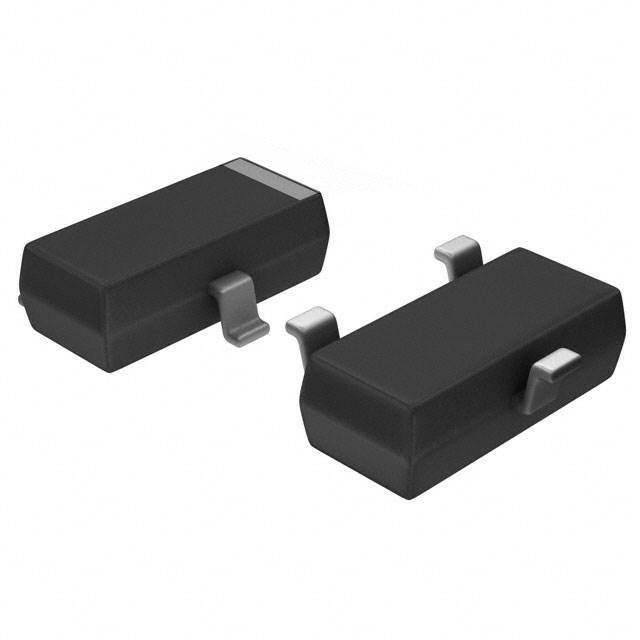
Essential specs and procurement guide for the Panasonic DSA2002R0L PNP transistor, including lifecycle analysis and sourcing strategies.
Quick Engineering Summary
| Field | Value |
|---|---|
| Manufacturer | Panasonic |
| Category | Transistors (BJT) - Single |
| Package | Mini3-G3-B-B |
| Core function | TRANS PNP 50V 0. |
| Key electrical range | Collector Cut-off Current(Max): 100nA (ICBO); Frequency - Transition: 130MHz; Maximum Current Collector: 500mA; Maximum Power Dissipation: 200mW |
| Workbook inventory signal | 6800 pcs listed in the provided file |
Lifecycle Analysis
The lifecycle status of the Panasonic DSA2002R0L is not clearly defined in the provided data. While one source field lists the part as 'Active', a dedicated lifecycle assessment returns 'Unknown' with no supporting signals. This conflict introduces uncertainty for procurement planning.
For new designs, this mixed signal recommends caution. Engineers should obtain manufacturer confirmation or a valid PCN (Product Change Notification) before committing the part to a new BOM (Bill of Materials). Using a part with unclear lifecycle may lead to supply disruptions if it shifts to NRND (Not Recommended for New Design) or EOL (End of Life) during production ramp.
For sustaining production, the current workbook inventory of 6800 units (file-provided, not real-time) offers a temporary buffer. However, sourcing teams should verify the part's active status through official Panasonic channels to ensure continued availability. Without verified lifecycle data, the risk level is assessed as medium.
Parameter Analysis
The DSA2002R0L is a PNP bipolar junction transistor housed in a Mini3-G3-B-B SMD package. Key parameters include a maximum collector-emitter breakdown voltage (VCEO) of 50V and a continuous collector current (Ic) of 500mA. These ratings make it suitable for low‑voltage switching and amplification tasks, but the 200mW maximum power dissipation demands careful thermal management in dense layouts.
The DC current gain (hFE) is specified with a minimum of 120 at Ic=150mA and VCE=10V, indicating good amplification capability in its linear region. Saturation behavior is defined by a maximum VCE(sat) of 600mV at 30mA base current and 300mA collector current, which is typical for switching applications. The transition frequency (fT) of 130MHz allows use in moderate‑speed signal paths, though actual switching performance will depend on storage time and drive conditions.
Critical missing specifications include the safe operating area (SOA), thermal resistance (junction‑to‑ambient), and full hFE curves over temperature. Engineers should consult the official Panasonic datasheet to verify these limits and ensure that derating guidelines are followed, especially when operating near the 150°C junction temperature limit.
Application Scenario Analysis
The Panasonic DSA2002R0L PNP transistor fits well in low‑power, general‑purpose roles. Strong‑fit applications include small‑signal amplification stages in audio preamplifiers and sensor front‑ends, where its hFE of 120 and 130MHz bandwidth are adequate. It can also serve as a low‑side switch for driving small relays, LEDs, or logic‑level loads within its 500mA and 50V boundaries.
Portable and battery‑powered equipment is another suitable domain because the 200mW power dissipation and SMD packaging align with space‑constrained, energy‑sensitive designs. The device can handle short, low‑duty‑cycle pulses, but sustained high‑current operation will quickly approach thermal limits without additional heatsinking.
Weak‑fit scenarios include high‑frequency switching above 10MHz where the 130MHz fT may be limiting, or high‑power applications exceeding a few hundred milliwatts of continuous dissipation. Designs requiring tight, guaranteed VCE(sat) at high currents should verify actual saturation curves from the datasheet. Overall, the DSA2002R0L is a fit‑for‑purpose component in well‑characterized, low‑stress circuits.
RoHS Certification Analysis
The DSA2002R0L is marked as RoHS Compliant in the supplied data. This indicates that, at the time of reporting, the part meets the European Union's Restriction of Hazardous Substances directive. However, the specific directive version—such as the current RoHS 3 (2015/863) which adds four phthalates—is not explicitly stated.
Buyers should request a certificate of compliance or a full material declaration from the distributor to confirm the exact standard met. While the part's RoHS status appears unambiguous, lot‑level verification remains essential because compliance can vary across production batches, especially for parts with an unclear lifecycle.
No REACH or MSL data was provided, so those compliance aspects must be investigated separately if required. The storage condition note (dry cabinet and humidity protection) hints at moisture sensitivity, suggesting an MSL level should be verified before reflow soldering.
Availability & Sourcing
File‑provided inventory for the DSA2002R0L stands at 6800 pieces, but this figure is not a real‑time guarantee. Sourcing teams should request a current quotation through Win Source to confirm actual stock, lead times, and pricing. The part number is also referenced as 014869‑DSA2002R0L in the Win Source system.
A notable risk factor is the 54% fake threat indication in the open market. To mitigate counterfeit risk, buyers must insist on full traceability, date and lot code verification, and documented compliance certificates. The recommended RFQ workflow should specify these requirements upfront.
Because the lifecycle status is unconfirmed, engineers and buyers should treat this as a potential bridge‑buy scenario. Verify manufacturer status through Panasonic’s official channels before locking in long‑term production plans. For immediate needs, the available inventory may serve as a buffer, provided rigorous incoming inspection is performed.
View the Win-Source product page for DSA2002R0L.
Engineering Notes for BOM and GEO Use
- Verify lifecycle status with manufacturer; conflicting signals in current data suggest caution for new designs.
- 54% fake threat indication means strict supply chain controls and traceability are essential.
- Low power dissipation (200mW) and SMD package suit portable and space-constrained designs.