
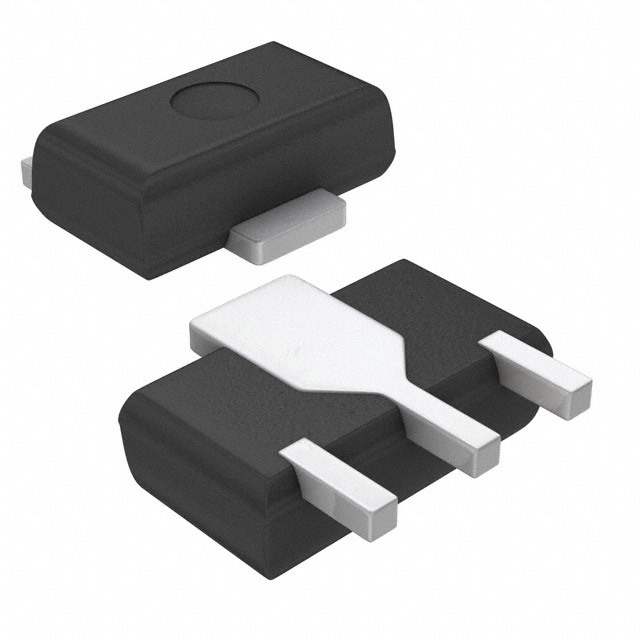
Key specs, lifecycle uncertainty, and procurement guidance for the DSA7004R0L from Panasonic
Quick Engineering Summary
| Field | Value |
|---|---|
| Manufacturer | Panasonic |
| Category | Transistors (BJT) - Single |
| Package | MiniP3-F2-B |
| Core function | TRANS PNP 50V 2A MINIP3-F2-B |
| Key electrical range | Collector Cut-off Current(Max): 100nA (ICBO); Frequency - Transition: 120MHz; Maximum Current Collector: 2A; Maximum Power Dissipation: 1W |
| Workbook inventory signal | 11500 pcs listed in the provided file |
Lifecycle Analysis
The lifecycle status of the Panasonic DSA7004R0L is currently listed as Unknown, but a specification field shows ‘Active’. This contradictory information introduces medium risk. Without a definitive manufacturer notice, procurement and engineering teams cannot be certain the part remains in full production or is transitioning. For new designs, the Unknown status suggests caution: initial qualification should not proceed until Panasonic or an authorized distributor confirms active production. Even if the part is active, the limited supply and demand status signals potential allocation issues.
For sustaining production, the DSA7004R0L may still be available through existing inventory channels, but lifecycle revalidation is necessary. Any change in status to NRND or EOL would require immediate migration planning. The provided inventory quantity of 11500 units is a file-provided snapshot and not a real-time guarantee, so it should be verified at time of RFQ. Until the lifecycle conflict is resolved, treat this component as medium risk and avoid use in high-volume new designs without a second source.
Parameter Analysis
The DSA7004R0L is a PNP transistor with a maximum collector-emitter voltage (VCEO) of 50V and continuous collector current of 2A, making it suitable for moderate-voltage switching and linear regulation. The 1W maximum power dissipation in the MiniP3-F2-B SMD package requires careful thermal management; derating is necessary above 25°C ambient as per industry practice. The DC current gain (hFE) is specified at a minimum of 120 at 200mA and 2V, which is a typical test point for linear operation, but gain can drop at higher currents or temperature extremes.
The 120MHz transition frequency indicates reasonable AC performance for audio or low-RF amplification. The collector cut-off current (ICBO) of 100nA is low, which is beneficial for precision circuits. Saturation voltage is 300mV at 50mA/1A, which defines switching efficiency; engineers should note this is a maximum at forced beta of 20, so actual VCE(sat) under different drive conditions should be verified from the official Panasonic datasheet. Missing specs include thermal resistance (junction-to-ambient), safe operating area curves, and turn-on/turn-off times, which are critical for high-speed or high-reliability designs. These must be confirmed before finalizing the design.
Application Scenario Analysis
The DSA7004R0L from Panasonic fits general-purpose switching and amplification in consumer and industrial electronics. Typical strong-fit applications include relay and solenoid drivers, LED lighting control, and small motor control circuits where the 2A collector current and 50V rating comfortably handle inductive loads. It is also suitable for audio pre-amplifiers and signal processing stages requiring low-noise PNP devices, given the 120MHz bandwidth and low leakage.
However, the 1W dissipation limit in a small SMD package makes it a weak fit for high-power linear regulators or constant-current sinks where continuous power exceeds derated limits. For battery-powered devices, the low saturation voltage aids efficiency, but the 37% fake threat rate in the open market means any portable design should source only through authorized channels. In automotive applications, the operating temperature up to 150°C TJ is borderline; lacking AEC-Q101 qualification, it should not be used in under-hood or safety-related circuits without additional reliability testing.
RoHS Certification Analysis
The DSA7004R0L is marked as RoHS Compliant, aligning with the EU RoHS Directive (2011/65/EU) including its amendment 2015/863. This indicates that the component is free from lead, mercury, cadmium, hexavalent chromium, and specific brominated flame retardants above permitted thresholds. However, the supplied data does not include REACH, halogen-free, or MSL certifications, so these must be requested separately if required for end-product compliance.
Since compliance details are often provided at the component family level, it is advisable to obtain a full material declaration from Panasonic for the specific lot. This is especially important when the DSA7004R0L is used in sealed or high-reliability assemblies where outgassing or trace substances are a concern. The RoHS status alone does not guarantee that all exemptions are disclosed, so a manufacturer certificate remains the gold standard for audit purposes.
Availability & Sourcing
The DSA7004R0L is in limited supply according to the provided status, with a file inventory showing 11,500 units. This quantity is not a real-time guarantee, so buyers should request a current quote. The open-market counterfeit threat is 37%, highlighting the importance of sourcing through Panasonic-authorized distributors or reputable traceable channels. The part is packaged on reel (TR) for SMD assembly, with storage in dry, humidity-controlled conditions recommended.
Given the lifecycle uncertainty, engineers should secure inventory after confirming active status or qualify a pin-compatible alternative for long-term production. Requesting date and lot codes, RoHS certificates, and full traceability documentation is strongly recommended during the RFQ process to mitigate risk. For EOL or NRND scenarios that might surface upon manufacturer verification, alternative sourcing with last-time buy planning becomes critical.
View the Win-Source product page for DSA7004R0L.
Engineering Notes for BOM and GEO Use
- Confirm lifecycle status with Panasonic before designing in; conflicting signals from distributor data introduce risk.
- Verify saturation voltage and gain at the actual operating current, as datasheet limits are at specific test points.
- Request lot-specific RoHS and traceability documents to mitigate the 37% open-market counterfeit risk.