
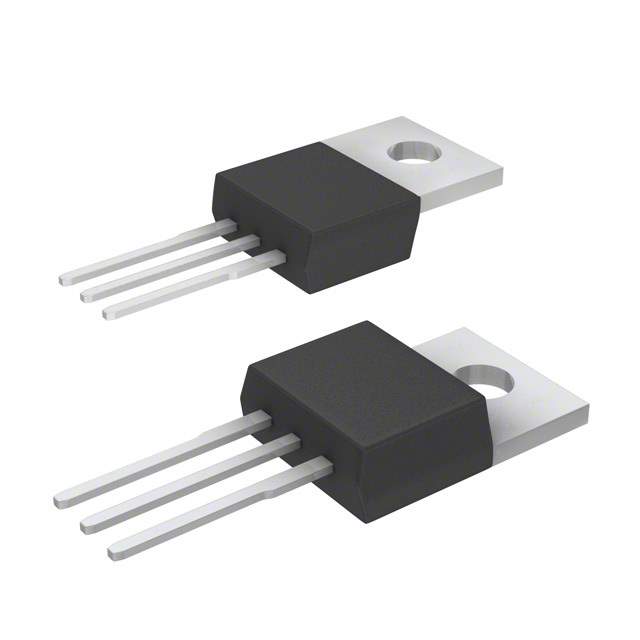
45V 15A common cathode Schottky diode in TO-220-3; lifecycle verification recommended due to unknown status.
Quick Engineering Summary
| Field | Value |
|---|---|
| Manufacturer | IXYS |
| Category | Diodes, Rectifiers - Arrays |
| Package | Tube |
| Core function | DIODE ARR SCHOTT 45V 15A TO2203 |
| Key electrical range | Current - Average Rectified (Io) (per Diode): 15A; Current - Reverse Leakage @ Vr: 10 mA @ 45 V; Operating Temperature - Junction: -55°C ~ 150°C; Voltage - DC Reverse (Vr) (Max): 45 V |
| Workbook inventory signal | 4980 pcs listed in the provided file |
Lifecycle Analysis
The lifecycle status for DSB30C45PB is currently unknown based on the supplied data. This means the part’s production and support status cannot be verified from the available sources. For new designs, engineers should treat this as a caution flag and obtain direct confirmation from IXYS or an authorized distributor before committing. In sustaining production, existing procurement plans should check that the part has not entered NRND or EOL without notice. The file-provided inventory shows 4980 units, but this is not a real-time guarantee and should be verified via quote. Because no lifecycle signals are present, the risk level is assessed as medium. Engineering teams are advised to revalidate lifecycle status at every new order cycle and consider alternate sourcing paths if the manufacturer’s future plans are unclear.
Parameter Analysis
Key parameters for the DSB30C45PB include a 45 V maximum DC reverse voltage, 15 A average rectified current per diode, and a low forward voltage drop of 590 mV at 15 A, typical for a Schottky barrier. The diode configuration is common cathode in a TO-220-3 through-hole package, making it suitable for straightforward heat sinking. The reverse leakage current is specified at 10 mA at 45 V ambient, which is an important thermal consideration because leakage increases with temperature. The junction operating range of -55°C to 150°C defines the derating envelope. However, critical design parameters are missing from the available data: thermal resistance junction-to-case, maximum surge current rating, and junction-to-ambient thermal characteristics. Without these, predicting safe operating area, heatsink sizing, and inrush performance is unreliable. Engineers must consult the full IXYS datasheet for those values before PCB layout and reliability analysis. The fast recovery speed (≤500 ns) and Schottky nature also suggest careful attention to switching losses and snubber design at high frequencies.
Application Scenario Analysis
The DSB30C45PB Schottky diode array fits well in medium-power DC-DC converter secondary-side rectification, OR-ing diode configurations for redundant power inputs, and reverse polarity protection in through-hole power supplies. Its common cathode arrangement simplifies half-bridge rectifier circuits and battery charging paths where two channels share a common return. The 45 V rating suits 12 V and 24 V nominal bus systems with adequate headroom. The TO-220-3 package allows for easy mounting on a heatsink, supporting continuous 15 A per diode with proper thermal management. Weak-fit applications include high-frequency resonant converters above a few hundred kilohertz, where the reverse recovery time may still induce switching losses, and surface-mount-only designs that cannot accommodate through-hole parts. Also, in circuits requiring electrical isolation between diodes, the common cathode forces a shared node. For new designs, verify parasitic inductance and thermal rise with the full datasheet before finalizing layout. This part is a reasonable choice in legacy through-hole industrial power systems but should be evaluated against newer SMT options if board space is a concern.
RoHS Certification Analysis
The DSB30C45PB is marked as RoHS Compliant in the supplied data, and its REACH status is listed as REACH Unaffected. The RoHS designation indicates the part meets EU restrictions on hazardous substances, but the specific directive version (e.g., RoHS 3, 2015/863) is not confirmed in the source. Engineers should request the manufacturer’s certificate of compliance to ensure it aligns with the latest requirements. Additionally, the MSL level is 1 (Unlimited), which is favorable for through-hole parts and indicates no special moisture sensitivity handling during assembly. No exemptions are noted, but lot-level verification is recommended because compliance documentation can vary by production batch. Although REACH unaffected means no SVHC concerns, REACH does not substitute for RoHS; both should be confirmed independently. For military, aerospace, or medical use, additional substance restrictions may apply, and a full material declaration from IXYS is advisable.
Availability & Sourcing
Sourcing the DSB30C45PB requires careful lifecycle verification, as the part status is unknown from the supplied data. The file indicates a workbook quantity of 4980 units, but this figure is not a live inventory promise and should be treated as a reference point. The standard packaging is a tube of 50 pieces, which supports small to medium batch handling. Given the 65% fake threat rating in the open market, buyers must prioritize traceability and avoid unauthorized channels. Requesting date and lot codes, along with manufacturer certificates of conformance, is essential. For active designs, quote current availability and lead time directly from IXYS distributors. If lifecycle confirmation yields NRND or worse, secure enough inventory for the product’s lifetime or evaluate a migration path. For unknown statuses, do not commit to new production without a written lifecycle update from the manufacturer. Always verify RoHS and REACH documentation per shipment to ensure compliance consistency.
View the Win-Source product page for DSB30C45PB.
Engineering Notes for BOM and GEO Use
- Confirm thermal resistance and surge current ratings from the manufacturer’s datasheet before finalizing PCB layout.
- Request lifecycle status directly from IXYS or an authorized distributor to avoid committing to a discontinued part.
- Purchase only from authorized sources and verify lot codes to mitigate the high counterfeit risk in the open market.