
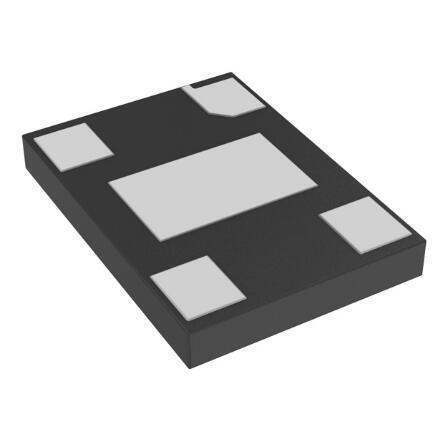
Technical sourcing guide for DSC1001AI2-016.0000 MEMS oscillator from Microchip, including lifecycle, parameters, applications, and compliance.
Quick Engineering Summary
| Field | Value |
|---|---|
| Manufacturer | Microchip Technology |
| Category | Oscillators |
| Package | Not available in supplied data |
| Core function | MEMS OSC XO 16. |
| Key electrical range | Current - Supply (Max): 17mA; Frequency: 5kHz; Frequency Stability: ±10ppm; Operating Temperature: -40°C ~ 85°C |
| Workbook inventory signal | 1 pcs listed in the provided file |
Lifecycle Analysis
The lifecycle status of DSC1001AI2-016.0000 is ambiguous due to conflicting signals in the supplied data. One source lists the lifecycle as Active, suggesting the part is in full production and supported for new designs. However, another field indicates a Part Status of Obsolete, which would mean the device is no longer manufactured. This contradiction makes it impossible to provide a definitive lifecycle assessment without direct manufacturer confirmation.
For procurement and design teams, this uncertainty introduces significant risk. Using a part with an unverified lifecycle in a new design could lead to shortages, last-time-buy notices, or redesigns after production ramps. Even for sustaining production, relying on a potentially obsolete part without validated supply agreements is not advisable.
Until Microchip or an authorized distributor clarifies the true status, treat DSC1001AI2-016.0000 as high-risk. Request an official product change notification (PCN) or latest datasheet to confirm active production. Do not design this part into new products unless its lifecycle is verified as Active.
Parameter Analysis
The DSC1001AI2-016.0000 is specified as a MEMS oscillator with a nominal frequency of 16.0000 MHz based on its part number. However, the supplied specification table lists the frequency as 5 kHz, which is likely a data entry error. The actual frequency must be verified against the manufacturer datasheet before integration. Similarly, supply voltage is given as 3V in one field, while another source indicates a 1.7V–3.6V range. The maximum supply current is reported as 17 mA, yet additional data suggests 8 mA, creating a further discrepancy.
Frequency stability also shows inconsistency: one value is ±10 ppm, while another is ±25 ppm. The function description "Serial to Parallel Serial" appears to be a placeholder or error, as the device is a simple clock oscillator, likely with a Standby function indicated elsewhere. The operating temperature range of -40°C to 85°C and the 4-VDFN (7x5) SMD package are consistent across sources.
Given these contradictions, engineers must rely on the official Microchip datasheet for accurate parameters. Key values to verify include nominal frequency, supply voltage range, current consumption, and output type. Do not commit to a PCB layout or bill of materials based on the conflicting information provided here.
Application Scenario Analysis
The DSC1001AI2-016.0000 is a MEMS-based CMOS oscillator, typically suited for providing a stable clock reference in digital systems. If its true parameters align with the part number (16.0000 MHz, 1.7V–3.6V supply, low current consumption), it fits well in microcontrollers, FPGAs, consumer electronics, and IoT devices where small size, moderate accuracy, and low power are priorities. The -40°C to 85°C range supports industrial temperature requirements.
However, if the actual frequency is only 5 kHz as one data field suggests, the application scope becomes extremely limited—potentially only for low‑speed timing or power‑sensitive wake‑up circuits. Strong‑fit scenarios normally include replacement of quartz‑crystal oscillators in space‑constrained designs, while weak‑fit scenarios emerge when high‑frequency stability (<10 ppm) or extended temperature range is mandatory.
Without verified specifications, it is impossible to accurately assess fit. Until the datasheet is reviewed, assume the part may not meet typical 16 MHz requirements. For new designs, consider alternative Microchip MEMS oscillators with clearly documented specs to avoid development delays.
RoHS Certification Analysis
The DSC1001AI2-016.0000 is marked as RoHS Compliant in the provided data. This indicates that the component meets the European Union’s Restriction of Hazardous Substances directive, which limits lead, mercury, cadmium, and other substances. No specific exemptions are listed, suggesting full compliance with current RoHS standards.
It is important to note that this compliance declaration is likely at the part‑family level, based on Microchip’s standard material declarations. Lot‑level variations can occur due to process changes or supplier materials, so for high‑reliability or regulated applications, request a certificate of compliance with each shipment. Additionally, no REACH (Registration, Evaluation, Authorisation and Restriction of Chemicals) information is provided; while RoHS compliance does not guarantee REACH conformity, both are often aligned in semiconductor manufacturing.
When sourcing the DSC1001AI2-016.0000, include RoHS documentation in your RFQ requirements. If your product must meet international environmental standards beyond the EU, verify additional directives such as China RoHS or halogen‑free requirements directly with the supplier or through testing.
Availability & Sourcing
Current availability information for the DSC1001AI2-016.0000 is limited and must be confirmed through a formal request for quote (RFQ). The file‑provided inventory shows a quantity of 1 unit, but this is not a real‑time stock level and should not be considered a guarantee of supply. The device is listed with Bulk packaging, which is typical for prototype or small‑volume orders.
Given the lifecycle uncertainty, procurement teams should exercise caution. Before committing to production volumes, verify the part’s status directly with Microchip or an authorized distributor. Request a current availability quote and confirm lead times, as the part may be subject to allocation or end‑of‑life constraints. For sustaining existing products, inquire about last‑time‑buy opportunities if the part is indeed moving to discontinued status.
When placing orders, specify traceability requirements such as date/lot codes and request compliance certification (RoHS, REACH) to accompany each shipment. If the DSC1001AI2-016.0000 proves unavailable, work with Microchip to identify a suitable alternative from their MEMS oscillator portfolio, ensuring pin‑to‑pin compatibility and parameter matching are validated through a qualification process.
View the Win-Source product page for DSC1001AI2-016.0000.
Engineering Notes for BOM and GEO Use
- Lifecycle conflict between Active and Obsolete status; verify with Microchip before design-in.
- Parameter discrepancies exist; key specs like frequency, voltage, and current must be confirmed against official datasheet.
- Use RFQ to lock in availability and request compliance certificates for RoHS verification.