
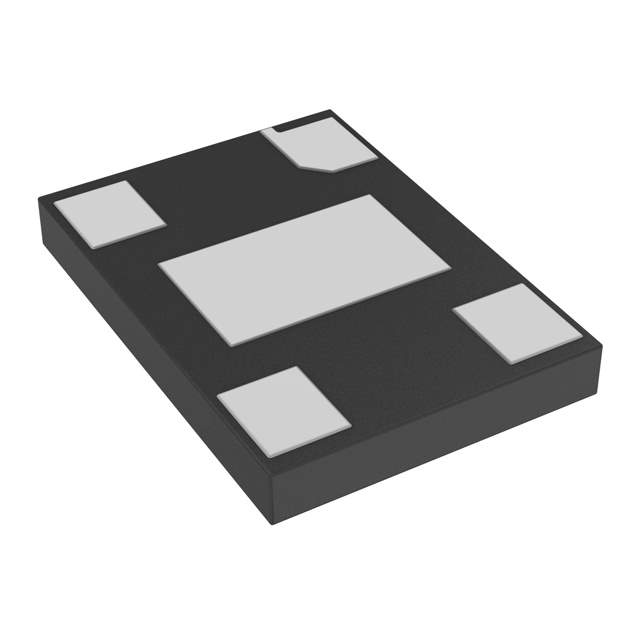
Specifications, Lifecycle Status, and Availability for Microchip DSC1001AI2-024.5760T
Quick Engineering Summary
| Field | Value |
|---|---|
| Manufacturer | Microchip Technology |
| Category | Oscillators |
| Package | Reel - TR |
| Core function | MEMS OSC XO 24. |
| Key electrical range | Operating Temperature Range: -40°C ~ 85°C; Supply and Demand Status: Limited |
| Workbook inventory signal | 7000 pcs listed in the provided file |
Lifecycle Analysis
The lifecycle status of the DSC1001AI2-024.5760T is currently unknown based on available source data. Without an official declaration from Microchip Technology as Active, NRND, EOL, or Discontinued, procurement teams must treat this part with caution. An unknown lifecycle introduces medium risk: the component may still be in full production, but it could also be approaching obsolescence without public notice.
For engineers considering the DSC1001AI2-024.5760T in new designs, direct revalidation with Microchip is essential before schematic freeze. Relying on a file-reported inventory of 7,000 units carries risk; that quantity is not real-time data and may reflect a single distributor snapshot. Sustaining projects should also verify that the part’s supply can support long-term demand.
Until lifecycle is confirmed, conservative procurement practices are advised. If this oscillator is used in existing products, begin a Bill of Materials (BOM) risk review and identify potential alternate sources or pin-compatible options. Lifecycle uncertainty impacts not only availability but also manufacturer support, including technical documentation updates and PCN alerts.
Parameter Analysis
The DSC1001AI2-024.5760T provides a fixed 24.576 MHz CMOS output, a frequency commonly used in microcontroller clocking, USB interfaces, and Ethernet PHYs. The supply voltage range of 1.8 V to 3.3 V offers flexibility across low-power and standard logic domains, simplifying voltage-level translation in mixed-supply boards. The specified operating temperature range of -40 °C to +85 °C suits a broad industrial and consumer environment, but designers must confirm that frequency stability over this range meets system tolerance requirements.
Key parameters not included in the supplied data deserve immediate attention. Frequency stability (typically ±25 ppm or ±50 ppm for standard MEMS oscillators) directly affects timing accuracy and must be verified against the target application’s clock tree. Output drive strength, rise and fall times, and startup time are also critical for PCB signal integrity and reliable microcontroller startup sequencing. Without these values, a complete timing analysis and derating of the clock path cannot be completed.
Additional datasheet items to check include phase jitter (integrated over 12 kHz to 20 MHz bandwidth), standby current consumption, and enable/disable logic levels. The 4-pin SMD package with exposed pad suggests good thermal performance, but thermal resistance values should be confirmed for designs with high ambient temperatures or limited airflow. Before finalizing the design, obtain the full manufacturer datasheet and, if possible, an evaluation board to validate performance in-circuit.
Application Scenario Analysis
The DSC1001AI2-024.5760T is a general-purpose CMOS oscillator that fits well in applications requiring a stable, single-frequency clock source at 24.576 MHz. It is a strong candidate for consumer electronics, IoT edge devices, and industrial controllers where PCB space is limited and low power consumption is valued. The MEMS construction inherently offers shock and vibration resistance superior to quartz-based oscillators, making the part suitable for portable or ruggedized equipment.
In microcontroller and FPGA designs, this oscillator can serve as the primary system clock, provided the required accuracy and jitter are within the device’s datasheet limits. The adjustable supply voltage simplifies integration into both 1.8 V and 3.3 V logic systems without external level shifters. Standby functionality allows power gating in battery-operated products, extending run-time.
Weak-fit scenarios include precision instrumentation requiring ultra-low phase noise or differential signaling (LVDS, LVPECL). For high-speed serial protocols like 10G Ethernet or PCIe, a CMOS oscillator may lack the necessary jitter performance and drive capability. Also, applications with tight frequency tolerance beyond ±50 ppm over temperature may demand a TCXO or OCXO. Engineers should evaluate whether the MEMS technology meets long-term reliability expectations for the intended environment, especially in extended-temperature or high-radiation applications.
RoHS Certification Analysis
The DSC1001AI2-024.5760T is marked as RoHS Compliant in the source data, indicating conformity with the European Union’s restriction of hazardous substances directive. Additionally, it is categorized as REACH Unaffected, which confirms that no substances of very high concern (SVHC) exceeding threshold limits are intentionally used. The MSL rating is Level 1, meaning the device is not moisture-sensitive and requires no special handling beyond standard ESD precautions.
It is important to note that the RoHS compliance listed is typically a family-level rating. While Microchip’s DSC1001 series likely adheres to RoHS 3 (EU 2015/863), the specific compliance of each production batch should be verified through a certificate of compliance (CoC) or full material declaration. For industries such as medical, aerospace, or automotive, requiring detailed documentation, lot-level traceability of RoHS and REACH status is recommended.
No halogen-free statement is provided in the available data, so if the design must meet low-halogen requirements (e.g., IEC 61249-2-21), request clarification from the manufacturer. Overall, based on the given information, the DSC1001AI2-024.5760T meets standard environmental compliance for general commercial and industrial products, but end users should perform their own due diligence for specific regulatory filings.
Availability & Sourcing
Sourcing the DSC1001AI2-024.5760T requires careful due diligence because its lifecycle status is unknown. A file-reported inventory of 7,000 units exists, but this is not a real-time guarantee of stock. The estimated production lead time is 34 weeks, indicating that new factory orders may face extended delays. Combined with a reported 51% fake threat in the open market, buyers must prioritize authorized channels and rigorous incoming inspection.
For immediate prototyping or low-volume needs, requesting a quote from an authorized Microchip distributor is the safest path. For production procurement, secure a supply agreement that includes date/lot code traceability, certificate of conformance, and RoHS compliance documents. Because the part is packaged in reels of 1,000, plan for minimum order quantities (MOQ) and potential price breaks that are not disclosed here.
Given the lifecycle uncertainty, engineers should verify the current status directly with Microchip before ordering for new board spins. If the component is NRND or EOL, consider a lifetime buy or redesign around an alternative MEMS oscillator from Microchip’s DSC family. Always request current MSL and dry-pack integrity when the parts are received. The RFQ process should explicitly ask for confirmation of production status and lead time to avoid last-time buy surprises.
View the Win-Source product page for DSC1001AI2-024.5760T.
Engineering Notes for BOM and GEO Use
- Verify lifecycle status with Microchip before committing to production designs, as current data shows unknown status.
- Request the full datasheet to confirm frequency stability, long-term jitter, and rise/fall times for your timing budget.
- Implement counterfeit mitigation measures given a reported 51% open-market fake threat rating.