
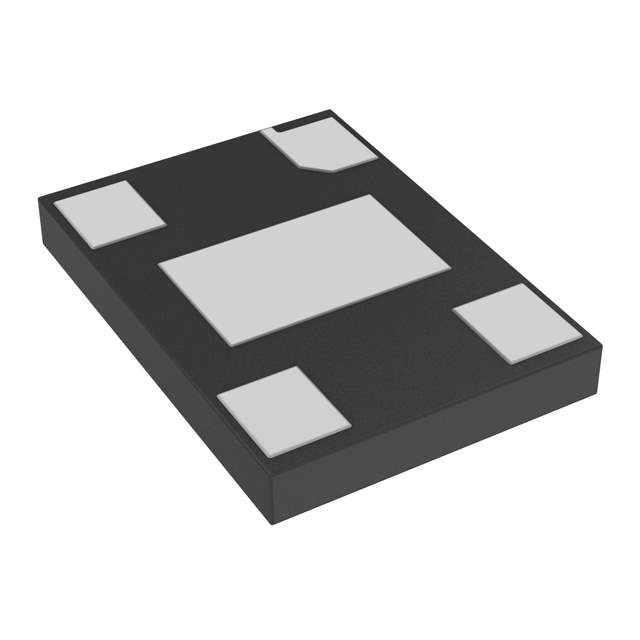
Microchip Technology 80 MHz CMOS Oscillator – Active, Low Risk
Quick Engineering Summary
| Field | Value |
|---|---|
| Manufacturer | Microchip Technology |
| Category | Oscillators |
| Package | Tube |
| Core function | MEMS OSC XO 80. |
| Key electrical range | Operating Temperature Range: -40°C ~ 85°C; Supply and Demand Status: Balance |
| Workbook inventory signal | 1 pcs listed in the provided file |
Lifecycle Analysis
The DSC1001AI2-080.0000 from Microchip Technology is currently in Active lifecycle status, with no conflicting signals between manufacturer data and supply chain records. This status confirms the oscillator is in full production and supported for both new designs and ongoing volume demand. For engineers starting new projects, the Active designation provides a green light for design-in, but it always prudent to periodically recheck manufacturer PCNs (Product Change Notifications) to catch any future NRND or EOL transitions.
From a procurement perspective, an Active component with low risk allows standard MRP workflows and long-term sourcing agreements. However, the file-sourced inventory of just 1 unit suggests limited immediate stock at the time of this report. Buyers should treat that number as a snapshot, not a real-time guarantee. Contacting authorized distributors for lead times and buffer stock recommendations is recommended, especially for production builds where JIT assumptions can be risky.
In summary, the DSC1001AI2-080.0000 is safe for new design insertion, but sustaining production plans should incorporate regular lifecycle revalidation. No immediate migration planning is needed, given the aligned Active signals.
Parameter Analysis
The DSC1001AI2-080.0000 is a fixed-frequency 80 MHz MEMS-based XO (standard oscillator) with CMOS output. The most decision-relevant parameters from the available data include the wide supply voltage range of 1.7 V to 3.6 V, frequency stability of ±25 ppm across the -40°C to +85°C industrial temperature range, and a maximum supply current of 16.6 mA. The 1.7 V minimum allows operation in low-voltage systems, while 3.6 V compatibility covers many legacy and mixed-voltage designs.
For integration, engineers must note the 4-pin VDFN (7 mm x 5 mm) package with exposed pad, which requires appropriate PCB land pattern design. The MSL 1 rating means no moisture sensitivity concerns, but the exposed pad may need thermal or grounding considerations. The standby (power-down) function can be used for power-sensitive applications. However, critical datasheet details are missing: phase noise, jitter specifications, aging rate, and start-up time. These parameters heavily influence performance in communications or high-speed digital systems. Verifying them with the manufacturer before finalizing a BOM is essential.
In addition, the 16.6 mA maximum current draw should be budgeted in power distribution, especially in compact designs where heat dissipation might be a concern. The ±25 ppm stability is adequate for most industrial and consumer applications but may fall short for telecom-grade clocking needs. Always cross-reference with your system’s tolerance budget.
Application Scenario Analysis
The DSC1001AI2-080.0000 targets general-purpose clocking in embedded systems, consumer electronics, and industrial controls. Its 80 MHz output is a common frequency for microcontrollers, FPGAs, and SoCs that require a stable timebase. The industrial temperature range (-40°C to +85°C) makes it suitable for factory automation, outdoor edge devices, and automotive infotainment systems that operate in harsh thermal environments. The MEMS construction typically offers better shock and vibration resistance than quartz crystals, a plus for portable or ruggedized equipment.
Strong-fit use cases include microcontroller clock sources (e.g., ARM Cortex-M series), Ethernet PHY reference clocks, and sensor hubs where 80 MHz provides a convenient 10x or 8x multiple for internal PLLs. The standby feature supports battery-powered gadgets that wake intermittently. Weak-fit scenarios arise in applications demanding ultra-low jitter, such as high-speed SerDes above 10 Gbps, or in avionics requiring radiation-hardened oscillators. Additionally, the absence of an AEC-Q100 qualification in the provided data means strict automotive safety systems would need further verification.
When evaluating for a design, map the oscillator’s known parameters against your system’s jitter tolerance, supply sequencing, and mechanical constraints. The small 7x5 mm footprint is friendly to dense PCB layouts, but the exposed pad must be properly grounded to maintain signal integrity.
RoHS Certification Analysis
The DSC1001AI2-080.0000 is documented as RoHS Compliant and REACH Unaffected. The RoHS designation indicates conformity with the EU directive restricting hazardous substances (lead, mercury, cadmium, etc.), making the part suitable for sale in European markets and for use in equipment requiring environmental compliance. The REACH Unaffected statement confirms that the product does not contain Substances of Very High Concern (SVHCs) above the regulatory threshold.
It is important to note that RoHS compliance is typically declared at the component family level, not necessarily for each individual lot. For users in high-assurance industries (medical, aerospace, defense), it is advisable to request a lot-specific Certificate of Compliance (CoC) or full material declaration from the distributor or manufacturer. The MSL Level 1 (Unlimited) rating further eases handling because no dry-pack or time-controlled assembly is needed before reflow.
In practice, the compliance profile of the DSC1001AI2-080.0000 meets standard procurement requirements. Buyers should ensure that their PCB assembly processes and end-product certifications accept device-level RoHS declarations. If the end product must meet additional standards (e.g., J-STD-020 for soldering), confirm that the MSL rating and package information align with those specifications.
Availability & Sourcing
According to file-provided data, the DSC1001AI2-080.0000 has a supply-demand status of “Balance” and a workbook quantity of 1 unit. This does not represent real-time inventory; actual availability may differ. Buyers are strongly encouraged to request a quote through authorized Microchip distributors to secure current stock levels, lead times, and pricing information. The part is packaged in tubes containing 50 units, which suits prototyping or small production runs.
An important sourcing note: the open market fake threat level for this component is estimated at 90%, indicating a high risk of counterfeit parts from unauthorized sources. To guarantee authenticity and traceability, procurement should be routed exclusively through Microchip’s franchised network. Ask for full traceability documentation, including date/lot codes, and verify that the component matches the manufacturer’s original packaging. For Active components, standard RFQ processes with compliance checks (RoHS, REACH) are sufficient.
Because the lifecycle is Active, urgent last-time buys are not necessary, but maintaining safety stock for critical builds is prudent. For high-volume production, consider negotiating a supply agreement with Microchip or a preferred distributor to mitigate allocation risks. Always incorporate lifecycle verification into the incoming inspection process, and stay alert to any EOL or NRND notifications from the manufacturer.
View the Win-Source product page for DSC1001AI2-080.0000.
Engineering Notes for BOM and GEO Use
- Request lot-specific RoHS and REACH certificates when sourcing for regulated industries.
- Verify supply voltage tolerance and current draw against your power budget, as the 1.7V–3.6V range and 16.6mA max must be accommodated.
- The 90% open market fake threat level demands strict authorized sourcing to avoid counterfeit MEMS oscillators.