
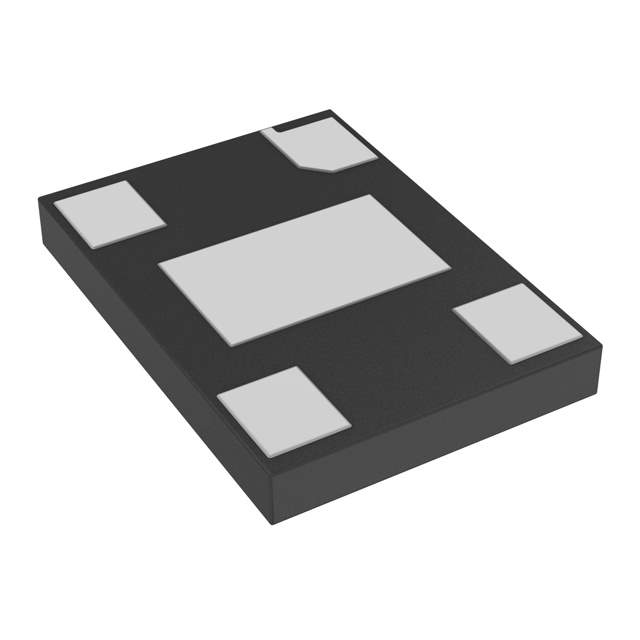
Specifications, lifecycle, compliance, and procurement insights for the Microchip DSC1001AI2-083.3330 MEMS oscillator.
Quick Engineering Summary
| Field | Value |
|---|---|
| Manufacturer | Microchip Technology |
| Category | Oscillators |
| Package | Tube |
| Core function | MEMS OSC XO 83. |
| Key electrical range | Operating Temperature Range: -40°C ~ 85°C; Supply and Demand Status: Balance |
| Workbook inventory signal | 1 pcs listed in the provided file |
Lifecycle Analysis
The DSC1001AI2-083.3330 is in Active lifecycle status, with no conflicting signals from available data. This classification indicates the part is in full production, supported by Microchip Technology, and recommended for both new designs and ongoing production. Procurement teams can proceed without immediate last-time-buy concerns, but should note that long-term availability still depends on manufacturer market demand and wafer allocation. For programs requiring extended product life, periodic revalidation of the lifecycle status directly with Microchip is advisable.
A file-provided stock quantity of one unit is shown, which is a static reference and not a real-time inventory indicator. This does not reflect current available supply, and engineers should not base sourcing decisions on that number. Active status also means that factory lead times and allocation may still apply, so building forecast and safety stock remains a standard practice.
In the context of the oscillator category, Active parts typically have strong second-source potential, but this specific MEMS oscillator may have limited form-fit-function equivalents. Users should evaluate any alternate sources carefully for phase noise and stability matching.
Parameter Analysis
The DSC1001AI2-083.3330 generates a fixed 83.333 MHz clock using MEMS resonator technology, which offers advantages in shock resistance and size compared to quartz crystals. The CMOS output ensures direct compatibility with most microcontrollers, FPGAs, and digital logic without additional level translation. The frequency stability of ±25 ppm over the full industrial temperature range (−40 °C to +85 °C) is sufficient for many communication and timing applications, though high-precision systems such as telecommunication base stations may require tighter stability.
Supply voltage flexibility spans 1.7 V to 3.6 V, allowing the same part to work across low-power 1.8 V rails and legacy 3.3 V systems. The maximum supply current of 16.6 mA occurs at the highest voltage and frequency; designers should budget for this in power-sensitive designs. The standby function (power-down) aids in reducing consumption during idle periods.
Missing from the supplied data are critical details such as phase jitter (period and cycle-to-cycle), rise/fall times, and start-up latency. These parameters directly affect signal integrity in high-speed interfaces and must be obtained from Microchip’s official datasheet before finalizing a design. The 4-VDFN (7x5 mm) package is compact, but careful footprint design is required to minimize parasitic effects at 83 MHz.
Application Scenario Analysis
The DSC1001AI2-083.3330 is well-suited for general-purpose clock generation in embedded systems, IoT gateways, and networking equipment operating at 83.333 MHz. Its industrial temperature range makes it appropriate for outdoor or ruggedized equipment where ambient temperatures can swing widely. The CMOS output simplifies integration with standard digital ICs, and the MEMS construction provides reliability advantages in mechanically stressful environments.
Applications that demand ultra-low phase noise or extremely tight frequency pull-range (APR) are not a strong fit, as the source data does not indicate sub-picosecond jitter performance or tuning capability. Similarly, battery-operated devices where quiescent current in standby mode is critical should verify the shutdown current specification from the datasheet, as the provided data only lists maximum active current.
The standby feature can enable power-saving modes in portable or intermittently operated systems, but the wake-up time must be evaluated to avoid violating timing requirements. Where precise clock synchronization or multi-board skew management is needed, the lack of guaranteed output-to-output skew data in this guide means the designer must consult the manufacturer for those details.
RoHS Certification Analysis
The DSC1001AI2-083.3330 is documented as RoHS Compliant, meaning it meets the restrictions on lead, mercury, cadmium, hexavalent chromium, PBBs, and PBDEs under the EU directive. This compliance is critical for products sold into the European market or those requiring CE marking. Additionally, REACH Unaffected status indicates no identified substances of very high concern above threshold levels, which further supports global market access.
Moisture Sensitivity Level 1 (unlimited) means the package does not require special dry-pack handling or baking prior to reflow. This simplifies storage and assembly flow, reducing risk of moisture-induced delamination. However, both RoHS and REACH status are typically declared at the family or date-code level; batch-specific certificates may be needed for high-compliance end markets like medical or automotive.
Since no exemption information is supplied, users should confirm with Microchip whether any RoHS exemptions apply to internal materials. If full EU RoHS 2 (2011/65/EU) or RoHS 3 (EU 2015/863) documentation is required, requesting the manufacturer’s Declaration of Conformity is recommended during procurement, especially when the part number must appear on compliance records for third-party audits.
Availability & Sourcing
The DSC1001AI2-083.3330 is in Active production, meaning standard RFQ processes can be used to obtain current pricing and lead times. The source data shows a file-stored quantity of one unit, which is not a live inventory number and should not be interpreted as stock availability. Buyers must contact distributors such as Win Source or authorized Microchip channels for up-to-date supply status. Packaging is in tubes of 50 pieces, which is suitable for small to medium production runs; higher volumes may require alternate packaging.
Given an 81% fake threat indication for this part in the open market, procurement strategies should emphasize traceability and authorized sourcing. Requesting date/lot code information, full traceability back to Microchip, and compliance certifications (RoHS, REACH) is essential to mitigate counterfeit risk. Incoming inspection protocols such as visual inspection, electrical test, and x-ray for package integrity are strongly recommended.
For long-term availability, secure a forecast with the supplier and consider holding safety stock if the part number is sole-sourced. Since the lifecycle is Active, a last-time-buy is not imminent, but market conditions can change. Engineers should verify the most current lifecycle status and any Microchip product change notifications (PCNs) before finalizing bill-of-materials for new production.
View the Win-Source product page for DSC1001AI2-083.3330.
Engineering Notes for BOM and GEO Use
- Verify phase jitter and rise/fall times directly from the manufacturer datasheet, as these critical timing parameters are not provided in the source data.
- Due to the 81% fake threat rate in the open market, implement incoming inspection and purchase from authorized or verified distributors only.
- Design with conservative decoupling near the VDD pin; the oscillator’s maximum supply current is 16.6 mA, but ensure power rail integrity across the full voltage range.